 Ferndale Siding
 Why Siding Wears Differently on Lynden and Ferndale Homes
Homes in Lynden and Ferndale sit in the same Whatcom County weather system, but they don't take the beating in exactly the same way. Ferndale gets the fuller dose of salt-laden air moving in off the coast, which accelerates corrosion on fasteners, trim, and any siding material that isn't built to shrug off moisture and chloride exposure. Lynden sits further inland, but it trades some of that salt exposure for its own combination of persistent dampness, shaded lots, and long stretches of overcast, low-drying-potential weather typical of the Nooksack lowlands. Either way, the common thread is the same: siding here spends a huge share of the year wet, and it rarely gets a hard, fast dry-out between rain events.
That matters more than most homeowners realize. Siding failure is almost never about a single storm — it's about cumulative moisture cycling. Materials that absorb water, swell, and then dry unevenly are the ones that cup, delaminate, or rot first. Materials that trap moisture behind them because of poor flashing or house-wrap detailing fail even faster, regardless of what's on the outside. A siding replacement in this area has to account for both the product and the assembly behind it.
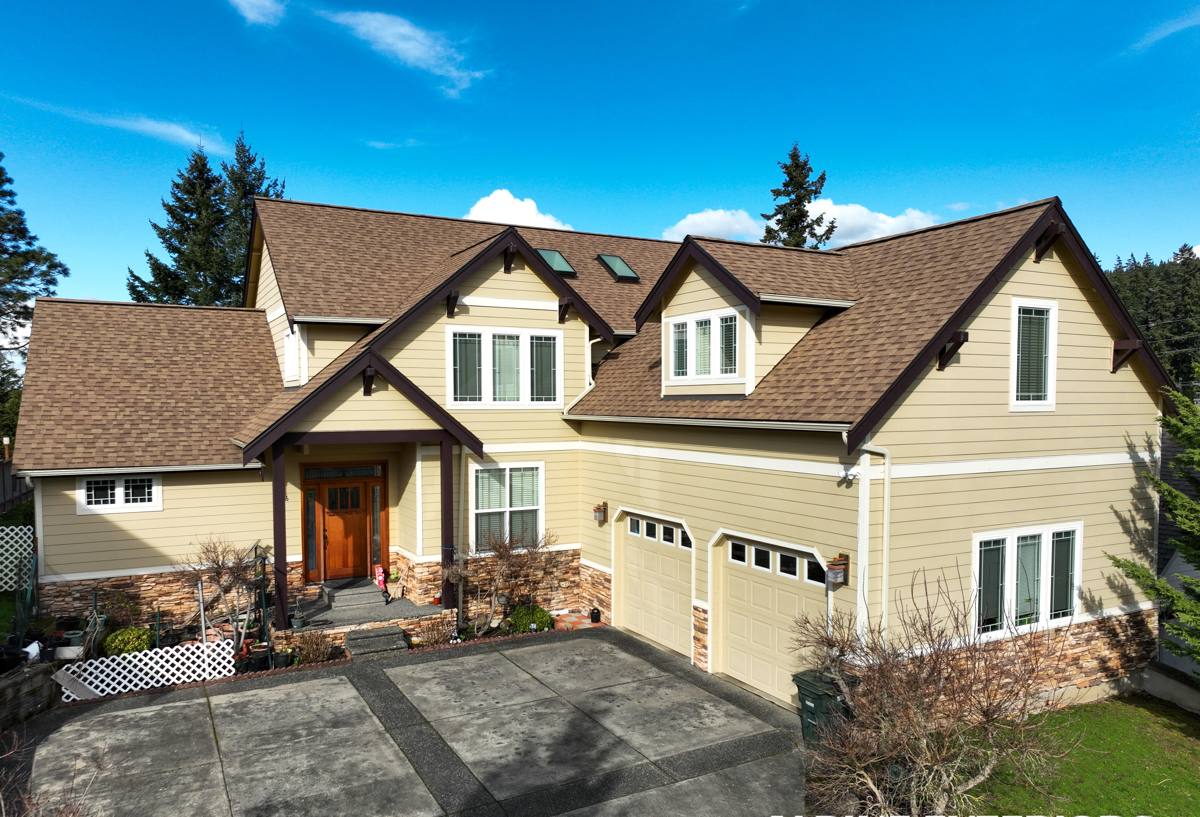
The Moss Season Problem
Whatcom County's long moss season is one of the most underrated causes of premature siding damage. Moss doesn't just grow on roofs — it colonizes north-facing walls, shaded gable ends, and anywhere siding stays damp longer than it should. On wood-based products, moss and algae growth holds moisture directly against the surface, which speeds up rot and paint failure. On vinyl, it's mostly cosmetic, but it still traps grime and moisture at seams. On fiber cement with a factory-applied finish, moss and mildew sit on the surface rather than feeding into the material, which makes a real difference over a 10, 20, or 30-year timeline.
If you've noticed green or black staining creeping up the lower courses of your siding, streaking below window sills, or soft spots near ground level, that's moss-season moisture doing its slow work — and it's one of the clearest signs a section of siding is past the point where caulk and paint can fix it.
Signs Your Lynden or Ferndale Home Is Due for Siding Replacement
- Boards or panels that feel soft, spongy, or crumble slightly when pressed near the bottom edges or window trim
- Paint that keeps failing within a couple of years no matter how well it's prepped and applied
- Visible cupping, buckling, or gaps opening up between boards or panels
- Persistent moss, algae, or dark staining that comes back within a season of cleaning
- Rising interior heating costs or drafts near exterior walls, which often points to a failing weather barrier behind the siding
- Siding that was installed more than 20–25 years ago in a material not rated for this climate
- Nail pops, warping panels, or visible fastener corrosion, especially on the sides of the house that face prevailing weather
What a Correct Siding Replacement Actually Involves
Replacing siding correctly is not a cosmetic swap — it's a rebuild of your home's entire moisture management system. A rushed tear-off-and-reinstall that skips the details underneath will look fine for a year or two and then fail in exactly the same spots the old siding did.
Tear-Off and Inspection
Once the old siding is off, the sheathing gets inspected for rot, soft spots, or prior water intrusion — especially around windows, doors, and any place two rooflines meet. This is the one point in the project where hidden damage is actually visible, and it should never be skipped or rushed.
Weather-Resistive Barrier and Flashing
A new weather-resistive barrier goes on with correctly lapped seams so water sheds downward and out, not into the wall cavity. Every window, door, and penetration gets proper flashing integrated into that barrier — this is the single most common place cheap installations fail, and it's invisible once the siding goes back on, which is exactly why it needs to be done right the first time.
Furring and Rainscreen Detailing Where Appropriate
In a climate that stays wet this long, giving siding a way to drain and dry — rather than sitting flush against a saturated wall assembly — extends its working life significantly. This is discussed with the homeowner based on the specific wall and exposure, not applied as a blanket upsell.
Installation to Manufacturer Spec
Fastener type, spacing, clearance from grade, and clearance from roof lines all matter — not as boilerplate, but because getting them wrong is what voids warranties and causes the exact failures described above. Correct installation is slower than shortcut installation. It's also the entire reason the material's warranty means anything.
Why We Install James Hardie Fiber Cement — And Nothing Else
We install James Hardie fiber cement siding exclusively. We don't install vinyl, LP SmartSide, Cemplank, Allura, primed spruce, or cedar, and we think Lynden and Ferndale homeowners deserve an honest explanation of why, not just a sales pitch.
Vinyl
Vinyl is inexpensive and low-maintenance in mild conditions, but it's a thin, flexible plastic product. In sustained wind and driving rain it can flex, crack, or blow off at the edges, and it doesn't hold paint if a color change is ever wanted. It also softens and warps under direct heat exposure. It's a reasonable product for some climates — we just don't think it's the right long-term investment for this one.
LP SmartSide, Cemplank, and Allura
LP SmartSide is an engineered wood product — it performs well when installation and maintenance are perfect, but wood-based substrates remain more sensitive to sustained moisture exposure than fiber cement, and this region rarely gives a product a long dry window. Cemplank and Allura are both fiber cement competitors to Hardie, and while fiber cement as a category is the right call for this climate, we've standardized on Hardie specifically for its factory finish system, product engineering, and warranty structure — consistency in the products we install lets us guarantee the workmanship on top of them.
Primed Spruce and Cedar
Cedar is beautiful and has real historical pedigree in the Pacific Northwest, but real wood siding demands an ongoing maintenance commitment — refinishing, moisture monitoring, and vigilance against exactly the moss and rot issues this climate specializes in. Primed spruce carries similar exposure risk with less of cedar's natural rot resistance. Both can work if a homeowner is committed to the upkeep; we've simply chosen not to install products whose long-term performance here depends that heavily on maintenance discipline.
Why Hardie
James Hardie fiber cement is non-combustible, engineered specifically for climate zones like ours through its HZ5 product line, and finished with a factory-applied ColorPlus finish that resists fading and holds up to the area's moss and moisture cycle far better than field-applied paint. It carries a strong transferable warranty, and — critically — it performs the way it's supposed to when it's installed to spec, which is why our entire process is built around getting that installation right.
Material Comparison for This Climate
| Material | Moisture Behavior Here | Maintenance | Typical Lifespan |
|---|---|---|---|
| James Hardie Fiber Cement | Resists swelling, cupping, and moisture-driven rot; factory finish sheds moss and algae staining | Occasional wash; no repainting on schedule | 30+ years with correct install |
| Vinyl | Doesn't rot, but can crack, warp, or blow off in wind-driven rain | Low, but panels can't be repaired invisibly | 15–25 years |
| LP SmartSide (Engineered Wood) | Vulnerable at cut edges and seams if moisture gets behind it | Requires diligent caulk and paint upkeep | 20–30 years if well maintained |
| Cedar / Primed Spruce | Absorbs moisture; prone to rot and moss without active upkeep | High — regular refinishing and inspection | Highly variable by maintenance |
Our Siding Replacement Process
- On-site assessment: We walk the home, check current siding condition, sheathing exposure risk, and note problem areas like shaded walls or heavy moss zones.
- Written estimate: A clear scope covering tear-off, any sheathing repair allowance, weather barrier and flashing work, and the Hardie product line and profile selected.
- Tear-off and inspection: Old siding comes off, sheathing is checked, and any rot or damage is documented and addressed before anything new goes on.
- Weather barrier and flashing installation: This is the step that determines whether the new siding lasts — done to spec, not shortcuts.
- Hardie installation: Installed per manufacturer fastening and clearance requirements so the product warranty stays valid.
- Final walkthrough: We review the finished work with the homeowner before calling the job done.
What Siding Replacement Cost Depends On
We won't quote a number without seeing the home, but the real cost drivers are consistent from project to project:
| Factor | Why It Matters |
|---|---|
| Home size and wall complexity | More corners, gables, and dormers mean more cutting, flashing, and labor time |
| Current siding condition | Rotten sheathing found during tear-off adds repair scope beyond siding alone |
| Hardie product line and profile | Lap, shingle, and panel styles carry different material and install costs |
| Access and site conditions | Steep lots, tight setbacks, or landscaping can affect staging and labor time |
| Trim and detail work | Window, door, and corner detailing adds precision time regardless of home size |
What to Check Before Hiring a Siding Contractor in Lynden
- Are they licensed and insured in Washington, with proof available on request?
- Do they specify how they'll handle weather barrier and flashing detailing — not just "new siding"?
- Do they install to the manufacturer's actual fastening and clearance specs, or just "however it fits"?
- Do they have a track record of jobs in Whatcom County's specific moisture and moss conditions?
- Is the warranty — both material and workmanship — explained clearly and in writing?
Why a Crew That Already Works Lynden Matters
A siding crew that works Lynden and Ferndale regularly already knows which wall orientations take the worst of the moss season, which lots stay damp longest into spring, and how to sequence a tear-off around this region's weather instead of getting caught mid-project by a rain system. That local familiarity shows up in small decisions — how flashing gets detailed on a shaded north wall, when to add drainage behind the siding, how tight to run seams given the humidity — that a crew unfamiliar with this specific climate simply won't think to make. It's the difference between siding that looks right on installation day and siding that's still performing correctly a decade later.
If your Lynden or Ferndale home's siding is showing its age — or you just want a straight answer about whether it's holding up the way it should be — we're happy to take a look. Reach out for a free, no-pressure estimate using the form below.