 Ferndale Siding
 Building a Deck That Actually Holds Up in Marietta
Marietta sits close enough to the water that a deck here lives a different life than one built twenty miles inland. Salt-laden air, long stretches of driving rain, and a moss season that can run from October through May all put steady stress on wood, fasteners, and finishes. A deck that looks good on installation day but wasn't built with this specific exposure in mind will show it within a few winters — soft spots, rust bleed at the fastener heads, slick green film on the boards, and railings that start to wobble before they should.
This page is about one thing: building and maintaining a custom deck for a home in Marietta, in the Ferndale area of Whatcom County. Not a generic "decks 101" rundown, but the specific decisions that matter when the project is a few minutes from Bellingham Bay's influence and squarely inside our regional marine climate.
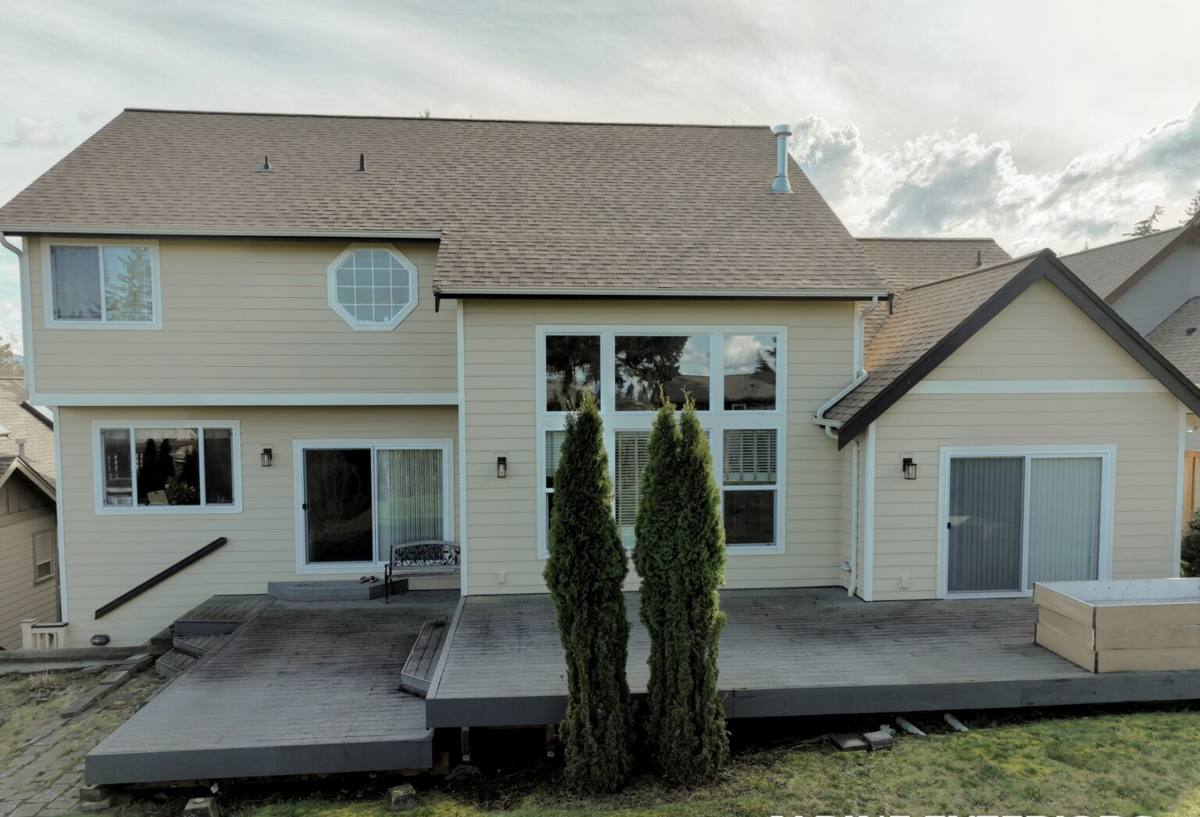
What Marietta's Coastal Exposure Actually Demands
Three climate factors do most of the damage to a poorly built deck in this area, and each one calls for a different response in materials and detailing.
Salt Air
Airborne salt accelerates corrosion on anything metal — nails, screws, joist hangers, post bases, and railing hardware. It doesn't take direct ocean spray to matter; a steady low-level exposure over years is enough to eat through standard zinc-coated fasteners from the inside out, often before any surface rust is visible on the deck boards themselves.
Driving Rain
Rain here doesn't just fall — wind pushes it sideways into ledger connections, stair stringers, and the gaps between decking boards. Water that gets trapped instead of shedding is the single biggest cause of premature rot and hardware failure in decks throughout Whatcom County.
Extended Moss Season
Shade, moisture, and mild temperatures give moss and algae months to establish themselves on any deck surface that doesn't drain and dry quickly. Beyond looking bad, a mossy deck surface is a genuine slip hazard on stairs and landings.
Choosing the Right Decking Material for This Climate
There's no single "best" decking material — there's a best match for how the deck will be used, the budget, and how much upkeep the homeowner actually wants to do. Here's how the common options hold up specifically against salt air, rain, and moss.
| Material | Moisture Behavior | Moss/Algae Resistance | Maintenance |
|---|---|---|---|
| Pressure-treated wood | Good if properly sealed; prone to cupping if finish is neglected | Low — needs regular cleaning and re-sealing | Annual cleaning, re-seal every 1-2 years |
| Cedar | Naturally moisture-resistant, but surface finish still wears | Moderate — still needs cleaning in shaded areas | Periodic cleaning, occasional re-oil or stain |
| Capped composite | Excellent — will not rot or absorb water | Higher — smoother capped surface sheds moss more easily | Occasional wash, no sealing or staining |
| PVC decking | Fully moisture-proof, no organic material to break down | High, though surface texture affects how easily moss grips | Lowest — wash as needed |
Pressure-treated wood is still the most affordable starting point and performs fine in this climate if it's sealed on schedule — the failure mode is almost always a homeowner who skipped a re-seal cycle, not the material itself. Cedar looks great and resists rot naturally, but it's not maintenance-free here; the finish still needs attention. Composite and PVC cost more up front but remove moisture absorption from the equation entirely, which matters more in a marine climate than in a drier one. We'll walk through the honest trade-offs for your specific project rather than push whatever has the best margin.
Framing, Fasteners, and Footings: The Parts You Don't See
A deck's surface material gets all the attention, but in this climate the structure underneath is what determines whether the deck is still solid in ten years.
Footings and Frost Depth
Footings need to be sized and set to the depth required by local code, on soil that's been properly assessed — not guessed at. Undersized or shallow footings are a common shortcut that doesn't show up as a problem until years later, usually as a deck that's started to shift or settle unevenly.
Corrosion-Resistant Hardware
Given the salt exposure in Marietta, we don't treat fastener selection as an afterthought. Hot-dip galvanized or stainless hardware for structural connections — joist hangers, ledger bolts, post bases — holds up far longer against salt air than standard coated fasteners, and it's a small cost difference relative to the total project.
Ledger Flashing and Joist Protection
Where the deck attaches to the house, proper flashing keeps water from working its way into the band joist and wall framing — this is one of the most common failure points on older decks in wet climates. Wrapping joists and beams with a protective tape before decking goes down also keeps trapped moisture from initiating rot at the top of the framing, where it's hardest to spot until it's advanced.
Railings, Stairs, and Code Compliance
Most local building codes require guardrails at a minimum height (commonly around 36 inches for decks, more for stairs) with baluster spacing tight enough that a small child couldn't pass through — typically no more than about 4 inches. Stair stringers need adequate bearing and consistent rise and run, which matters even more in a climate where wet, mossy stair treads are a real slip risk.
We handle the permit and inspection process as part of the build rather than leaving it to the homeowner to navigate. Skipping permits on a deck may seem like a shortcut, but it can create real problems at resale and with insurance if something goes wrong later.
Moss, Mildew, and Long-Term Deck Maintenance
No deck material in Whatcom County is completely maintenance-free, but the amount of upkeep varies a lot by material and by how the deck was designed.
- Keep gaps between boards clear of debris so water and air can move through and the surface can dry between rain events
- Trim back overhanging branches and vegetation that keep sections of the deck shaded and damp longer than the rest
- Clean the deck surface at least once a year — more often in shaded, north-facing areas — to stay ahead of moss establishment rather than scrubbing it out after the fact
- Re-seal wood decking on the schedule the finish manufacturer recommends, not just when it starts to look faded
- Check fastener heads and railing connections periodically for early rust bleed, which is often the first visible sign of hardware corrosion
- Make sure the deck's drainage slope and any under-deck drainage system are still directing water away from the house foundation
Good design reduces how much of this maintenance is even necessary — a deck laid out to get more sun exposure, with drainage planned into the framing from the start, will need far less scrubbing than one that traps water and shade by accident.
Our Process for a Marietta Deck Project
- On-site assessment — we look at drainage, sun exposure, existing structure (for replacements), and soil conditions specific to your property
- Design and material selection — we walk through the real trade-offs between wood, cedar, composite, and PVC for your budget and how you'll use the space
- Permitting — we prepare and submit what the project needs and coordinate inspections
- Build — footings, framing with corrosion-resistant hardware, flashing and joist protection, decking, and railings
- Final walkthrough — we go over care and maintenance specific to the material you chose so you know what upkeep to expect
Why a Crew That Already Works in Marietta Matters
A contractor who builds decks all over the region without regard for microclimate will spec the same hardware and the same details whether the job is in a dry inland neighborhood or a few blocks from the water in Marietta. That difference shows up in how the deck ages, not on the day it's finished.
Working in Ferndale and the surrounding Whatcom County area regularly means we already know which fastener grades hold up, how local soil and drainage tend to behave, and what the permitting process actually requires here — not generic answers, but what's worked on decks in this specific exposure. That local familiarity is part of what you're paying for, even though it doesn't show up as a line item.
What a Custom Deck Typically Costs
Every deck is priced on its own specifics, but a few factors move the number more than anything else.
| Cost Factor | Why It Matters |
|---|---|
| Decking material | Pressure-treated is the lowest upfront cost; composite and PVC cost more but reduce long-term maintenance |
| Size and footprint | Larger decks mean more footings, framing, and material — cost scales roughly with square footage |
| Height and stairs | A raised deck with stairs and additional railing requires more structure than a low, grade-level deck |
| Site access and grading | Difficult site access or extra grading/excavation for footings adds labor time |
| Railing style | Cable, glass, or custom railing systems cost more than standard wood or metal baluster railings |
| Permitting complexity | Larger or elevated decks typically require more engineering and inspection steps |
We'll give you a clear, itemized estimate before any work starts, so you know exactly what's driving the number for your specific project.
If you're planning a new deck or need to replace one that hasn't held up to Marietta's weather, we'd be glad to take a look and put together a free, no-pressure estimate. There's a form below — tell us a bit about the project and we'll get back to you.