 Ferndale Siding
 Marietta's Waterfront Location Puts Extra Demands on Siding
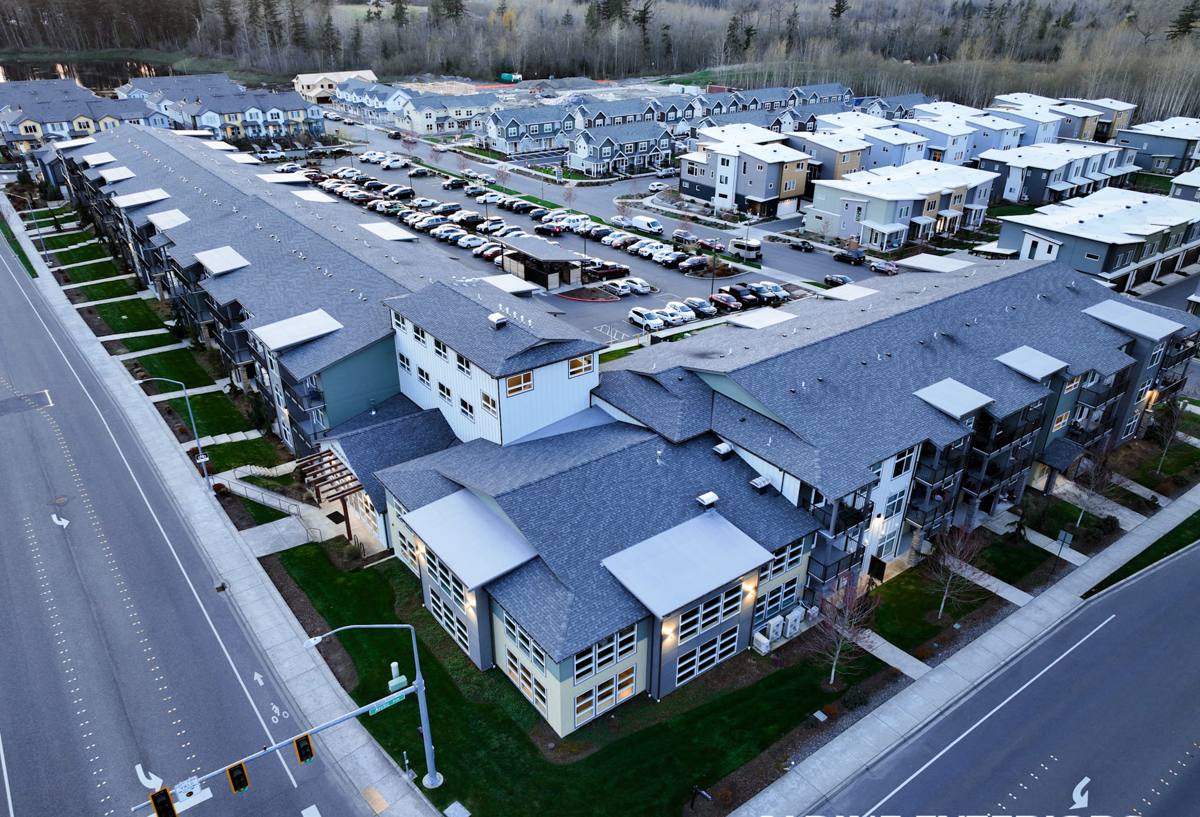
Marietta sits close to the water along the Ferndale side of Bellingham Bay, and that location changes what a home's exterior has to deal with day in and day out. Homes just a short distance inland in Whatcom County face a fairly typical Pacific Northwest exterior climate. Homes in Marietta face that same climate plus a steady dose of salt-laden air coming off the bay, more wind-driven rain because there's less tree cover to break it up near the shoreline, and shaded, damp pockets around foundations and north-facing walls that stay wet longer between dry spells. None of that is unusual or alarming — it's just the reality of building near the water in this part of the state. But it does mean siding that would hold up fine on a dry, inland lot can fail early on a Marietta home if it isn't the right material, installed the right way.
What Salt Air, Driving Rain, and a Long Moss Season Actually Do to Siding
Salt Air
Salt-laden moisture doesn't just sit on the surface of siding — it works into fastener heads, trim joints, and any spot where the factory finish has been compromised. Over years, that accelerates corrosion at exposed nail heads and staples, and it breaks down paint and lower-grade finishes faster than the same product would wear a few miles inland.
Driving Rain
Wind off the bay pushes rain sideways into wall assemblies instead of letting it run straight down and off. That means laps, butt joints, window and door trim, and any penetration through the siding take on more water pressure than a sheltered inland wall ever sees. If those details aren't built correctly the first time, water finds its way behind the siding, and by the time it shows up as a stain or soft spot, the sheathing underneath has often already been wet for a long time.
A Long Moss Season
Whatcom County's wet, mild winters and shaded lots already favor moss and algae growth on exterior surfaces. Add the extra humidity that clings near the water, and Marietta homes can see active moss and mildew growth for a good stretch of the year, especially on north- and west-facing walls that don't get much direct sun to dry out between storms. Wood-based siding products give moss and algae something to feed on and root into over time. Siding that doesn't support that growth in the first place is a much easier home to keep looking clean.
Why We Install Only James Hardie Fiber Cement Siding in Marietta
We don't install vinyl, LP SmartSide, primed spruce, cedar, or other fiber cement brands. That's not a marketing line — it's a standard we hold to because of what we've seen these climate factors do to those products over time, and what fiber cement from James Hardie does instead.
- It's non-combustible. Fiber cement doesn't burn, which matters in a region where wildfire smoke and defensible-space conversations have become more common even west of the Cascades.
- The factory-applied ColorPlus finish is baked on, not brushed on. It resists the fading and chalking that painted wood and lower-grade siding finishes show after a few Whatcom County winters, and it holds color better in direct salt-air exposure than field-applied paint.
- It's engineered for this specific climate. James Hardie makes climate-specific HZ product lines, and the versions used in western Washington are built for a wet, moderate climate rather than a dry or freeze-heavy one — the plank composition and moisture performance are matched to what a place like Marietta actually experiences.
- It doesn't feed moss and mildew the way wood fiber products can. That doesn't mean a Marietta home never sees moss on its siding — anything exposed to this climate can pick up surface growth — but the material itself isn't an organic food source the way engineered wood or untreated cedar can be.
- It carries a strong, transferable manufacturer warranty when installed to spec, which matters on a coastal-adjacent home where the siding is working harder than average.
We've explained on other pages why we walk away from vinyl, LP SmartSide, and other products for homeowners who ask about them directly. The short version for Marietta specifically: this location doesn't leave much margin for a siding material that struggles with moisture, UV, or organic growth. Hardie fiber cement gives us that margin.
What a Correct Siding Installation Involves
The material is only half the equation. A lot of siding failures we get called out to inspect in this area aren't a product problem — they're an installation problem. Correct installation in a wet, salt-exposed environment means paying close attention to details that don't matter as much in drier climates.
Weather-Resistive Barrier and Flashing
A continuous, properly lapped weather-resistive barrier behind the siding, with correctly integrated flashing at every window, door, and penetration, is what actually keeps wind-driven rain out of the wall assembly. The siding is the first line of defense, not the only one.
Proper Clearances
Siding installed too close to grade, a deck, a roofline, or a walkway traps moisture against the bottom edge of the boards and is one of the most common causes of early rot and finish failure we see on homes near the water. Manufacturer-specified clearances aren't a suggestion in this climate.
Fastening and Joint Treatment
Corrosion-resistant fasteners, correct nailing patterns, and properly treated butt joints and caulked seams matter more here than inland, because salt air accelerates the breakdown of anything undersized or improperly sealed.
Trim and Caulking Practices
Trim details around windows, corners, and roof intersections are where most water intrusion actually starts. Using the right sealants, rated for exterior and UV exposure, and applying them correctly, is a small line item that prevents a large repair down the road.
Comparing Siding Materials for a Marietta Climate
| Material | Salt Air / Moisture Resistance | Moss & Algae Resistance | Typical Maintenance |
|---|---|---|---|
| James Hardie fiber cement | Strong — non-combustible, moisture-engineered, factory finish | Doesn't feed organic growth; surface cleaning as needed | Occasional wash; no repainting for the life of the finish |
| Vinyl siding | Can warp or become brittle with temperature swings and UV over time | Surface growth still occurs; can trap moisture behind panels | Low, but panels can crack or fade and are hard to color-match if replaced |
| LP SmartSide (engineered wood) | Vulnerable at cut edges and joints if moisture gets in | Wood-based substrate can support growth if finish is compromised | Requires diligent caulking and finish upkeep |
| Cedar / primed spruce | Absorbs moisture, prone to swelling, cupping, and rot near the water | Natural wood substrate is a food source for moss and mildew | Regular repainting/staining and moisture monitoring |
This isn't a knock on the other products in general terms — vinyl and engineered wood have their place in drier or more sheltered locations. It's specifically about what holds up on a home exposed to salt air, driving rain, and a long moss season the way Marietta homes are.
Our Process, From Estimate to Finished Siding
- On-site inspection. We walk the exterior, check for existing moisture damage, note trouble spots (grade clearance, trim, roof intersections), and talk through what's driving the need for new siding.
- Honest assessment. If there's rot or sheathing damage behind the current siding, we tell you before work starts, not after the tear-off, whenever it's visible at inspection.
- Product and color selection. We walk through the applicable James Hardie lines and ColorPlus finish options for your home.
- Tear-off and prep. Old siding comes off, sheathing is inspected and repaired as needed, and the weather-resistive barrier and flashing are installed or corrected before a single new board goes up.
- Installation to manufacturer spec. Correct fastening, clearances, joint treatment, and trim detailing throughout.
- Final walk-through. We review the finished job with you and make sure warranty registration is handled correctly.
Signs Your Marietta Home May Need New Siding
- Soft spots, bubbling, or visible warping anywhere on the siding, especially near the bottom courses
- Paint that's peeling, chalking, or fading unevenly, particularly on walls facing the water or prevailing wind
- Persistent moss, algae, or dark staining that comes back quickly after cleaning
- Gaps opening up at seams, corners, or trim that weren't there a few years ago
- A musty smell or visible staining on interior walls that share an exterior wall with damaged siding
- Fastener heads showing rust or staining through the siding surface
- Siding that's original to a home over 20-25 years old with no known replacement history
Why Hiring a Crew That Already Works in Marietta Matters
A crew that's worked this specific area knows which walls typically take the worst of the wind-driven rain, where moisture tends to collect on lots close to the water, and how to sequence a tear-off so a home isn't left exposed during an unpredictable stretch of weather. They also know the permitting process with the applicable local jurisdiction and don't need to relearn it on your project. That local familiarity translates into fewer surprises during the job and a better read on what your specific home actually needs, rather than a generic approach that ignores what makes this stretch of Whatcom County different from an inland neighborhood.
After Installation: Keeping Marietta Siding Performing
Correctly installed James Hardie siding is low-maintenance, not no-maintenance. A periodic gentle wash removes surface salt residue and organic buildup before it has a chance to take hold, and it's worth a visual check after major storms for any new gaps at trim or seams. Keeping gutters clear and vegetation trimmed back from the walls also helps reduce the standing moisture that drives moss growth in shaded areas. Beyond that, a correctly installed system with a factory finish is built to go a long time without repainting or major upkeep — which is a meaningful difference from wood-based options in a climate like this one.
If you're weighing siding options for a home in Marietta or elsewhere around Ferndale, we're happy to take a look and give you a straightforward read on condition and options — no pressure, no sales script. Reach out for a free estimate using the form below.