 Ferndale Siding
 Metal Roofing Built for Kendall's Climate
Kendall sits in a stretch of Whatcom County that puts real, sustained weather pressure on a roof year after year. Salt-tinged marine air works on exposed metal and fasteners over time. Wind-driven rain doesn't just fall straight down, it gets pushed sideways and forced upward under laps and edges that a lazier installation never accounted for. And a long, damp moss season settles into shaded, north-facing roof planes and stays there for months at a stretch. Metal roofing can handle all three of those pressures better than almost any other roofing material available, but only when the system is specified and installed correctly for this specific climate rather than treated as an interchangeable upgrade.
This page covers metal roofing specifically for a Kendall home — the panel types and finishes that make sense here, the installation details that determine whether a metal roof lasts thirty years or develops problems within five, and how our process works from first inspection to final walkthrough.
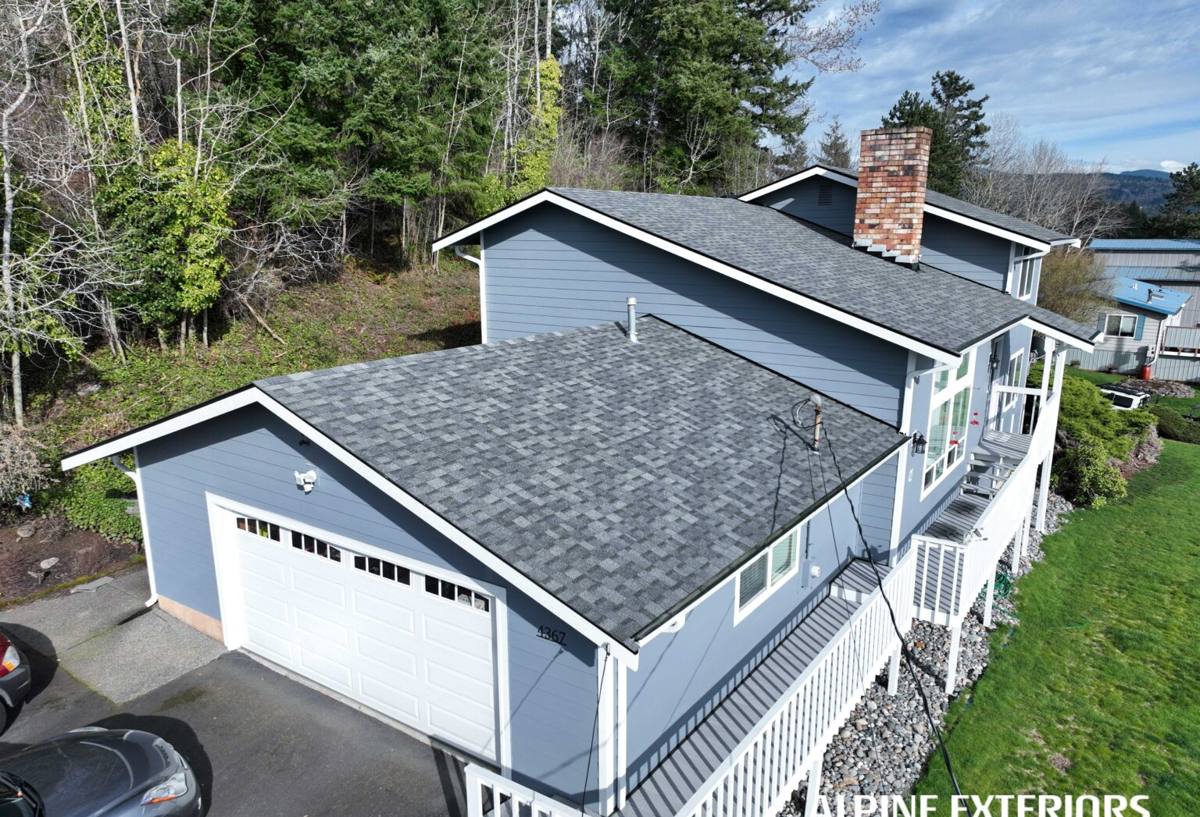
Why Metal Makes Sense for a Kendall Roof
Metal roofing has earned its reputation in wet Pacific Northwest climates for a simple reason: it sheds water fast and doesn't give moss and algae the textured, moisture-holding surface they need to take hold the way asphalt shingles do. A correctly installed metal roof also stands up to wind-driven rain better than most alternatives, since a well-lapped, properly fastened panel system doesn't rely on granule adhesion or shingle tab seal to stay watertight. For a Kendall property dealing with a long moss season and consistent marine moisture, that combination is a real, practical advantage rather than a marketing point.
None of that means every metal roof performs the same way. The material itself is only part of the equation. Panel gauge, coating quality, fastener selection, and how flashing details are executed at valleys, penetrations, and wall transitions are what actually separate a metal roof that goes thirty-plus years without a problem from one that develops leaks, streaking, or fastener failure well ahead of schedule. A metal roof is also less forgiving of installation shortcuts than shingles are, since a missed detail doesn't get masked by an overlapping course the way it sometimes does on a shingle roof.
What Local Weather Actually Demands
- Corrosion-resistant fasteners and flashing: Salt-tinged air accelerates corrosion on undersized or mismatched hardware, which is one of the most common points of failure on a metal roof installed without this climate in mind.
- Compatible metal pairing: Mixing dissimilar metals in fasteners, flashing, and panels sets up galvanic corrosion over time, especially in a moisture-heavy environment like this one.
- Proper panel overlap and sealant at laps: Wind-driven rain gets forced under panel edges and laps that aren't sealed and lapped correctly for the direction prevailing weather actually comes from.
- Adequate roof and attic ventilation: Trapped moisture under a metal roof deck can lead to condensation issues on the underside of panels, which is a different failure mode than shingle roofs but just as real.
Panel Types and What Fits a Kendall Home
Not every metal roofing system is built the same way, and the right choice depends on the home's roof pitch, budget, and how long you plan to own the property. We walk through these tradeoffs honestly rather than defaulting to whatever's easiest to install.
| Panel Type | Typical Lifespan | Fit for Kendall Conditions |
|---|---|---|
| Exposed-Fastener Panels | 25-35 years | Lower upfront cost, but fasteners penetrate the panel face and need periodic inspection and eventual re-seating in a wet, salt-influenced climate |
| Standing Seam Panels | 40-60+ years | Concealed fastener system with raised interlocking seams; the strongest performer against wind-driven rain and the most common recommendation for this climate |
| Metal Shingles/Shakes | 30-50 years | Traditional shingle or shake appearance with metal's durability; a good fit for homeowners who want the look without the moss and fastener issues of real wood shake |
Standing seam is generally the strongest fit for a Kendall roof because its concealed fastener system removes the recurring maintenance point that exposed-fastener panels carry, and its raised seams handle wind-driven rain more decisively than any lapped or fastener-penetrated system. Exposed-fastener panels still have a place on outbuildings, shops, and budget-conscious projects, but we're upfront about the maintenance tradeoff that comes with the lower price.
What a Correct Metal Roof Install Involves
A metal roof installed correctly is a system, not just a set of panels laid down and screwed in. Each layer underneath the visible panel matters as much as the panel itself.
Deck Inspection and Underlayment
Before any panel goes down, the roof deck gets inspected for hidden rot or soft spots, particularly if this is a re-roof over an older asphalt shingle roof. A high-temperature synthetic or self-adhered underlayment goes down next, since metal roofing runs hotter in direct sun than shingles and standard felt underlayment can degrade faster underneath it than it's rated for.
Panel Selection and Gauge
Panel gauge (thickness) affects both durability and how the roof handles foot traffic and hail or debris impact. Thinner, cheaper-gauge panels can oil-can, or develop a visible wavy distortion, more readily than a properly specified gauge for the panel width and roof pitch involved.
Fastening and Clip Systems
On standing seam roofs, concealed clips allow the panels to expand and contract with temperature changes without tearing at fastener points, which is critical for long-term performance. Clip spacing and fastener corrosion resistance both need to match the coastal and marine-influenced conditions this area sees, not a generic inland spec.
Flashing at Valleys, Penetrations, and Wall Transitions
Just as with any roofing material, most leaks on a metal roof start at flashing details rather than the open panel field. Valleys, chimney and vent penetrations, and wall-to-roof transitions all need flashing that's properly formed, lapped in the correct order, and integrated with the underlayment beneath it.
Sealants and Closures
Ridge caps, eave closures, and panel end laps rely on the correct foam closure strips and sealants to stay watertight and to keep pests out from underneath the panels. Skipping or under-specifying these small components is a common shortcut that shows up as a leak or an animal intrusion problem years later.
Coatings and Corrosion Resistance
The finish on a metal roof isn't just cosmetic. It's the primary line of defense against the corrosion that salt-tinged marine air accelerates over time. Galvalume and properly applied PVDF (Kynar-type) paint finishes hold up well against coastal-influenced moisture and UV exposure, while lower-grade or under-coated products can chalk, fade, or corrode noticeably faster in this environment. We only specify coating systems with a track record in wet, marine-influenced Pacific Northwest climates, not generic products rated for a drier region.
Avoiding Galvanic Corrosion
Galvanic corrosion happens when two dissimilar metals are in direct contact in the presence of moisture, and it's a real and preventable problem on metal roofs. Using fasteners, flashing, and panel systems that are metallurgically compatible, and isolating dissimilar metals where contact is unavoidable, prevents the kind of premature pitting and corrosion that shows up fastest in a consistently damp climate like Kendall's.
Cost Factors Worth Understanding
Metal roofing bids can vary substantially for what looks like the same scope on paper, and the difference usually comes down to real distinctions in materials and labor rather than one contractor simply marking up the same job.
| Factor | What It Affects |
|---|---|
| Panel system (exposed-fastener vs. standing seam) | Upfront cost, long-term maintenance needs, and wind-driven rain performance |
| Panel gauge | Resistance to oil-canning, impact damage, and overall roof lifespan |
| Coating type | Corrosion and fade resistance in salt-influenced, sun-exposed conditions |
| Underlayment grade | How well the system resists wind-driven rain intrusion and handles heat under the panels |
| Flashing and closure detail | How thoroughly valleys, penetrations, and transitions are addressed |
| Roof pitch, complexity, and access | Labor time, staging, and safety requirements |
A written estimate that itemizes panel system, gauge, coating, and flashing scope tells you far more than a single lump-sum number. It's worth asking any contractor bidding a metal roof to walk through exactly what's included, since "metal roofing" alone doesn't describe a specific product or installation standard.
How Our Process Works
Metal roofing is a bigger investment than a shingle re-roof, and we keep the process transparent at every stage so you know exactly what's happening and why.
- In-person inspection: We walk the roof and attic in person, evaluate the existing deck and structure, and discuss which panel system actually fits your home and goals.
- Written estimate: You get a clear, itemized bid covering panel system, gauge, coating, underlayment, flashing, ventilation, and cleanup, not a single vague number.
- Scheduling around weather: We build reasonable flexibility into the timeline, since wet-season delays are a normal part of working in this region rather than an excuse after the fact.
- Deck prep and underlayment: Any deck damage found is addressed before high-temperature underlayment goes down across the full roof.
- Panel installation: Panels, clips, and fasteners go on to manufacturer specification, with extra care at seams, laps, and expansion allowances.
- Flashing, closures, and trim: Valleys, penetrations, wall transitions, and ridge details are finished with the correct closures and sealants, not caulked over as an afterthought.
- Final walkthrough and cleanup: We review the completed roof with you and do a full site sweep before calling the job done.
Why Hiring a Crew That Already Works in Kendall Matters
A crew that regularly installs metal roofing in and around Kendall has already seen how salt-tinged air corrodes underspecified fasteners and coatings, how wind-driven rain finds its way through improperly lapped panel seams, and which roof orientations hold moisture and moss longest through the wet season. That's practical knowledge that shows up in small decisions throughout a job — decisions a crew without ongoing experience in this specific climate might not think to make at all, from fastener selection to how tightly ridge caps get sealed.
It also matters for accountability after the work is done. A workmanship warranty is only as good as the company standing behind it, and a contractor with an established, ongoing presence in the area is one you can actually reach years later if a question comes up, not a crew that moved on to another region after the install.
A Practical Checklist Before You Choose a Metal Roofing Contractor
- Do they recommend a specific panel system and gauge for your roof, or just "metal roofing" in general terms?
- Does the estimate specify coating type and underlayment, not just panel color?
- Is flashing work at valleys, penetrations, and wall transitions explicitly included in the bid?
- Do they explain how they prevent galvanic corrosion between dissimilar metals?
- Do they carry current WA contractor licensing, liability insurance, and workers' compensation?
- Can they point to recent, real local metal roofing work in or near Kendall?
- Does the bid separate material warranty coverage from their own workmanship warranty?
Signs Your Kendall Roof Might Be a Good Fit for Metal
Not every re-roof needs to switch materials, but certain patterns point toward metal being worth serious consideration.
- Repeated moss and algae streaking on shaded or north-facing shingle roof planes despite regular cleaning
- A shingle roof reaching the end of its service life and needing full replacement anyway
- A steep or complex roofline where shedding water quickly matters more than average
- A long-term ownership plan where the higher upfront cost pays off over decades of reduced maintenance
- Wind exposure that has caused repeated shingle lifting or loss in past storms
If several of these sound familiar, it's worth having an honest conversation about whether metal roofing makes sense for your specific home and budget, rather than assuming it's automatically the right call for every property.
If you'd like an honest, no-pressure look at your Kendall home's roof and a written estimate to compare against anything else you've received, we're glad to come take a look. Use the form below to request a free estimate.