 Ferndale Siding
 Building New in Semiahmoo Means Building for the Water
Semiahmoo sits right on the edge of the Salish Sea, and any new home going up out here is going to spend its entire life a few hundred yards from salt water and open exposure. That's a different set of conditions than a new build a few miles inland in Ferndale proper. Wind-driven rain comes off the water at an angle, salt air settles into every exposed metal surface, and the shaded, damp stretches of the year — which in Whatcom County run long — keep moss and algae active on anything that holds moisture. New-construction windows are one of the few building components that have to stand up to all three of those things at once, every single day, for decades.
Getting new-construction windows right isn't just about picking a good window. It's about how that window gets integrated into the rough opening, the weather-resistive barrier, and the siding assembly before the house is ever weathertight. Get that sequence wrong on a coastal lot like Semiahmoo, and you won't see the problem for a year or two — by then it's hidden behind finished walls.
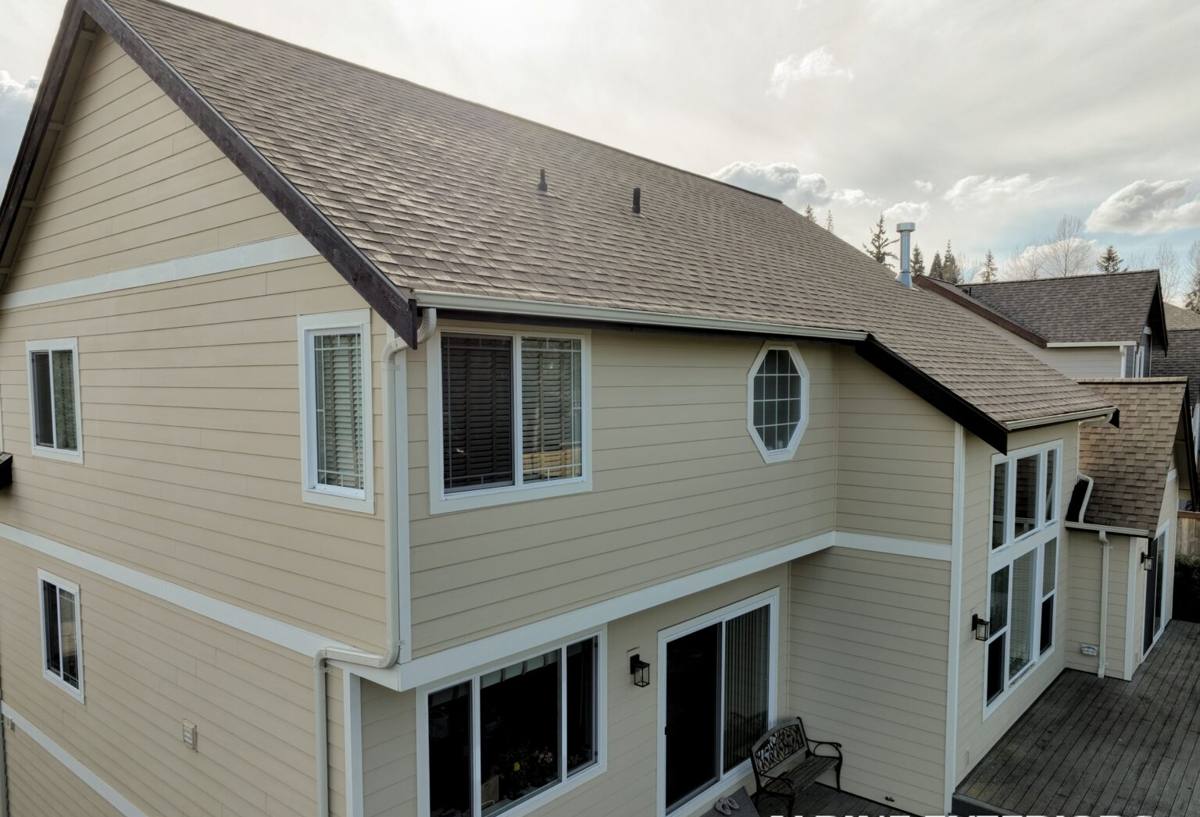
New-Construction vs. Replacement: Why the Method Changes Everything
A lot of homeowners assume a window is a window. New-construction windows are a distinct category, installed with a nailing fin directly into the rough framing before the weather-resistive barrier (WRB) and siding go on. That's different from a retrofit or pocket replacement window, which gets set into an existing opening after the house is already clad.
New construction gives us the advantage of building the water management system in the right order, from the inside out — sill pan first, then window, then flashing tape integrated with the WRB, then siding. On a site like Semiahmoo, where driving rain hits the envelope harder than it does further inland, that sequencing is what actually keeps water out. There's no shortcut version of this that holds up long-term near the water.
What "Correct" Actually Means on This Job
- A sloped, sealed sill pan under every rough opening — not just caulk and hope
- Window set square, plumb, and shimmed correctly before fastening
- Nailing fin fastened per manufacturer spec, not just "enough nails to hold it"
- Flashing tape lapped shingle-style (top piece over the side pieces, side pieces over the sill pan) so water always sheds outward and down
- Full integration with the house wrap or WRB — no gaps where the window flashing meets the field membrane
- Interior and exterior sealant joints that allow drainage rather than trapping moisture inside the wall cavity
- Head flashing or drip cap detail on any window exposed to direct wind-driven rain
Salt Air, Driving Rain, and Moss: What They Do to a Window Over Time
Salt Air
Salt-laden air corrodes exposed metal — hinges, cranks, screws, and cladding fasteners — faster than it does further inland. This isn't dramatic; it's slow, and it shows up as pitting, stuck hardware, or streaking around the frame years before the glass itself is a problem. On Semiahmoo builds, hardware and fastener choice matters more than it would on a Ferndale lot set back from the water.
Driving Rain
Wind off the water pushes rain sideways and upward into laps and joints that would stay dry on a calmer inland site. Any flashing detail that relies on gravity alone to shed water is a liability here. This is why sill pan drainage and proper flashing lap order aren't optional details — they're the actual defense.
Moss Season
Whatcom County's wet, low-light stretch of the year keeps north- and shade-facing surfaces damp for long periods. Wood sills, trim, and any horizontal surface near a window can hold moisture and grow moss or algae if it isn't sloped to shed water and finished with a material that dries out between rain events. This is a maintenance and material decision as much as an installation one.
Material and Hardware Choices That Make Sense Near the Water
We steer new-construction window specs on coastal jobs toward materials and finishes that shrug off salt air and repeated wet-dry cycles, rather than materials that need active upkeep to avoid corrosion or rot. There's no single "right" window brand — the trade-offs below are about material class, not marketing.
| Material | Salt Air Behavior | Maintenance Near Water | Notes |
|---|---|---|---|
| Vinyl | Resistant — no corrosion, UV-stable finish holds up | Low — occasional rinse | Cost-effective; good baseline choice for most Semiahmoo builds |
| Fiberglass | Very resistant — dimensionally stable, doesn't pit or corrode | Low | Higher upfront cost; strong long-term option on exposed elevations |
| Aluminum-clad wood | Cladding resists weather, but hardware and any exposed wood need attention | Moderate — exterior finish should be inspected periodically | Interior wood look with exterior protection; watch sealant joints |
| Bare aluminum frame | Prone to pitting and corrosion in salt air over time | Higher — needs monitoring and occasional refinishing | We generally don't spec this on direct-exposure coastal elevations |
Hardware finish matters as much as frame material. On Semiahmoo builds we favor corrosion-resistant hardware finishes and stainless or coated fasteners at the flashing and cladding attachment points — the small stuff is what fails first in salt air, not the glass unit.
Our Process on Semiahmoo New-Builds
Whether we're working directly for a homeowner or alongside a builder's crew, the sequence stays the same:
- Site and exposure review — we look at which elevations take direct wind and rain off the water versus which are more sheltered, and adjust flashing detail and material spec accordingly.
- Rough opening prep — openings checked square and to size before any window shows up on site, so nothing gets forced or shimmed excessively.
- Sill pan and flashing install — sloped sill pan, then window, then flashing tape integrated with the WRB in the correct shingle-lap order.
- Window set and fastening — set to level and plumb, fastened per manufacturer spec, with shim placement that won't distort the frame or bind the sash.
- Siding integration — because we install siding as well as windows, the transition between window trim and siding is planned as one continuous water-management system rather than two trades working past each other.
- Final check — operation, seal, and flashing lap checked before we call the opening complete.
That last point is worth underlining: a lot of window callbacks on new construction come from a disconnect between the window installer and the siding crew, where each assumes the other handled the transition detail. When one crew does both, that gap goes away.
Common Mistakes We See on Coastal New Builds
- Caulk used as the primary water barrier instead of a properly lapped flashing system
- Sill pans skipped or improvised with tape alone, with no slope to drain
- Nailing fins fastened inconsistently, leaving gaps where wind-driven rain can work its way in
- Standard hardware finishes specified without accounting for salt air exposure
- Wood trim or sills installed flat instead of sloped, inviting moss and standing moisture
- Window and siding trades not coordinating the flashing handoff, leaving a gap in the water management plan
What Drives Cost on a New-Construction Window Job
| Factor | Why It Matters in Semiahmoo |
|---|---|
| Frame material | Vinyl is the lower-cost baseline; fiberglass and clad-wood cost more but handle salt air and moisture cycling with less upkeep |
| Number and size of openings | Larger view windows facing the water need more careful flashing and structural consideration than smaller, sheltered openings |
| Exposure per elevation | Direct water-facing walls may warrant upgraded flashing detail or hardware versus more sheltered sides of the house |
| Coordination with siding | Having one crew handle both trades can reduce redundant trim work and callback risk |
| Site access and timing | New-build schedules move fast; window install has to land in the right window between framing and WRB/siding work |
Why It Matters to Hire a Crew That Already Works Semiahmoo
Whatcom County covers a lot of ground, from inland Ferndale neighborhoods to the exposed shoreline around Semiahmoo, and the right window spec genuinely changes based on where the lot sits relative to the water. A crew that's done this work up and down the coast here already knows which elevations need the extra flashing detail, which hardware finishes hold up, and how to sequence the window install with siding so there's no seam in the water management plan. That's not something you get from a generic installation — it comes from having actually built in this specific exposure before.
If you're planning a new build in Semiahmoo or elsewhere around Ferndale, we're happy to walk the plans with you, talk through window and siding sequencing, and give you a straightforward, no-pressure estimate — just fill out the form below.