 Ferndale Siding
 Why Bellingham Roofs Wear Differently
Bellingham sits close enough to the water and the foothills that its homes take a different kind of beating than roofs inland. Salt-laden air off the bay accelerates corrosion on fasteners, flashing, and metal components. Driving rain, often pushed sideways by wind off the Strait, finds every weak seam and lap. And Whatcom County's long, wet, shaded winters give moss and algae months at a time to take hold on north-facing slopes and anywhere tree cover blocks the sun. None of this means a roof here is doomed to fail early — it means the installation has to account for those conditions from the start, not patch around them later.
A roof designed for a dry inland climate, installed the same way in Bellingham, will typically show problems years sooner: granule loss, soft decking at the eaves, moss lifting shingle edges, and corroded nails bleeding rust streaks down the field. Getting the details right the first time costs little more up front and saves a lot of grief later.
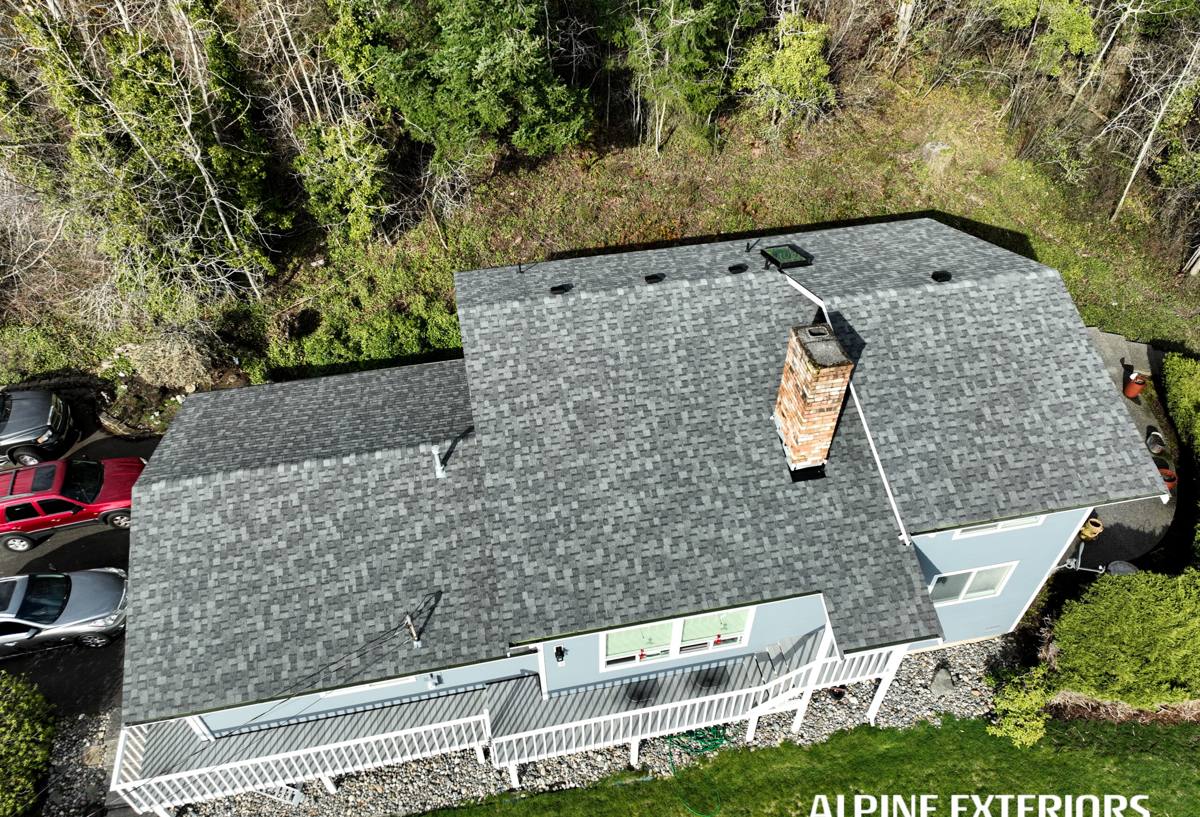
Signs Your Bellingham Home Needs a New Roof
Most roofs give warning before they fail outright. In this climate, watch for these specific indicators:
- Moss or algae streaking that keeps coming back within a season or two of cleaning
- Granules collecting in gutters or at downspout outlets
- Curling, cupping, or cracked shingles, especially on south and west-facing slopes
- Soft or spongy spots underfoot, particularly near eaves and valleys
- Daylight visible through the roof deck from the attic
- Rust staining around nail heads, flashing, or metal vents
- Interior ceiling stains or musty attic odor after heavy rain
- A roof approaching or past 20-25 years old on standard asphalt shingle
One or two of these on their own might mean a repair. Several together, or a roof already at the end of its expected service life, usually means it's time to plan a full replacement rather than keep chasing leaks.
What a Correct Roof Installation Involves
Tear-Off and Deck Inspection
A proper new roof starts with a full tear-off down to the deck, not a layover. That's the only way to actually see the plywood or OSB underneath. In this climate, deck damage from long-term moisture intrusion is common enough that it needs to be caught and replaced before anything new goes down — covering over soft or rotted decking just guarantees a shorter lifespan for the new roof.
Underlayment and Water Protection
Underlayment matters more here than in drier regions. Self-adhered ice-and-water membrane belongs at eaves, valleys, and around every penetration — the places where wind-driven rain is most likely to force its way under the shingle field. A synthetic underlayment across the rest of the deck adds a second line of defense and holds up better than old-style felt if a storm delays the shingle install.
Flashing Details
Flashing is where most leaks actually start, not in the field of the roof. Step flashing at wall intersections, proper counter-flashing at chimneys, and correctly lapped valley metal all need to be installed in sequence with the shingles, not caulked on afterward as a shortcut. Given the corrosive effect of salt air on lower-grade metals, we use flashing and fasteners rated to hold up to coastal exposure rather than the cheapest option available.
Ventilation
Balanced intake and exhaust ventilation keeps the attic dry and temperature-stable, which matters for two reasons here: it prevents condensation that can rot decking from underneath, and it reduces the moisture buildup that helps moss and algae get established on the shingles above.
Roofing Material Options for Whatcom County Homes
There's no single "right" material for every Bellingham home — it depends on budget, roof pitch, tree cover, and how long you plan to stay in the house. Here's how the common options compare for this specific climate:
| Material | Moisture & Moss Resistance | Typical Lifespan | Relative Cost |
|---|---|---|---|
| Architectural asphalt shingle | Good with algae-resistant granules; still needs periodic moss removal in shaded areas | 25-30 years | $ |
| Standard 3-tab shingle | Fair; more prone to moss and granule loss over time | 15-20 years | $ |
| Standing seam metal | Excellent; sheds moisture and resists moss almost entirely on adequately pitched roofs | 40-50+ years | $$$ |
| Synthetic/composite shingle | Very good; engineered to resist moisture absorption and algae staining | 30-40 years | $$ |
| Cedar shake | Requires the most maintenance in this climate; moss and moisture retention are ongoing concerns without regular upkeep | 20-30 years with maintenance | $$-$$$ |
Architectural asphalt with algae-resistant granules is the most common choice we install in Bellingham — it balances cost, appearance, and performance well for most homes. Metal roofing is worth serious consideration on homes with heavy shade or low-slope sections where moss and standing moisture are persistent problems.
Our Installation Process
- On-site assessment. We inspect the existing roof, attic ventilation, and deck condition, and talk through material options based on your home's exposure and budget.
- Written estimate. You get a clear, itemized quote before any work begins — no surprise add-ons once we're on the roof.
- Scheduling around weather. Whatcom County's rain patterns mean timing matters. We schedule tear-off in windows that minimize the time your home is exposed.
- Tear-off and deck repair. Old roofing comes off completely; any damaged decking is identified and replaced before moving forward.
- Underlayment, flashing, and material installation. Installed in the correct sequence, with attention to every valley, penetration, and edge detail.
- Cleanup and final walkthrough. Job site is cleared of debris and nails, and we walk the finished roof with you.
Moss, Algae, and Salt Air: Long-Term Roof Care
Managing Moss Before It Spreads
Moss on a roof isn't just cosmetic — as it grows, it lifts shingle edges and holds moisture against the surface, which shortens the shingle's life and can eventually work its way under the roofing. Zinc or copper strips installed near the ridge during a new roof install help suppress regrowth over time by letting rain carry trace metal ions down the roof face.
Salt Air and Metal Components
Anywhere near the water, standard fasteners and flashing corrode faster than the shingles around them. Specifying corrosion-resistant fasteners and flashing at installation time is far cheaper than dealing with rust-stained streaks and failed flashing seams a decade in.
Simple Maintenance That Extends Roof Life
An annual gutter cleaning and a visual check for moss buildup, especially on shaded north-facing slopes, catches most problems while they're still cheap to fix. A roof installed correctly for this climate should need very little beyond that.
Why Local Experience in Bellingham Matters
A crew that already works throughout Whatcom County knows which details actually matter here versus what a generic installation guide assumes. That means understanding how the Nooksack valley's wet winters affect deck moisture, sizing ventilation for homes under heavy tree cover common around Bellingham, and knowing which flashing and fastener grades hold up against the coastal air rather than learning it after a roof fails early. It also means being available for warranty follow-up and honest answers if a question comes up after the job is done — not a crew that installed one roof in the area and moved on.
What Affects the Cost of a New Roof
Every roof is a little different, but the main cost drivers on a Bellingham home are usually the same:
- Total roof square footage and number of stories
- Roof pitch — steeper roofs take longer and require more safety setup
- Number of layers being removed during tear-off
- Deck condition and how much replacement plywood or OSB is needed
- Complexity: valleys, dormers, chimneys, and skylights all add labor and flashing work
- Material choice, from standard asphalt shingle up through metal or synthetic products
- Accessibility of the site for material delivery and staging
We walk through these factors on-site so the estimate reflects your actual roof, not a generic per-square average that doesn't hold up once the work starts.
Warranty and Protecting Your Investment
A new roof is a long-term investment, and the paperwork behind it matters. Manufacturer warranties typically cover material defects, while workmanship warranties cover the installation itself — and the two are not the same thing. We stand behind our installation work directly, and we make sure you understand exactly what's covered, for how long, and what routine maintenance (like keeping gutters and valleys clear) is expected of you to keep that coverage valid.
If you're weighing whether it's time to replace your roof, or you just want an honest read on what shape it's in, we're happy to take a look. Fill out the form below for a free, no-pressure estimate on new roof installation for your Bellingham home.