 Ferndale Siding
 Point Roberts Puts Siding Through More Than Most Whatcom County Homes See
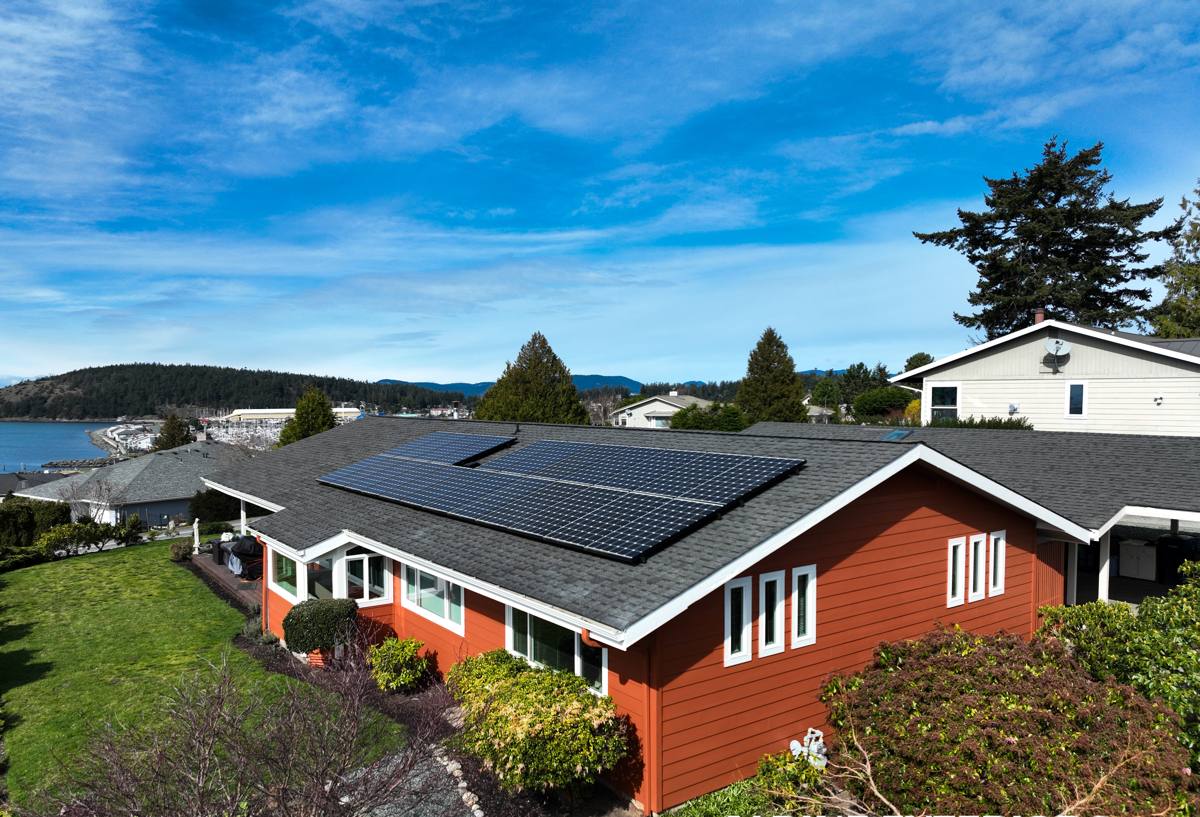
Point Roberts sits on its own peninsula, surrounded by water on three sides, which means almost every home there gets some combination of salt-laden air, wind-driven rain, and long stretches of damp, shaded weather that never quite dries out. That's a harder environment than most of Whatcom County, and it's a different environment than a home fifteen minutes inland. If you're planning a siding replacement out here, the product and the installation both need to answer for that exposure, not just look good on install day.
This page is about one job in one place: replacing siding on a home in Point Roberts. Not a general siding overview, not a sales pitch for a product line — a straight look at what this specific coastal setting does to exterior walls, what a correct replacement actually involves here, and why the crew doing the work should already know this peninsula before they show up with a truck.
What Salt Air, Driving Rain, and Moss Actually Do to Siding
Salt Air
Airborne salt doesn't just sit on the surface — it works into seams, fasteners, and any spot where a finish has started to fail. On untreated or lower-grade materials, that accelerates corrosion of trim fasteners and can pit or dull factory finishes faster than the same product would wear a few miles inland. Homes with a direct or partial water view take the brunt of it, but salt air travels; even homes set back from the shoreline see some of this effect over the life of a siding system.
Driving Rain
Point Roberts gets weather off the water, and that means rain that doesn't fall straight down — it gets pushed sideways into walls, especially on west- and south-facing elevations. Siding that relies on paint film alone, or that has marginal lap coverage and butt joints, is the first to show water intrusion at those exposures. The water-resistive barrier behind the siding and the flashing details around every penetration matter as much as the siding itself when the rain comes in at an angle.
Moss and Prolonged Dampness
The moss season here is long — shaded north walls, areas under tree cover, and anywhere air doesn't circulate well can stay damp for months at a stretch. Moss and algae growth on siding isn't just cosmetic. Sustained moisture against a wall surface is what eventually finds its way into seams, fastener holes, and any spot where caulking has started to let go. A siding replacement is a chance to fix the ventilation and drainage details that let moss take hold in the first place, not just paint over the symptom.
What a Correct Replacement Looks Like Here
A siding replacement in this kind of climate is really several jobs stacked together. Skipping any one of them is how a wall that looks fine for two or three years starts failing at year five or six.
- Full tear-off and substrate inspection — old siding comes off so sheathing, framing, and any hidden rot from years of moisture intrusion can actually be seen and addressed, not covered over.
- Water-resistive barrier, installed correctly — lapped and taped so water sheds down and out, not one that just gets stapled up and covered.
- Flashing at every penetration — windows, doors, hose bibs, light fixtures, deck ledgers. These are the spots where driving rain finds a way in if flashing is missing or installed backward.
- Rainscreen or drainage gap where appropriate — a small air gap behind the siding lets bulk water drain and lets the wall assembly dry, which matters a lot more here than in a drier climate.
- Correct fastening and clearances — proper nailing pattern, and siding held up off grade, decks, and roof lines per the manufacturer's installation instructions so water doesn't wick up from below.
- A finish built for the exposure — a factory-applied finish that isn't relying on site-applied paint to do all the work of resisting salt air and UV.
Any one of these done wrong shortens the life of the whole system, no matter how good the siding itself is.
Why We Only Install James Hardie Fiber Cement
We get asked why we don't offer vinyl, LP SmartSide, or other fiber cement brands as options. It's not that those products have no place anywhere — it's that after years of doing exterior work in this exact coastal environment, we standardized on one product line because it holds up to what Point Roberts throws at a wall, and we'd rather stand behind one system we trust completely than offer a menu of products with different long-term outcomes.
Vinyl
Vinyl is inexpensive and low-maintenance in mild conditions, but it expands and contracts significantly with temperature swings, and its seams and J-channels are places where wind-driven rain can work its way behind the panel over time. In a driving-rain environment, that's a real trade-off, not a hypothetical one.
LP SmartSide and Other Engineered Wood
Engineered wood siding performs well in a lot of climates, but it's still a wood-based product, and wood-based products are more sensitive to sustained moisture exposure — exactly the condition Point Roberts' shaded, damp microclimates create. Edge sealing and caulking maintenance become non-negotiable, and falling behind on them in a place with this much moss and dampness carries more risk than it would somewhere drier.
Why Hardie
James Hardie fiber cement is non-combustible, dimensionally stable across temperature and moisture swings, and comes with a factory-applied ColorPlus finish that's built to resist fading and hold up to coastal UV and salt exposure better than a site-painted finish. Hardie also engineers specific product lines for different climate zones — including an HZ10 formulation suited to areas with more moisture exposure — which is relevant for a peninsula community like this one. Backed by a strong transferable warranty and installed to spec, it's the product we're comfortable putting our name behind on every job out here.
Material Comparison for This Climate
| Factor | Vinyl | Engineered Wood (LP-type) | James Hardie Fiber Cement |
|---|---|---|---|
| Salt air resistance | Moderate; seams vulnerable over time | Moderate; edges need consistent sealing | Strong; factory finish engineered for coastal exposure |
| Driving rain performance | Depends heavily on seam and flashing quality | Sensitive to sustained moisture at joints | Strong when installed with proper drainage details |
| Moss/algae resistance | Grows on surface; doesn't affect structure but looks bad fast | Moisture retention can lead to substrate concerns | Non-organic material; surface can still need cleaning but no structural risk |
| Fire resistance | Melts/deforms under heat | Combustible | Non-combustible |
| Finish longevity | Can fade/chalk over time | Relies on paint maintenance | Factory-baked finish, longer fade resistance |
Our Process for a Point Roberts Siding Replacement
- On-site assessment. We look at exposure by elevation — which walls take the worst of the wind and rain, where moss has already taken hold, and where the current siding is showing early failure.
- Substrate check during tear-off. We don't quote blind; if there's hidden moisture damage behind the existing siding, we address it before anything new goes up.
- Drainage and barrier detailing. Water-resistive barrier, flashing, and rainscreen gap sized to the home's actual exposure, not a one-size-fits-all approach.
- Hardie installation to manufacturer spec. Correct fastener type and pattern, proper clearances from grade and roof lines, and joint treatment that accounts for this area's rain patterns.
- Final walkthrough. We go over caulking points, clearances, and anything the homeowner should keep an eye on given the local climate.
What Drives Cost on a Point Roberts Job
Every home is different, but the same handful of factors move the price on most siding replacements out here:
| Cost Factor | Why It Matters Here |
|---|---|
| Extent of substrate repair | Homes with long-term moisture exposure sometimes need sheathing or framing repair before new siding goes on |
| Home size and elevation count | More wall area and more corners/penetrations means more flashing detail work |
| Existing siding removal | Full tear-off versus siding over old material — we recommend tear-off for accurate substrate inspection |
| Trim and accessory scope | Fascia, soffits, and trim replacement alongside siding affects total scope |
| Product line and profile | Hardie panel and plank styles and factory colors vary in price |
| Access and site logistics | Waterfront lots, limited staging area, or seasonal weather windows can affect scheduling and setup |
Why Local Experience in Point Roberts Actually Matters
Point Roberts is a bit of a logistical outlier — it's part of Whatcom County, but getting there means crossing an international border, which affects how crews schedule materials, staging, and site visits compared to jobs elsewhere in the county. A crew that already works this peninsula regularly has that logistics figured out, knows how to plan around border crossing times, and isn't learning the area's wind and rain exposure patterns for the first time on your house. That experience shows up in fewer surprises mid-project and a finished job that's detailed for the conditions your specific lot actually sees.
Keeping New Siding Performing Long-Term
A correct installation does most of the work, but a little homeowner attention afterward extends the life of any siding system in this climate:
- Rinse siding periodically, especially shaded or north-facing walls where moss and algae are more likely to build up.
- Keep vegetation and tree limbs trimmed back from walls to improve air circulation and sun exposure.
- Check and refresh caulking at trim and penetration points every year or two, since exposed sealant is the first thing sun and salt air degrade.
- Keep gutters clear so roof runoff isn't dumping extra water onto siding below.
- Watch for any early staining or streaking near grade, which can signal a drainage or flashing issue worth catching early.
If you're weighing a siding replacement for a home in Point Roberts, we're happy to take a look, walk the exposure on your specific lot, and put together a straightforward, no-pressure estimate. There's a form below to get that started.