 Ferndale Siding
 Windows in Point Roberts Face a Tougher Job Than Most
Point Roberts sits on its own peninsula at the tip of Whatcom County, wrapped on three sides by Boundary Bay and the Strait of Georgia. That location is part of what makes it a special place to live, but it also means the windows on your home are dealing with conditions that a lot of standard installation work simply isn't built for. Salt-laden air moves off the water and settles on siding, trim, and glazing. Driving rain comes in sideways during winter storms instead of falling straight down. And the long damp season that Whatcom County is known for gives moss, algae, and mildew months at a time to take hold on anything that stays wet.
None of that is a reason to panic about your windows. It is a reason to make sure they were installed correctly in the first place, with materials and flashing details chosen for a marine environment rather than a general-purpose install. That's the gap we see most often when we're called out to look at leaking, fogged, or swollen windows in this area — the window itself is usually fine. The installation around it is what failed.
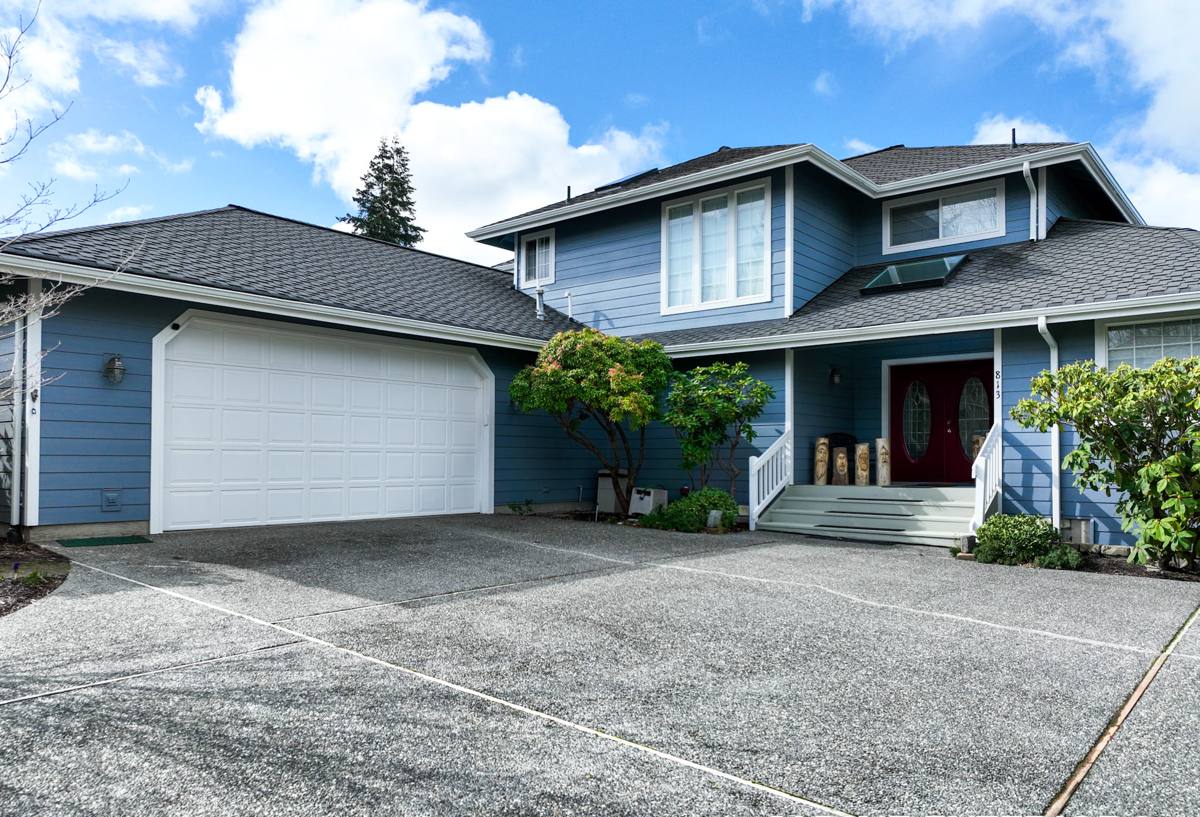
What Salt Air and Driving Rain Actually Do to a Window Opening
It helps to understand the failure points, because it explains why the install matters as much as the window unit itself.
- Salt air accelerates corrosion on exposed fasteners, hinges, and unprotected metal components, which is why fastener choice and flashing metal type matter more here than inland.
- Wind-driven rain pushes water sideways and upward against the wall, meaning a window relies on proper flashing and sealant order — not just a bead of caulk around the trim — to stay dry.
- Persistent moisture feeds moss and mold growth in any gap, seam, or low spot where water can sit instead of shedding away.
- Repeated wet-dry cycling stresses seals and caulk lines faster than in a drier climate, so lower-grade sealants fail years ahead of schedule.
A window that's simply screwed into an opening and caulked around the outside might look fine for a season or two. In a Point Roberts location, that shortcut usually shows up as a stain on the interior sill, a soft spot in the wall framing, or a musty smell in a closet on the exterior wall — often before the homeowner even notices a problem from outside.
What a Correct Installation Actually Involves
Good window installation is mostly invisible once the trim goes back on, which is exactly why it's worth understanding what should be happening underneath.
Water Management, Not Just Sealant
The opening needs a drainage plane and flashing sequence that directs any water that does get past the window back out, not into the wall cavity. That means flashing tape or pan flashing at the sill, proper lapping with the house wrap, and sealant used to back up the flashing — not to substitute for it.
Fastener and Hardware Choice
In a salt-air zone, fastener material matters. Standard fasteners can corrode and stain trim or fail years before the window does. We select corrosion-resistant fasteners and hardware appropriate for coastal exposure rather than defaulting to whatever's fastest to install.
Air Sealing and Insulation
Gaps around the window frame are a path for both drafts and moisture-laden air. Proper low-expansion foam or backer rod and sealant around the perimeter closes that gap without bowing the frame, which can happen with the wrong foam under pressure.
Sill and Sub-Sill Detailing
The bottom of the opening takes the most water exposure over time. A sloped sill pan and correctly lapped flashing here is one of the details that separates an installation that lasts decades from one that leaks within a few years.
Signs Your Current Windows Are Losing the Battle
Homeowners in this area usually notice one of these before anything dramatic happens:
- Fogging or condensation between panes on a double- or triple-glazed unit — a sign the seal has failed
- Soft, discolored, or bubbling paint on interior or exterior trim near the window
- Persistent moss or dark staining on the sill or the siding just below the window
- A window that's noticeably harder to open, close, or lock than it used to be
- Noticeable drafts even when the window is fully latched
- A musty smell localized to one room, especially on an exterior wall
Any one of these on its own isn't necessarily an emergency, but if you're seeing two or more on the same window, it's worth having someone look at it before the surrounding wall framing gets involved.
Choosing Materials That Hold Up in This Climate
Frame material matters as much as the glass package when you're this close to salt water. Here's how the common options actually perform in a Whatcom County coastal setting:
| Frame Material | Salt Air / Moisture Behavior | Maintenance Burden |
|---|---|---|
| Vinyl | Doesn't corrode; performs well in coastal exposure | Low — occasional cleaning |
| Fiberglass | Excellent moisture and corrosion resistance, stable in temperature swings | Low |
| Wood (unclad) | Attractive, but absorbs moisture and needs a sound paint or finish barrier to avoid rot | High — regular repainting/refinishing |
| Wood with aluminum or vinyl cladding | Good exterior protection while keeping a wood interior; cladding seams need to be well-sealed | Moderate |
| Bare aluminum | Prone to corrosion and pitting in salt air over time | Moderate to high |
We don't push one material on every job — the right call depends on your home's style, budget, and how exposed the wall is to wind and salt spray. What we won't do is install a frame material that we know is a poor match for a marine environment just because it's cheaper up front. That trade-off tends to cost homeowners more in the long run through maintenance and premature replacement.
Our Installation Process
- On-site assessment. We look at the existing window openings, wall assembly, and any current signs of water intrusion before recommending anything.
- Measurement and material selection. Exact opening sizes are taken, and we walk through frame material, glazing, and hardware options suited to your home's exposure.
- Removal and opening prep. Old units are removed carefully to avoid damaging the surrounding siding or trim, and the opening is inspected for hidden rot or water damage before the new window goes in.
- Flashing and drainage plane installation. Sill pan flashing and proper integration with the house wrap or building paper come before the window is ever set.
- Window setting and leveling. The unit is shimmed, leveled, and fastened with corrosion-resistant hardware.
- Air sealing and insulation. Perimeter gaps are sealed correctly — not overpacked, not left open.
- Exterior trim and sealant finish. Trim is reinstalled or replaced, and exterior sealant is applied as the backup to the flashing, not the primary defense.
- Final walkthrough. We check operation, sealing, and cleanup with you before calling the job done.
Why a Crew That Already Works in Point Roberts Matters
Point Roberts is a bit of a logistical outlier. It's part of Washington State, but the only way to reach it by land is through Canada — there's no direct road connection to the rest of Whatcom County. That means any contractor working here needs to plan the trip, the border crossing, and the materials list carefully. A crew that hasn't done this before can end up caught without a part, a tool, or enough time in the day to finish a job cleanly.
Working this area regularly means we plan material orders and crew schedules around that reality instead of learning it on your job. It also means we've seen firsthand how this specific stretch of coastline treats window installations over time — which details hold up and which shortcuts show up as callbacks two or three years later. That's local knowledge that doesn't come from a general installation checklist.
What Affects the Cost of a Window Installation Here
| Cost Factor | Why It Matters |
|---|---|
| Number and size of windows | More openings and larger units mean more material and labor |
| Frame material | Vinyl is typically the most budget-friendly; fiberglass and clad wood cost more upfront but often less over the window's lifespan in this climate |
| Condition of the existing opening | Hidden rot or water damage found during removal adds repair work before the new window can go in |
| Glazing package | Double vs. triple pane, and coatings for energy performance, affect unit cost |
| Trim and siding work | Matching or replacing exterior trim adds labor beyond the window swap itself |
| Access and logistics | Site access, staging, and the exclave's border-crossing logistics can factor into scheduling and cost |
We give straight, itemized estimates so you can see where the cost is actually going, rather than a single lump number with no explanation behind it.
Maintaining Your Windows Once They're In
A correctly installed window in this climate still benefits from some basic upkeep. A short annual routine goes a long way:
- Rinse salt residue off frames and glass with fresh water a few times a year, especially after storms
- Check exterior caulk lines each fall for cracking or separation before winter rains set in
- Clear moss or debris from sills and tracks so water doesn't sit against the frame
- Test that weep holes (if your window design has them) are clear and draining
- Operate locks and hardware periodically so they don't seize from disuse or corrosion
- Watch for condensation between panes, which signals a failed seal rather than something you can fix with cleaning
None of this requires special equipment — it's the kind of maintenance most homeowners can do themselves in an afternoon, and it meaningfully extends the life of a good installation.
Get a Straight Answer on Your Windows
If you're dealing with drafts, fogged glass, moss buildup, or windows that just aren't performing the way they used to, we're happy to take a look and give you an honest read on whether you're looking at repair or replacement. We offer free, no-pressure estimates for Point Roberts homeowners — use the form below to get started.