 Ferndale Siding
 Why Roofs Near Lummi Nation Wear Differently Than Roofs Inland
A roof over a home near Lummi Nation is doing more work than a roof twenty miles inland. It's dealing with salt-laden air coming off the water, wind-driven rain that gets pushed sideways under normal flashing details, and a moss season that runs longer here than in the drier pockets of Whatcom County. None of that means the roof needs to fail early — it means the repair work has to account for those conditions instead of treating every leak or shingle problem the same way it would be handled somewhere with a milder, drier climate.
Salt Air and Slow Corrosion
Salt in the air doesn't just affect boats and railings. It accelerates corrosion on exposed metal roofing components — fasteners, flashing, vent caps, and gutter hardware — well before the shingles or panels themselves are due for replacement. A repair that ignores this and reuses corroded fasteners or generic flashing is a repair that's going to fail again, often at the exact same spot, within a couple of seasons.
Driving Rain and Wind-Driven Water
Storms coming off the water tend to drive rain at an angle rather than straight down. That matters because a lot of standard roofing details are built to shed water moving vertically, not water being pushed horizontally under shingle edges, around chimneys, or into vent penetrations. Leaks in this area often show up at transitions — where a roof plane meets a wall, where a skylight is set, where a vent pipe comes through — rather than in the open field of the roof.
A Longer Moss Season
Shade, moisture, and cool temperatures are what moss needs, and this area has all three for a good stretch of the year. Moss holds water against the roofing material long after a dry-climate roof would have shed it, which speeds up granule loss on shingles and can work its way under laps and seams if it's left unaddressed. A roof that looks fine from the ground can already have moss doing quiet damage underneath.
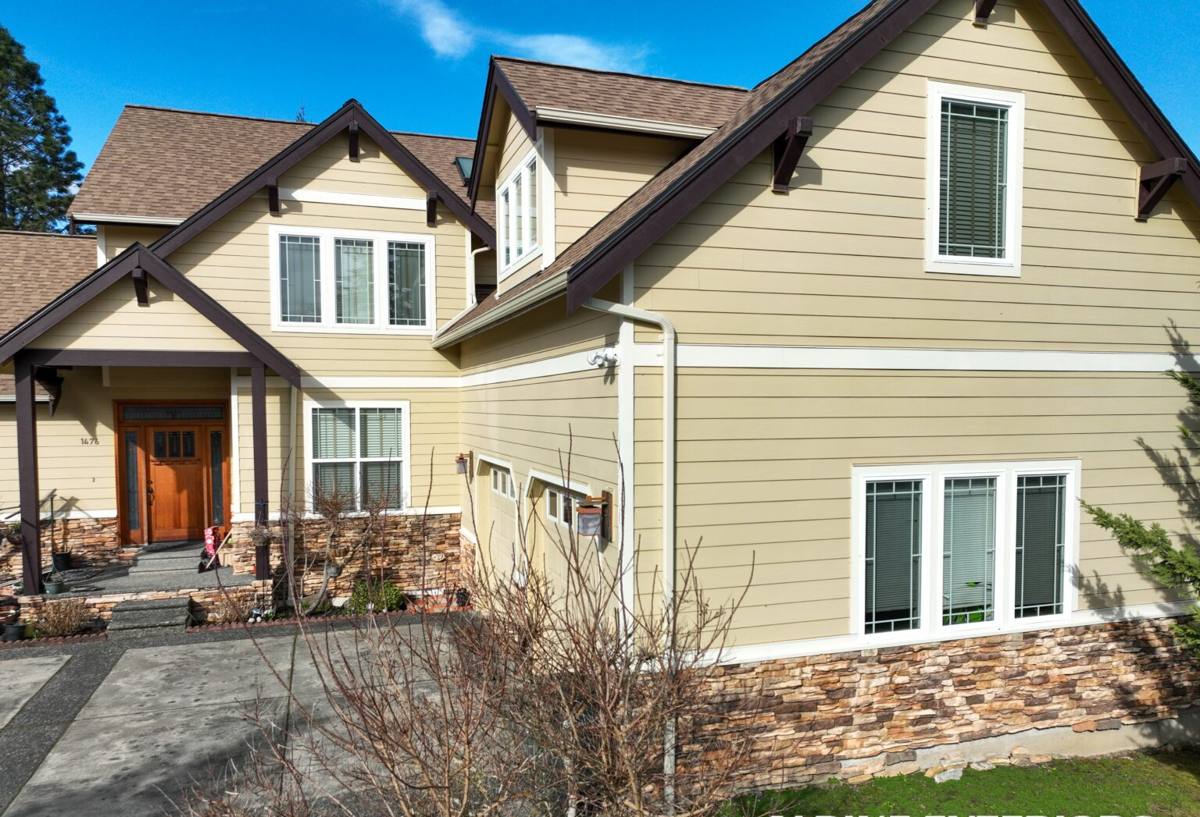
Common Roof Repair Calls We See in This Area
- Flashing that has corroded or pulled loose around chimneys, skylights, and roof-to-wall transitions
- Wind-driven leaks that show up as ceiling stains well away from the actual entry point
- Moss buildup along north-facing slopes and shaded valleys that has started lifting shingle edges
- Corroded fasteners backing out on metal roofing or metal flashing components
- Gutter and downspout issues that send water back up under the roof edge instead of away from the house
- Granule loss and premature aging on shingles that were never rated for consistent salt exposure
What a Correct Roof Repair Actually Involves
Diagnosing the Real Cause, Not Just the Symptom
Patching the spot where water is dripping inside the house is not the same as fixing the roof. Because wind-driven rain and moss both tend to move water sideways before it finds its way in, the visible leak point and the actual entry point are often several feet apart. A correct repair starts with tracing the path — checking flashing, underlayment condition, shingle lap direction, and any moss or debris that's redirecting water — before any material gets replaced.
Matching Materials and Technique to the Cause
Once we know why water got in, the repair has to match that cause. A section of damaged shingles gets re-laced properly instead of just sealed over with roofing cement. Corroded flashing gets replaced with new flashing and corrosion-resistant fasteners, not reused. Moss-damaged areas get cleared and treated, not just covered up. Skipping any of these steps might stop a leak for a season, but it's not a repair that holds up through another wet winter.
Protecting the Rest of the Roof During the Work
Repair work should never create new vulnerabilities. That means keeping surrounding shingles and underlayment intact, sealing any temporary openings properly if weather rolls in mid-job, and cleaning up debris and old fasteners so nothing is left to cause a puncture or a clogged drainage path later.
Repair or Replace? How We Help You Decide
Not every roof problem near Lummi Nation calls for a full replacement, and not every leak is a quick fix. Here's how we generally weigh it:
| Factor | Leans Toward Repair | Leans Toward Replacement |
|---|---|---|
| Age of roofing material | Under 2/3 of expected lifespan | Near or past expected lifespan |
| Extent of moss/moisture damage | Isolated to one or two areas | Spread across multiple slopes |
| Flashing and fastener condition | Localized corrosion | Widespread corrosion throughout |
| Underlayment condition (where visible) | Intact, doing its job | Deteriorated or missing in sections |
| Number of past repairs in same area | First or second repair here | Repeated repairs to the same spot |
We'll walk you through where your roof falls on this before recommending anything, and we'll tell you honestly if repair is the right call even when a replacement would be the bigger job for us.
Our Process, Start to Finish
- You call or request an estimate, and we schedule a time to actually get on the roof — not just look from the ground.
- We inspect the problem area and the surrounding roof, checking flashing, underlayment, ventilation, and moss or debris buildup that might be contributing.
- We explain what we found in plain terms, including what's causing the issue and what it will take to fix it correctly.
- You get a written estimate before any work starts, with the scope spelled out so there are no surprises.
- We complete the repair using materials suited to coastal exposure, clean up thoroughly, and confirm the fix before we consider the job done.
Materials and Methods We Use — and Why
For repair work in this area, we lean toward materials and details that hold up specifically against salt exposure and sustained moisture, not just general-purpose materials that work fine in a drier climate:
- Corrosion-resistant fasteners and flashing on every repair, even small ones, since standard hardware corrodes faster this close to the water
- Proper underlayment at repair sites, since a patch over compromised underlayment just moves the leak down the road
- Shingle or panel matching that accounts for both appearance and how the material sheds wind-driven rain, not just a color match
- Moss treatment as part of the repair, not a separate afterthought, when moss is a contributing factor
We're also upfront when a product isn't a good fit for this climate, even if it's a reasonable choice elsewhere. Some roofing materials and low-cost patch products hold moisture against the deck longer than they should, or require maintenance schedules that are unrealistic for a coastal property. That's not a knock on the manufacturer — it's a trade-off in moisture behavior and upkeep that we'd rather flag up front than let you discover after a repair fails early.
A Practical Maintenance Checklist
- Clear moss and debris from valleys and north-facing slopes at least once a year, more often under overhanging trees
- Check flashing around chimneys, skylights, and vents for lifting or corrosion after major storms
- Make sure gutters and downspouts are clear so water isn't backing up under the roof edge
- Look inside the attic (if accessible) for staining or damp spots after heavy wind-driven rain events
- Have a small repair looked at before winter, not after — moss and moisture make small problems worse fast once the wet season sets in
Why It Matters to Hire a Crew That Already Works This Area
Roofing crews that mostly work drier, inland areas don't always think about wind-driven rain angles, salt-air corrosion timelines, or how aggressive moss growth can get on a shaded, moisture-heavy roof. A crew that regularly does roof repair work around Ferndale and out toward Lummi Nation already knows to check the transitions and flashing first, already carries corrosion-resistant hardware as a default, and already understands that a "quick patch" mentality doesn't hold up through a full Whatcom County winter. We also understand that some properties in this area may fall under tribal land use or permitting considerations, and we're upfront with homeowners about coordinating on anything like that rather than assuming it doesn't apply.
Local experience also means fewer surprises on timing. We know which months bring the heaviest wind-driven storms and plan repair scheduling around them when we can, rather than treating every week of the year the same.
Getting Your Roof Looked At
If you're dealing with a leak, visible moss damage, or flashing that looks like it's seen better days, it's worth having it looked at before the next round of coastal weather makes the problem bigger. We offer free, no-pressure estimates for roof repair work in the Lummi Nation area — use the form below to get one scheduled.