 Ferndale Siding
 Roof Replacement Built for Sumas and the Surrounding Whatcom County Weather
A roof in Whatcom County doesn't get an easy season. Between the driving rain that blows in off the water toward Ferndale, the salt-laden air closer to the coast, and the long stretch of gray, wet months that let moss take hold on anything with a north-facing slope, roofs here age differently than they do in drier parts of the state. Sumas sits a little further inland, but it shares the same core problem: months of sustained moisture, freeze-thaw swings in the winter, and enough shade and tree cover in older neighborhoods to keep roofs damp long after a storm has passed. A roof replacement done right in this area has to account for all of that, not just cover the house.
This page covers what a proper roof replacement looks like for a Sumas or Ferndale home, what tends to go wrong when it's done by a crew unfamiliar with local conditions, and how we approach the job from tear-off to final inspection.
What Whatcom County Weather Actually Does to a Roof
Moss and Sustained Moisture
Moss is the most visible local problem and the most misunderstood one. It's not just cosmetic — moss holds water against the shingle surface far longer than open air would, and that constant dampness breaks down the asphalt granules and the mat underneath faster than sun exposure ever does. A roof that looks "mossy but fine" from the ground is often losing years of service life on the shaded slopes. This shows up earliest on north- and east-facing roof planes, under overhanging trees, and along any valley where debris collects.
Driving Rain and Wind-Driven Water
Storms in this part of Washington rarely come straight down. Wind pushes rain sideways and up under shingle edges, ridge caps, and anywhere flashing is even slightly undersized. Roofs that were built to a minimum code spec — rather than to what this climate actually demands — tend to develop leaks first at valleys, chimney flashing, and low-slope transitions, not in the open field of the roof.
Freeze-Thaw and Temperature Swings
Sumas sees colder overnight lows than the coastal parts of the county, especially in winter cold-air pooling. Repeated freeze-thaw cycles work on any moisture that's already gotten into a roof deck or underlayment, expanding cracks and loosening fasteners over time. A roof system that traps moisture instead of shedding and drying it will fail faster here than in a milder microclimate a few miles away.
Signs a Sumas Home Needs Replacement, Not Just a Repair
Not every roof problem calls for a full replacement, but ignoring the signs below usually turns a manageable job into a bigger one — often with hidden deck damage.
- Granule loss heavy enough that you're finding shingle grit in gutters or downspout runoff
- Shingles that are cupping, curling at the edges, or cracking when walked on
- Persistent moss or algae staining that comes back within a season of cleaning
- Daylight visible through the attic roof deck, or damp insulation below the roofline
- Soft or spongy spots when walking the roof, which usually means deck rot
- Roof age at or past 20-25 years for standard asphalt shingle in this climate
- Multiple past repairs in different spots rather than one isolated leak
- Interior ceiling stains that reappear after storms even following a patch repair
What a Correct Roof Replacement Involves
Full Tear-Off and Deck Inspection
We don't install new roofing over old layers. A full tear-off is the only way to actually see the deck, and in this climate hidden rot around vents, valleys, and low-slope areas is common enough that skipping this step is a real risk. Any soft or delaminated sheathing gets replaced before anything new goes down.
Underlayment and Ice-and-Water Barrier
Given how much wind-driven rain this area sees, underlayment choice matters more than it does in drier climates. We use a synthetic underlayment across the field and self-adhering ice-and-water membrane at eaves, valleys, and any roof-to-wall transition — the places where wind-driven water is most likely to find a way in.
Ventilation
Trapped attic moisture is one of the biggest drivers of early roof failure in wet climates, and it's also one of the most commonly overlooked parts of a replacement. Balanced intake and exhaust ventilation keeps the underside of the deck dry and helps prevent the ice-damming and condensation issues that come with our winter temperature swings.
Flashing
Chimneys, skylights, sidewalls, and valleys fail more often at the flashing than in the open shingle field. We replace flashing rather than reuse it, and we detail it to actually shed water in a sideways rainstorm, not just a straight-down one.
Roofing Material Options for This Climate
There's no single "best" roofing material for every home — it depends on budget, roof pitch, tree cover, and how long you plan to stay in the house. Here's how the common options actually compare for a Sumas or Ferndale property.
| Material | Typical Lifespan Here | Moss Resistance | Best Fit |
|---|---|---|---|
| Standard 3-tab asphalt | 15-20 years | Low — needs regular cleaning | Budget-driven projects, shorter hold times |
| Architectural (laminate) asphalt | 25-30 years | Moderate, better with algae-resistant granules | Most homes — best balance of cost and durability |
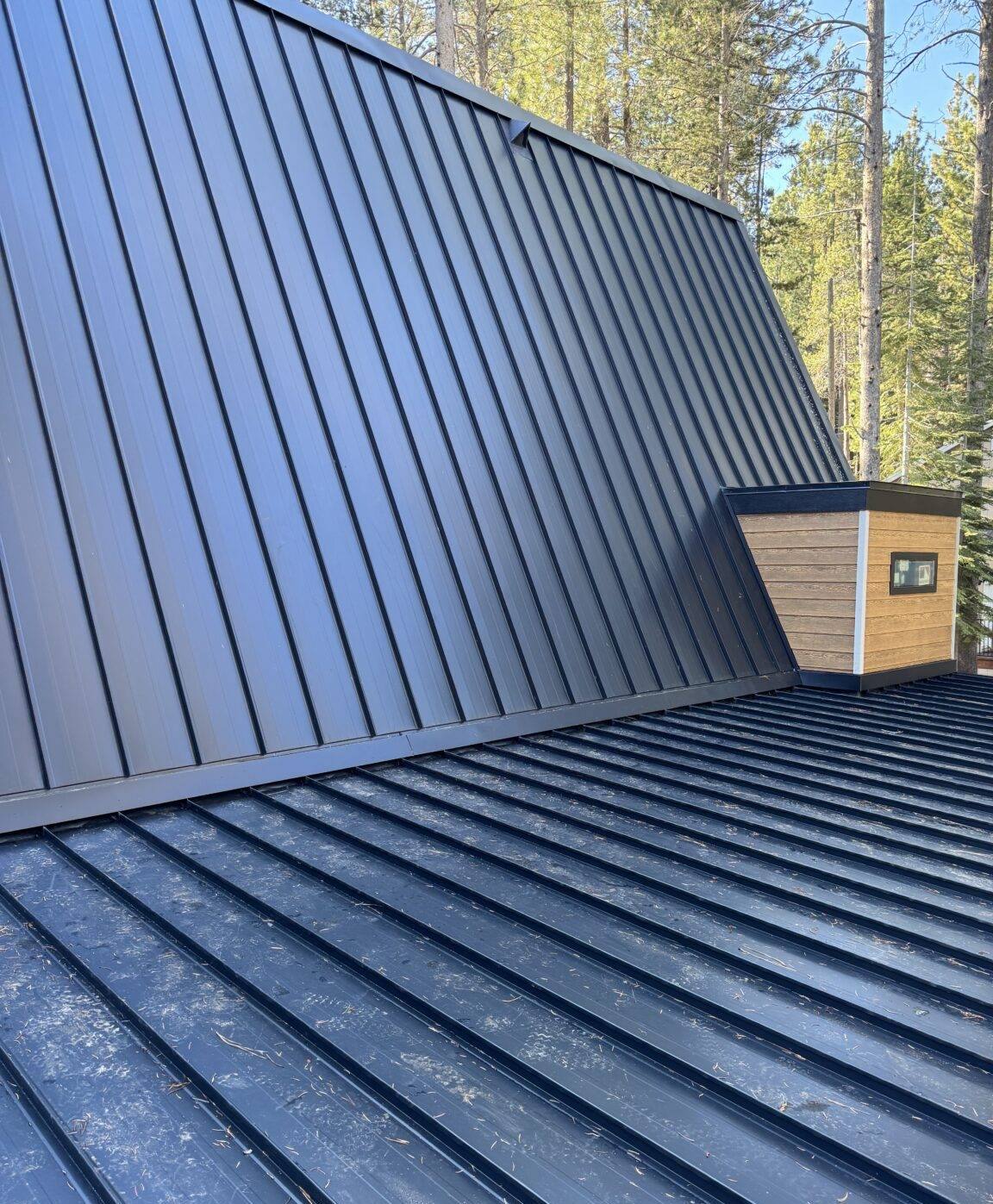
| Metal (standing seam or panel) | 40-50+ years | High — sheds moss and debris well | Steep-slope homes, long-term owners, wildfire-adjacent areas |
| Synthetic/composite shake | 30-40 years | Moderate to high | Homes wanting a shake look without cedar's maintenance |
We install algae-resistant architectural shingle as our standard recommendation for most Whatcom County homes because it holds up well against moss and wind-driven rain without the added cost of metal. We'll walk through the honest trade-offs for your specific roof rather than push whatever has the best margin — pitch, sun exposure, and tree cover all change which option makes sense.
Our Roof Replacement Process
- On-site inspection: We walk the roof and attic, check for deck damage, ventilation issues, and flashing condition before quoting anything.
- Written estimate: A clear scope of work — materials, tear-off, deck repair allowance, and timeline — with no vague line items.
- Material selection: We go over shingle, underlayment, and ventilation options based on your roof's exposure and your budget.
- Tear-off and deck repair: Old roofing comes off completely; any damaged sheathing is replaced and documented before cover-up.
- Underlayment, flashing, and ventilation installed: Built for wind-driven rain and long wet stretches, not just code minimums.
- New roofing installed: To manufacturer specification, which is also what keeps material warranties valid.
- Final walkthrough and cleanup: Site is cleared of debris and nails, and we go over the finished roof with you before we call the job done.
Why a Crew That Already Works in Sumas Makes a Difference
A roofing crew that only shows up occasionally in a smaller community like Sumas doesn't have the same read on local conditions as one that's out here regularly. Knowing which slopes in this area tend to hold moss longest, how local permitting and inspection works, and what wind exposure does to flashing on the homes typical of this part of Whatcom County all come from repeat work in the area — not from a general checklist. It also means if a warranty question or minor issue comes up after the job, you're calling a crew that's still working nearby, not chasing down someone who did one job in town and left.
Cost Factors Homeowners Should Understand
Roof replacement pricing varies by roof size, pitch, number of layers to remove, deck condition, and material choice, so we won't quote a number without seeing the roof. What we can tell you honestly is what tends to move the price:
- Steeper pitches and multiple roof planes take longer and cost more in labor
- Deck repair is billed as-needed once old roofing is off and rot is visible — we don't pad this estimate speculatively
- Metal roofing costs more up front than architectural shingle but spreads that cost over a much longer lifespan
- Extra layers of tear-off (some homes have two roofs stacked) add disposal and labor cost
- Complex flashing details — multiple chimneys, skylights, dormers — add time regardless of material
We'd rather walk you through these factors on your actual roof than throw out a broad number that doesn't hold up once we're up there.
Get a Straightforward Roof Estimate
If your Sumas or Ferndale roof is showing moss buildup, granule loss, or age, it's worth having someone look at it before a repair turns into water damage. Fill out the form below for a free, no-pressure estimate — we'll give you a straight read on what your roof needs and what it'll take to do it right.