 Ferndale Siding
 Roofing Built for Sandy Point's Waterfront Exposure
Sandy Point sits close enough to the water that homes here take a different kind of beating than a roof further inland in Whatcom County. Salt-laden air works into fasteners and flashing over time, driving rain off the Strait finds every weak seam in a roof system, and the shaded, damp lots that make this area beautiful are also exactly what moss and moisture love. An asphalt shingle roof that would hold up fine in a drier, more sheltered neighborhood can wear out early here if it wasn't installed with this specific environment in mind.
Ferndale Siding Contractors installs and repairs asphalt shingle roofing for homes throughout Sandy Point and the surrounding Ferndale area. This page is about that one job — asphalt shingle roofing for this one location — not a general overview of every roofing option we offer.
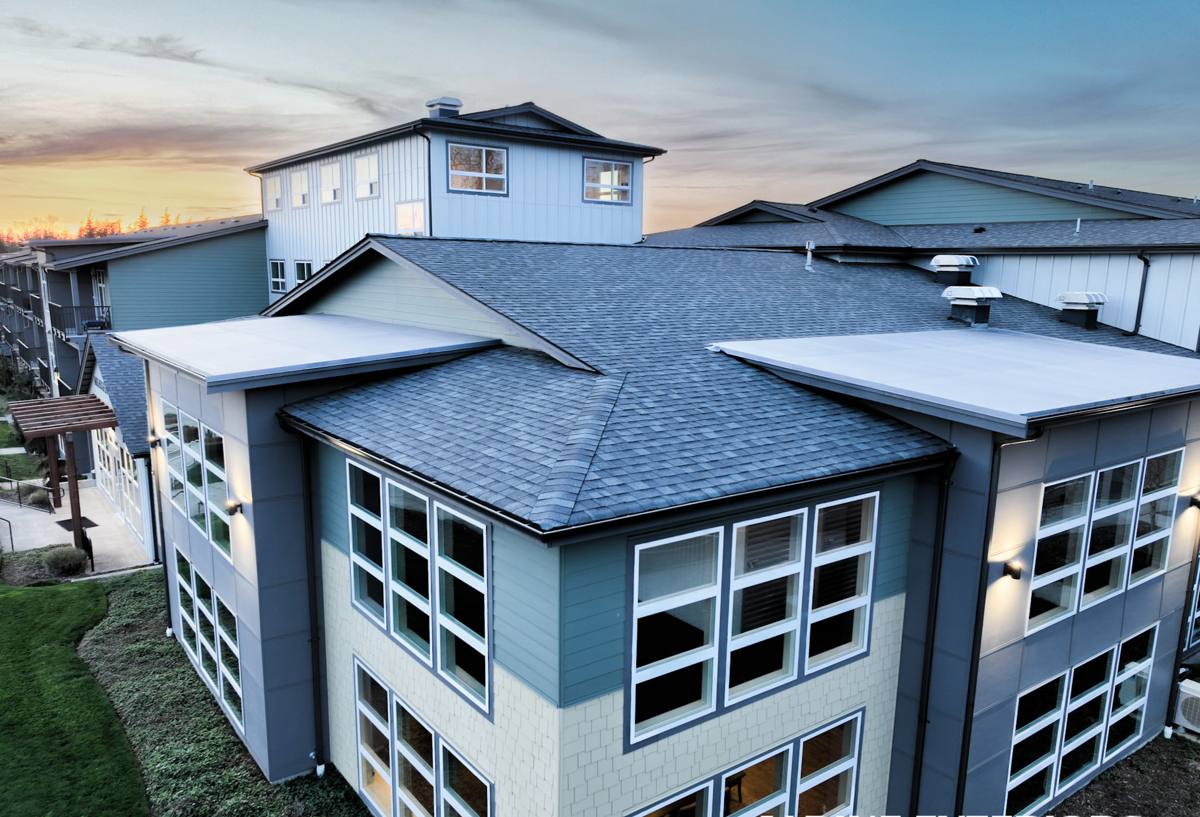
What Salt Air, Rain, and a Long Moss Season Actually Do to a Roof
It helps to understand the specific stresses at play before talking about the fix, because they shape almost every decision in a correct installation.
Salt Air and Corrosion
Airborne salt accelerates corrosion on any exposed metal — nail heads, flashing, drip edge, and vent stacks. Standard mill-finish metal components can start rusting years before they would inland, and once flashing corrodes at the seams, water finds its way underneath the shingles rather than off the roof.
Driving Rain
Whatcom County gets plenty of steady rain, but the wind off the water pushes it sideways at times, not just straight down. That matters at every horizontal lap, valley, and penetration on the roof. A shingle system that's only detailed for vertical rainfall will leak in wind-driven storms even if it looks fine on a calm day.
Moss and Shade
Many Sandy Point lots have mature trees and partial shade, which keeps roof surfaces damp longer after a rain and gives moss and algae the conditions they need to establish. Moss doesn't just look bad — it holds moisture against the shingle surface, works into the granule layer, and can lift shingle edges over time, which is exactly where leaks start.
None of this means asphalt shingles are the wrong choice for Sandy Point. It means the installation details — underlayment, ventilation, flashing, and shingle selection — have to actually account for this environment rather than follow a generic checklist.
Choosing the Right Asphalt Shingle for This Location
Not every asphalt shingle product is built the same, and for a home exposed to salt air and moss pressure, the differences matter more than they would in a milder setting.
| Shingle Type | Wind Rating | Algae/Moss Resistance | Typical Lifespan | Best Fit |
|---|---|---|---|---|
| 3-tab (economy) | Lower, thinner profile | Minimal unless treated | Shorter | Budget projects, low wind exposure |
| Architectural (laminate) | Higher, layered construction | Available with algae-resistant granules | Longer | Most Sandy Point homes |
| Impact-rated architectural | Highest available in asphalt | Available with algae-resistant granules | Longer, with impact protection | Exposed sites, insurance discounts in some cases |
For most Sandy Point homes, we recommend an architectural shingle with algae-resistant (copper-infused) granules built in. It costs somewhat more than a basic 3-tab shingle up front, but the heavier profile handles wind-driven rain better, and the algae-resistant granules directly address the moss and algae pressure this area sees. We'll walk through the honest trade-offs for your specific roof rather than defaulting to the cheapest option — a roof that needs replacing again in twelve years isn't actually the better deal.
What a Correct Asphalt Shingle Installation Includes
The shingle itself is only one part of the system. Most premature roof failures we see trace back to shortcuts in the layers underneath, not the visible shingle. A correct installation for this climate includes:
- Full tear-off to the deck when the existing roof has more than one layer or shows signs of decking damage — shingling over a failing roof just hides the problem
- Deck inspection and repair of any soft, delaminated, or water-stained sheathing before anything new goes down
- Self-adhering ice-and-water shield at eaves, valleys, and around all penetrations, where wind-driven rain is most likely to get pushed underneath the shingle field
- Synthetic underlayment across the full roof, which sheds water better and holds up longer than old-style felt in a damp environment
- Corrosion-resistant flashing at chimneys, walls, and roof-to-wall transitions — not just reused or patched existing metal
- New drip edge and starter strips at all eaves and rakes, sized and fastened correctly for the wind exposure at this site
- Shingles fastened per manufacturer specification for wind rating, not just "close enough" nailing
- Proper ridge and intake ventilation, sized to the attic, installed as part of the job rather than left as an afterthought
Any one of these steps done wrong shortens the life of the whole roof, regardless of how good the shingle is.
Ventilation and Moisture Control Matter More Here
A roof near the water deals with more ambient moisture in the air, and shaded lots keep that moisture around longer. Without adequate attic ventilation, moisture gets trapped under the roof deck, which can lead to condensation, premature deck rot, and ideal conditions for mold — separate from anything happening on the outside surface of the roof.
Balanced ventilation (intake at the eaves, exhaust at the ridge) keeps air moving through the attic space, which helps the roof deck dry out between rain events and reduces the moisture load that contributes to moss growth on the shingle surface itself. On older Sandy Point homes we often find ventilation that was adequate when the house was built but was never updated when insulation was added or additions changed the roof shape — we check this as part of every re-roof, not as an upsell.
Our Process, From Estimate to Cleanup
- On-site inspection. We walk the roof (or use a lift/drone where pitch or access requires it), check the decking, flashing, and ventilation, and take photos of anything that needs attention.
- Honest written estimate. You'll get a clear scope — tear-off or overlay, shingle options, flashing and ventilation work — with pricing broken out so you know what you're paying for.
- Scheduling around weather. Roofing in this region means working around rain windows. We plan the tear-off and dry-in to minimize the time your roof deck is exposed.
- Tear-off and deck repair. Old material comes off, the deck gets inspected, and any damaged sheathing is replaced before anything new is installed.
- Dry-in and flashing. Ice-and-water shield, underlayment, and new flashing go in first, sealing the roof against wind-driven rain before the shingles go on.
- Shingle installation. Installed to manufacturer spec for the wind rating and pattern that fits your roof.
- Ventilation check and correction. Intake and exhaust ventilation is verified and corrected if the existing setup is inadequate.
- Cleanup and magnetic sweep. Yard, driveway, and gutters are cleared of debris and stray fasteners before we consider the job done.
Maintenance and Moss Prevention Checklist
A well-installed roof still needs a small amount of ongoing attention in a moss-prone, salt-air environment. Homeowners in Sandy Point can extend the life of their roof by keeping up with:
- Clearing overhanging branches to reduce shade and let the roof surface dry faster after rain
- Removing moss growth gently (soft brushing or low-pressure treatment) rather than pressure-washing, which can strip protective granules
- Keeping gutters clear so water doesn't back up under the shingle edge during heavy rain
- Checking flashing around chimneys and vent stacks periodically for early signs of corrosion
- Scheduling a roof check after major windstorms, especially ones with driving rain off the water
- Watching for granule buildup in gutters, which can signal a shingle surface nearing the end of its service life
Cost Factors for a Sandy Point Re-Roof
Every roof is different, but the same handful of factors drive most of the price difference between projects in this area. We'll go over your specific numbers at the estimate — this is meant to give you a general sense of what moves the price up or down.
| Factor | Why It Matters Here |
|---|---|
| Roof pitch and access | Steeper roofs and limited access (trees, tight lot lines) take longer and require more safety equipment |
| Number of existing layers | A full tear-off of multiple old layers costs more than a single-layer tear-off, but is often necessary for a sound installation |
| Decking condition | Moisture-related deck damage, more common on shaded, moss-affected roofs, adds material and labor to replace sheathing |
| Shingle class chosen | Architectural and impact-rated shingles cost more per square than 3-tab but generally last longer under this area's conditions |
| Flashing and ventilation upgrades | Older homes often need flashing or ventilation brought up to current standards, which adds to the scope but reduces future risk |
| Valley and penetration count | More valleys, skylights, and vent penetrations mean more detail work and material |
Why Hire a Crew That Already Works Sandy Point
A roofing crew that hasn't worked this specific area before is guessing at things a local crew already knows: how much moss pressure a shaded lot will actually see, how the wind off the water behaves during a real storm, what corrosion looks like on flashing that's only a few years old, and what deck condition is common under older shingle layers in homes built decades ago in this part of Whatcom County. That local knowledge shows up in better decisions during the job — not just in the sales pitch beforehand.
Ferndale Siding Contractors works throughout Ferndale and the surrounding Whatcom County communities, including Sandy Point, and we bring that same local familiarity to every roofing project — matching the shingle, ventilation, and flashing approach to what actually holds up here, not to a generic spec sheet.
Get a Straight Answer for Your Roof
If your Sandy Point roof is showing moss, aging shingles, or you're just planning ahead, we're happy to take a look and give you an honest assessment — no pressure, no inflated scare tactics. Use the form below to request a free estimate, and we'll walk you through exactly what your roof needs and why.