 Ferndale Siding
 Sandy Point's Deck Environment Is Tougher Than It Looks
Sandy Point sits right on the water outside Ferndale, and that location is exactly what makes it a hard place to keep a deck looking good. Homes here take on salt-laden air coming off the water, steady wind, and the kind of driving, sideways rain that Whatcom County gets for a good chunk of the year. Add in a moss season that can run from fall through spring, and you've got a deck surface that's wet, shaded, and slowly corroding its own hardware more days than not.
A deck that would hold up fine twenty miles inland can fail early out here — not because the homeowner did anything wrong, but because the material and the installation weren't matched to the environment. That's the gap we focus on closing for Sandy Point specifically, not just Ferndale in general.
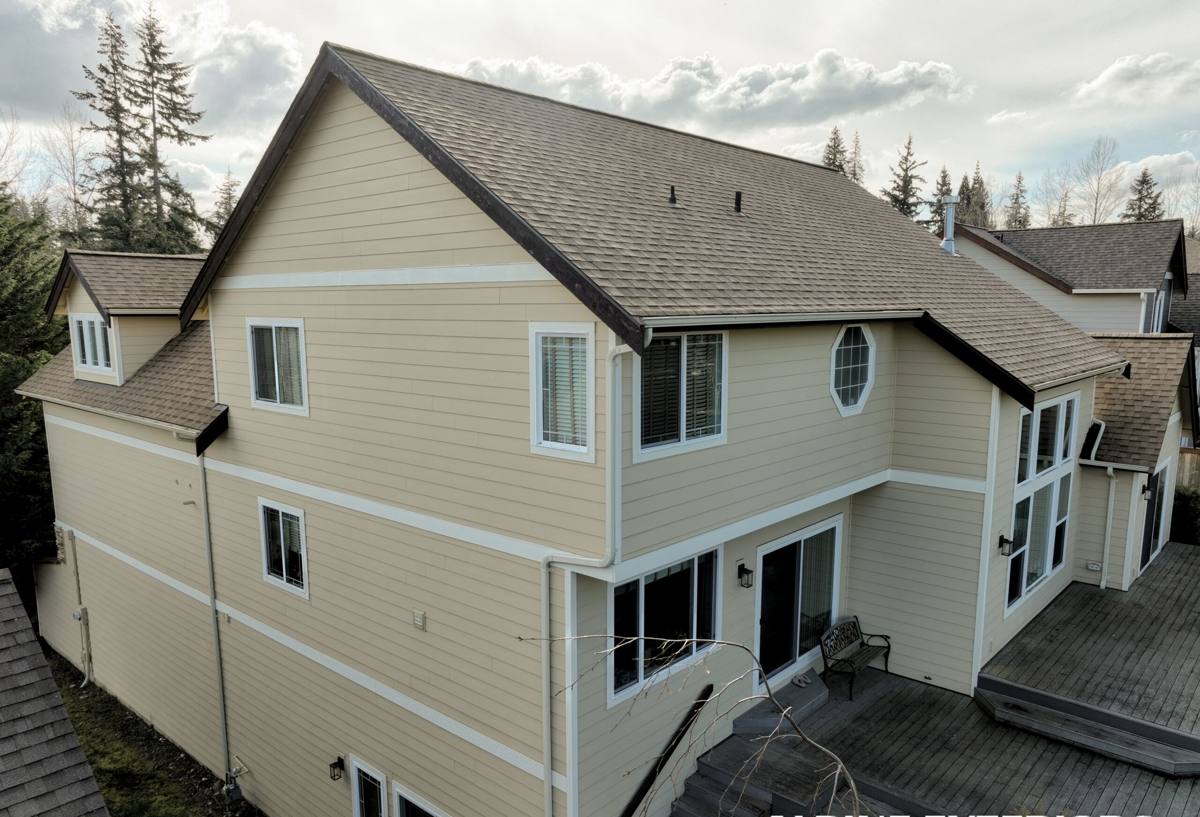
Why So Many Sandy Point Homeowners Land on Composite
Wood decking isn't ruled out by living near the water, but it asks a lot of upkeep to survive it well — regular sealing, sanding, and replacing boards that cup or split once moisture gets underneath them. In a salt-air, high-moss environment, that maintenance schedule tends to slip, and once it does, rot and fastener corrosion move fast.
Composite decking is popular here for a practical reason: it doesn't absorb water the way wood does, so it doesn't swell, cup, or feed rot the same way. It also doesn't need annual sealing or staining. That doesn't mean composite is maintenance-free — nothing on a Sandy Point deck is — but the maintenance shifts from "protect the wood from moisture" to "keep organic growth and salt residue off the surface," which is a much lower-effort job.
What Composite Won't Fix By Itself
Composite decking solves the board itself. It does not solve a poorly built substructure, undersized joists, missing flashing, or fasteners that corrode in salt air. We've seen composite boards installed over framing that was never built for a coastal environment, and the deck still failed early — just at the frame instead of the surface. The material only performs as well as what's underneath it.
Composite vs. Other Decking Materials for a Coastal Site
| Material | Moisture Behavior | Salt Air / Corrosion Risk | Typical Maintenance | Realistic Lifespan Here |
|---|---|---|---|---|
| Pressure-treated wood | Absorbs water, swells and shrinks seasonally | High — fasteners and connectors corrode faster near salt air | Annual cleaning, periodic sealing/staining | 10–15 years before major repair |
| Cedar | Naturally rot-resistant but still absorbs moisture | Moderate to high depending on fastener quality | Regular sealing, more sensitive to moss/algae staining | 10–20 years with diligent upkeep |
| Uncapped composite (older-generation) | Some moisture absorption at the core | Lower than wood, still depends on hardware used | Periodic cleaning; more prone to surface staining and mold than capped boards | 15–20 years |
| Capped composite | Sealed outer shell resists moisture intrusion | Low, especially with stainless or coated fasteners | Routine washing to clear salt film and moss spores | 20–25+ years, backed by manufacturer warranty |
We install capped composite for most Sandy Point projects for exactly this reason — the cap layer is what keeps salt spray and standing moisture from working into the board over years of exposure. Uncapped composite still has its place on a budget, but we're upfront that it will show wear sooner in this environment.
What a Correct Composite Deck Installation Involves
Substructure and Ledger Board
The framing is where most early failures actually start, not the decking surface. In a wet, salty environment, we pay close attention to how the ledger board is flashed against the house, how joists are protected from standing water, and whether the substructure allows the deck to shed water instead of trapping it against the siding or foundation.
Fasteners and Hardware
Standard fasteners corrode faster in salt air than most homeowners expect, and corroded hardware is one of the more common reasons a deck that "looks fine" is actually failing underneath. We use fasteners and connectors rated for coastal/corrosive exposure, and we use hidden-fastener systems where the product allows for it, which also keeps the walking surface free of exposed metal that will show rust streaks over time.
Drainage and Airflow Underneath
A deck built low to grade or without airflow underneath stays damp longer after our long stretches of rain, and that damp air is what feeds moss and mold growth on the underside and around fasteners. Proper spacing, grading beneath the deck, and gaps between boards all matter more here than they would in a drier inland location.
Board Layout and Trim Details
Picture-framing the perimeter, mitering corners cleanly, and using manufacturer-approved trim and fascia keeps water from getting into cut board ends — which is one of the few places composite boards are actually vulnerable to moisture wicking if the cut edge isn't sealed or capped properly.
Our Process for Sandy Point Deck Projects
- On-site assessment: we look at exposure direction, existing framing condition, drainage, and how much shade/moss buildup the site sees.
- Material selection: we walk through capped vs. uncapped composite options and color/board profiles suited to a marine environment.
- Substructure evaluation or rebuild: if the existing frame isn't sound or isn't protected for this environment, we address that before decking goes down — not after.
- Installation: hidden fasteners, coastal-rated hardware, proper spacing and flashing detail throughout.
- Final walkthrough: we go over basic care specific to a salt-air, high-moss site so the deck holds up the way it's supposed to.
Cost Factors Worth Knowing Before You Budget
Composite decking costs more upfront than pressure-treated wood, but the comparison isn't just material price per square foot. A few things shift the number more than homeowners expect:
| Factor | Why It Matters in Sandy Point |
|---|---|
| Existing substructure condition | Salt air and moisture can mean joists or ledger boards need repair or replacement before new decking goes on |
| Capped vs. uncapped board choice | Capped boards cost more but hold up longer against salt spray and standing moisture |
| Fastener and hardware grade | Coastal-rated fasteners cost more than standard hardware but prevent early corrosion failures |
| Deck height and railing requirements | Elevated decks near the water often need engineered railing and structural detailing |
| Access and site conditions | Waterfront lots can have tighter access or drainage considerations that affect labor time |
We give a written, itemized estimate so you can see exactly where the cost is coming from rather than a single lump number — that way you know what you're paying for the board versus what you're paying to make sure it lasts in this climate.
Maintaining a Composite Deck in a Marine, Mossy Climate
Composite cuts down on maintenance, but "low-maintenance" isn't "no-maintenance," especially this close to the water. A short seasonal routine keeps a composite deck performing the way it's built to:
- Rinse the deck surface periodically to clear salt film buildup, especially after storms with onshore wind
- Sweep or brush off organic debris before moss or algae gets a foothold, particularly in shaded corners
- Use a soft-bristle brush and a cleaner rated for composite decking — pressure washers can be used but only at low pressure and the right distance to avoid damaging the cap layer
- Check railing posts and stair connections once a year for any sign of hardware corrosion
- Keep gutters and downspouts nearby clear so runoff isn't draining directly onto or under the deck
None of this is heavy work, but skipping it entirely is how a composite deck ends up looking dull and streaked years before it should.
Why Hiring a Crew That Already Works in Sandy Point Matters
A lot of decking problems we get called out to fix aren't material failures — they're installation choices that made sense somewhere drier and windless, but not on a shoreline lot in Whatcom County. Framing that isn't detailed for salt exposure, standard hardware instead of coastal-rated fasteners, or decking laid flush to grade without airflow all show up as expensive fixes within a few years.
Working regularly in Sandy Point and along the Ferndale shoreline means we're not guessing at how the climate will treat a given product or detail — we've already seen how salt air, wind-driven rain, and moss buildup play out on decks in this exact setting, and we build accordingly from the start.
If you're planning a new composite deck or replacing an aging one in Sandy Point, we're glad to take a look and give you a straightforward, no-pressure estimate — just fill out the form below to get started.