 Ferndale Siding
 Building a Deck That Actually Belongs at Sandy Point
Sandy Point sits right up against the water, and that changes what a deck has to survive. A deck built to a generic spec sheet might look fine the day it's finished and start showing problems within a year or two — fasteners bleeding rust through the boards, framing that stays damp long after a storm passes, or a walking surface that turns slick and green every fall. We build decks for this stretch of Whatcom County specifically, which means every material and connection gets chosen with salt air, wind-driven rain, and a long moss season in mind, not just whatever's cheapest at the yard.
This page is about deck building for Sandy Point homes specifically — what the site conditions demand, what a correctly built deck involves, and how we approach the job differently than we would twenty miles inland.
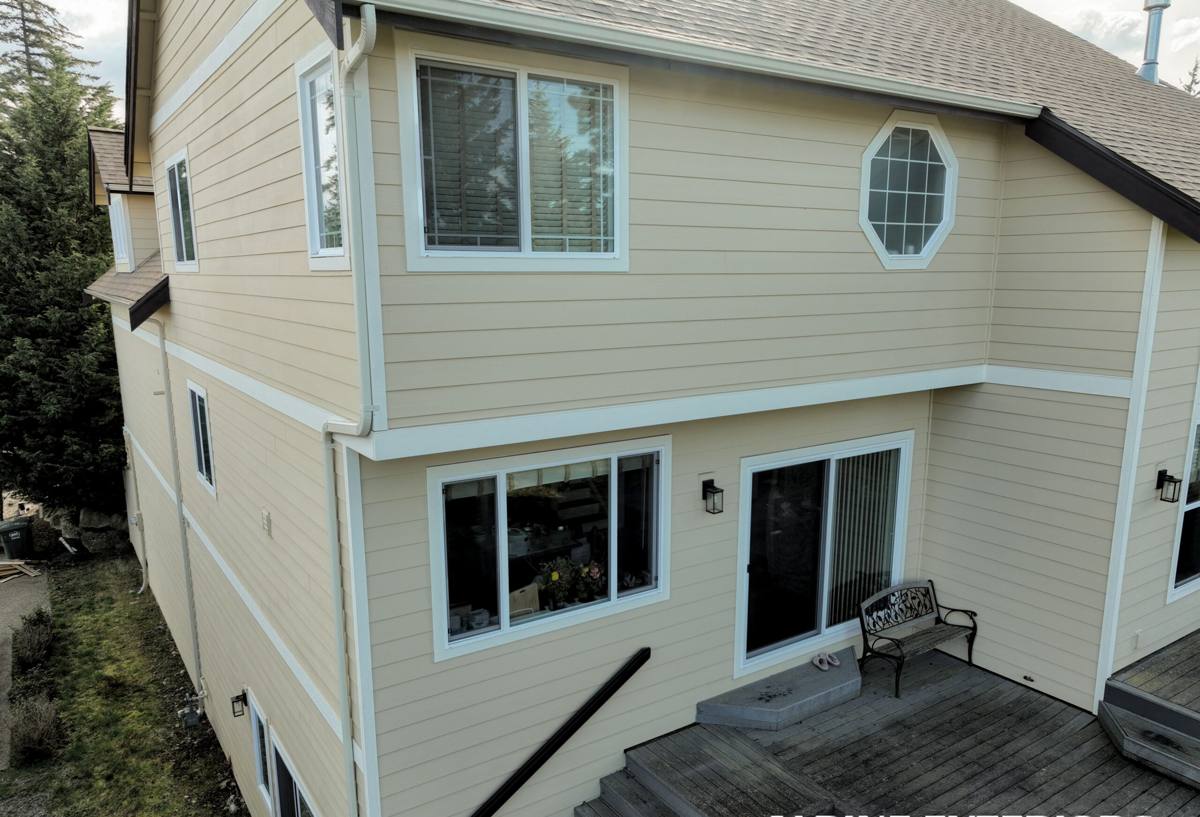
What Makes Sandy Point Tough on a Deck
Salt Air and Corrosion
Proximity to the water means airborne salt settles on everything, including your deck's hardware. Ordinary galvanized fasteners and connectors that would last decades in a drier, inland yard can start corroding within a few years here. That corrosion doesn't stay cosmetic — a rusted-through joist hanger or ledger bolt is a structural problem, not just an eyesore.
Driving Rain
Storms coming off the water don't just fall straight down — wind pushes rain sideways, under railings, behind fascia boards, and into any gap in the flashing. A deck built without real attention to water management will eventually rot at the ledger connection to the house, which is the single most common point of deck failure we see in this area.
Moss and Algae Season
Whatcom County's wet season runs long, and a shaded or north-facing deck at Sandy Point can stay damp for weeks at a stretch. That moisture, combined with organic debris from nearby trees, is exactly what moss and algae need to take hold. Beyond looking bad, a mossy deck surface is a real slip hazard, especially on stairs.
What a Correctly Built Deck Involves Here
A deck that holds up at Sandy Point isn't built differently in some dramatic way — it's built carefully, with the right materials in the right places. The details that matter most:
- Ledger board flashing that actually sheds water away from the house rim joist, not just a bead of caulk
- Fasteners and structural hardware rated for coastal or salt-exposure use, not standard exterior-grade
- Joist tape or a water-shedding barrier on top of framing members to keep end grain from wicking moisture
- Decking material chosen for how it actually performs wet and shaded, not just how it looks in a showroom
- Airflow underneath the deck so framing can dry out between storms instead of staying damp
- Railing and stair connections built to handle wind loads off the water, not just code minimums
Choosing the Right Decking Material
Material choice matters more at Sandy Point than it does further inland, because the wrong choice ages faster here. There's no single "best" decking for every homeowner — it comes down to how much maintenance you're willing to do, your budget, and how the deck is oriented relative to sun, shade, and wind.
| Material | How It Handles Salt Air & Moisture | Moss/Algae Resistance | Maintenance | Relative Cost |
|---|---|---|---|---|
| Pressure-treated wood | Holds up if properly sealed; end cuts and fasteners are the weak point | Needs regular cleaning and periodic treatment | Highest — annual cleaning, re-sealing every few years | Lowest |
| Cedar | Naturally decay-resistant but still needs sealing near salt air | Moderate — still needs cleaning | Moderate to high | Mid-range |
| Composite decking | Doesn't absorb moisture or rot; won't corrode | Better resistance, but can still grow surface film if never cleaned | Low — occasional washing | Mid to high |
| PVC/capped polymer decking | Fully sealed surface, best moisture performance | Best resistance among common options | Lowest | Highest |
For a lot of Sandy Point homeowners, composite or capped polymer decking earns its higher upfront cost back in reduced maintenance — you're not out there re-sealing or scrubbing moss off a shaded deck every spring. But there are still homeowners who prefer the look and feel of real wood and are willing to keep up with the maintenance. We'll walk you through the honest trade-offs for your specific deck's exposure rather than pushing one product.
A Note on Wood Species and Treatment
If you do go with wood, the fastener and connector question matters as much as the decking itself. A beautiful cedar deck held together with the wrong hardware will still fail early in a salt-air environment. We match the fastener spec to the wood, not the other way around.
Fasteners and Framing Hardware Actually Matter Here
This is the part of a deck build that's invisible once the project is finished, and it's also the part most likely to determine whether your deck is still solid in fifteen years or needs structural repair in five. In a salt-air environment like Sandy Point, we use fasteners and structural connectors rated for coastal exposure — typically stainless steel or a coating specifically rated for higher corrosion environments, not the standard galvanized hardware that's fine for an inland deck. The cost difference on hardware for an average deck is modest; the cost difference in repair work if the wrong hardware fails is not.
Drainage, Footings, and Ground Conditions
Water management doesn't stop at the ledger board. How a deck sheds water at ground level, and what it's anchored into, matters just as much over time.
- Footings sized and set to local frost depth and soil conditions, not a one-size-fits-all minimum
- Post bases that keep wood posts off standing water and away from direct soil contact
- Grading and drainage under and around the deck so water has somewhere to go besides pooling against the house
- Gaps between decking boards sized to let water and debris pass through instead of collecting
Sandy soil and proximity to water can mean different drainage behavior than you'd see on a typical inland lot, so we look at the actual site rather than assuming a standard footing plan will work as-is.
Permits and Local Considerations
Deck projects in and around Ferndale generally require a permit, and depending on how close your lot is to the water, there may be additional shoreline-related review through Whatcom County. Requirements vary by parcel and setback, so we don't guess — we check what applies to your specific property before finalizing a design, and we handle the permit application as part of the job so you're not navigating that process on your own.
Our Deck Building Process
- On-site assessment. We look at sun/shade exposure, wind direction, existing drainage, and the condition of anything we're replacing or building against.
- Design and material selection. We talk through decking material, railing style, and layout based on how you'll actually use the space and what your maintenance appetite is.
- Permit handling. We pull the necessary permits and handle any required review before work begins.
- Framing and flashing. This is where the long-term durability of the deck gets decided — ledger flashing, hardware, and framing layout come first, before anything visible goes on.
- Decking, railing, and finish work. Boards, railings, stairs, and any lighting or trim go on last.
- Final walkthrough and inspection. We review the finished deck with you and make sure it passes any required inspection.
Keeping a Sandy Point Deck in Good Shape
A well-built deck still needs some upkeep in this climate — the goal is to make that upkeep manageable instead of constant. A basic seasonal checklist for a Sandy Point deck:
- Sweep debris off the deck surface regularly, especially in fall when leaves and needles accumulate
- Rinse or scrub shaded areas prone to moss before it gets established, not after
- Check fastener heads and railing connections annually for early signs of corrosion
- Confirm gaps between boards stay clear so water keeps draining properly
- Reseal wood decking on the manufacturer's recommended schedule — don't wait until it's visibly worn
- Look underneath the deck once a year for standing water, damp framing, or signs of pests
Why Hire a Crew That Already Works Sandy Point
A lot of deck problems we get called to repair weren't built by lazy crews — they were built by good general contractors who simply don't build decks in salt-air, high-moisture environments often enough to know which details matter here. We build and repair decks throughout Ferndale and the surrounding Whatcom County coastline regularly, so the coastal-grade hardware, the flashing details, and the material trade-offs aren't an afterthought — they're just how we build every deck in this area. That experience shows up in fewer callbacks and a deck that's still solid well past when a generic build would start needing attention.
If you're planning a new deck or need an existing one evaluated, we're happy to take a look and put together a straightforward, no-pressure estimate — just fill out the form below.