 Ferndale Siding
 Why Decks in Semiahmoo Wear Out Faster Than Inland Decks
A deck built the same way in Ferndale proper and one built in Semiahmoo will not age the same. Semiahmoo sits close to saltwater, which changes the math on everything from fasteners to finish. Salt-laden air corrodes exposed metal faster than it will just a few miles inland, wind-driven rain gets forced sideways under railings and against ledger boards, and Whatcom County's long stretch of overcast, damp months from fall through spring gives moss and algae months to establish themselves on any horizontal surface that doesn't drain and dry quickly.
None of that means a deck in this area can't last. It means the deck has to be built assuming those conditions, not built to a generic spec and hoped for the best. Most of the "surprise" deck failures we get called out for — soft framing at the ledger, rusted-through joist hangers, decking that's gone slick and black with moss in the shaded corners — trace back to a deck that was built correctly for a drier, less coastal environment but not for this one.
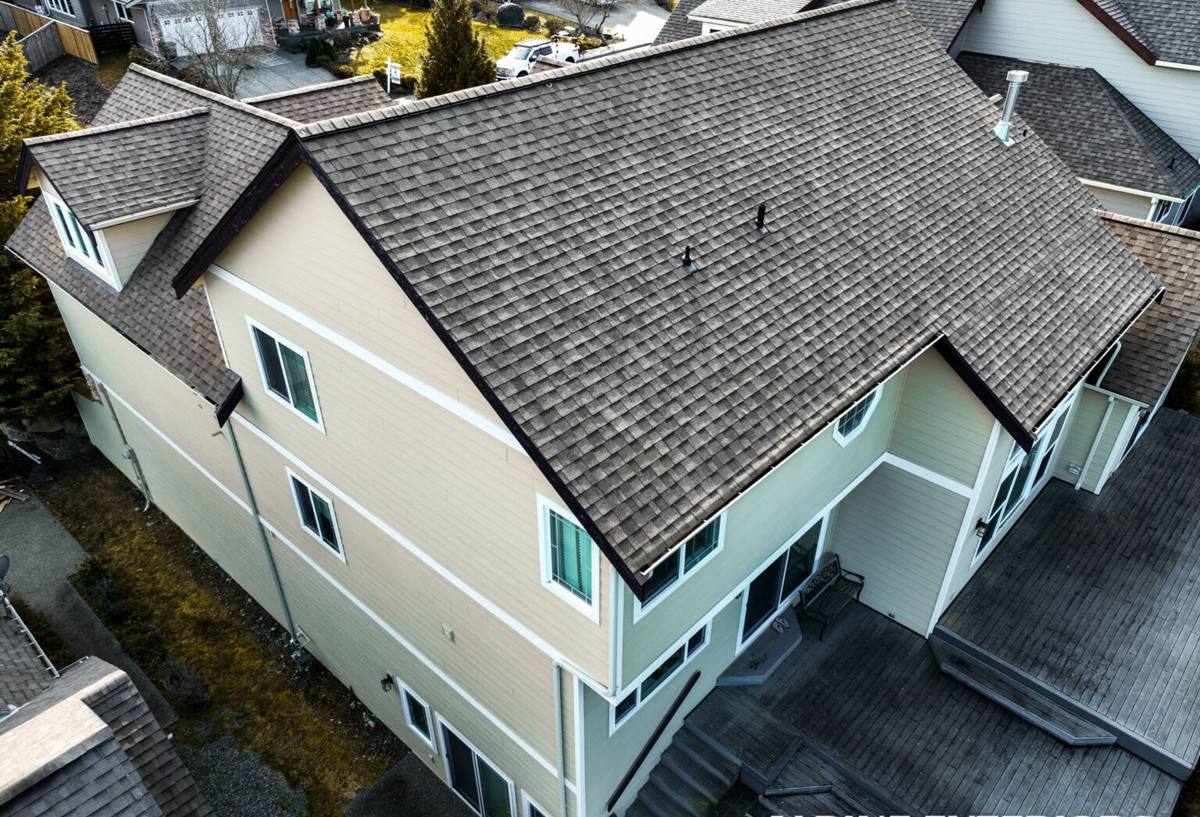
What "Correct" Actually Means for a Semiahmoo Deck
Deck replacement isn't just tearing off old boards and screwing down new ones. The parts nobody sees are what determine whether the deck is still solid in twelve years or soft and unsafe in five. For a coastal Whatcom County property, that means paying close attention to:
Ledger Attachment and Flashing
The ledger board — where the deck bolts to the house — is the single most common failure point on any deck, and it's worse in a wet, salty climate because a bad flashing detail lets water track behind the siding and into the rim joist for years before it shows on the surface. We flash the ledger with a proper drip cap and self-adhering membrane, not caulk alone, and we check that the ledger bolts are corrosion-rated for the exposure.
Framing Protection
Joists and beams that will spend a decade under Whatcom County rain need more than pressure-treated lumber left bare on top. We run joist tape over the top edge of every joist and beam to keep standing water from soaking into end grain and screw holes, which is where rot actually starts.
Drainage and Slope
A deck surface needs a slight slope away from the house so water sheets off instead of pooling. Pooling is what feeds moss and algae growth and what eventually finds its way into fastener holes. We also make sure there's enough clearance and airflow underneath the deck so the framing can actually dry out between storms instead of staying damp all winter.
Fastener and Hardware Grade
This is where corners get cut most often, because it's invisible once the deck is finished — and it's the part that matters most this close to saltwater.
Fasteners and Hardware: The Detail That Decides How Long It Lasts
Standard coated deck screws and joist hangers are fine in a lot of inland settings. In a salt-air environment they can start showing corrosion — rust streaks bleeding through the decking, hardware that's visibly pitting — well before the wood around them has any problem. Galvanic corrosion (where two dissimilar metals react against each other in the presence of moisture and salt) speeds this up further if the wrong hardware gets paired with the wrong fasteners.
For decks in Semiahmoo and other saltwater-adjacent parts of our service area, we specify stainless steel fasteners and hot-dip galvanized or stainless structural hardware rated for coastal exposure, and we make sure the hardware and fastener metals are compatible with each other and with the decking material chosen. It costs more up front than standard-grade hardware. It's also the difference between hardware that's still sound at year fifteen and hardware that's staining the decking and weakening at year five.
Choosing a Decking Material for Salt Air and Moss Season
There's no single "best" decking material — there's a best fit for how the deck sits relative to the water, how much shade and moisture it holds onto, and how much maintenance the homeowner actually wants to keep up with.
| Material | Moisture / Salt Air Behavior | Moss & Mildew Resistance | Ongoing Maintenance |
|---|---|---|---|
| Pressure-treated fir/hem-fir | Decent if fasteners and joist protection are done right; can cup or check with repeated wet/dry cycles | Needs regular cleaning and sealing to resist surface moss | Annual cleaning, periodic sealing/staining |
| Cedar | Naturally moisture- and insect-resistant, but softer and can gray/weather quickly near salt air | Moderate — still needs cleaning in shaded, damp spots | Regular cleaning, sealing to preserve color and surface |
| Composite decking | Very stable in moisture, doesn't absorb water into the board | Better, but surface film and mildew can still build in shaded areas without airflow | Occasional washing; no staining or sealing |
| PVC/capped polymer decking | Excellent — fully moisture-sealed, no wood fiber to absorb water | Best of the options here, especially with a textured, drainage-friendly profile | Lowest — periodic rinsing only |
Composite and PVC decking cost more per square foot than wood, but for a deck that spends most of the year damp and shaded — which describes a lot of Semiahmoo lots given the tree cover and marine air — the lower long-term maintenance and better moisture performance usually make up the difference over the life of the deck. Wood is still a legitimate choice, especially cedar, for homeowners who like the natural look and are willing to clean and reseal on a schedule. We'll walk through the honest trade-offs for your specific site rather than push one material across the board.
Our Deck Replacement Process
- On-site assessment — we check the ledger connection, framing condition, footings, and how the site's shade and drainage pattern have treated the current deck.
- Material and layout walkthrough — we go over decking options, railing style, and any layout changes, with real trade-offs, not a sales pitch toward the highest-margin product.
- Permit handling — we pull the permit where the scope requires one, so you're not the one navigating the county or city process.
- Tear-off and framing inspection — old decking and, where needed, old framing come off so we can see the actual condition of the ledger, joists, and footings before anything new goes down.
- Rebuild with coastal-rated materials — ledger flashing, joist tape, corrosion-rated fasteners and hardware, and proper slope built in from the framing up.
- Decking, railing, and finish work — installed to the manufacturer's fastening spec, with attention to gapping for drainage and airflow.
- Final walkthrough — we go over the finished deck with you, including what maintenance it actually needs given the site conditions.
Permits, Setbacks, and Guardrail Requirements
Most deck replacement work in Whatcom County — including the Semiahmoo area — requires a building permit when it involves structural work: new footings, ledger reattachment, or a deck more than about 30 inches above grade. Guardrails, baluster spacing, and stair rail height are all governed by code as well, and those requirements get enforced at inspection, not just recommended. We handle the permit application and schedule the required inspections as part of the job, so the deck is signed off and documented rather than something that could become a problem at resale.
Keeping a New Deck Ahead of Moss and Mildew
Even a well-built deck in this climate benefits from a little seasonal attention. None of this is complicated, but skipping it is how moss gets a foothold in the first place.
- Sweep off fallen leaves and debris regularly in fall — trapped organic matter holds moisture and feeds moss growth.
- Rinse or lightly scrub shaded corners and areas under furniture a couple of times a year, since these dry out slowest.
- Keep gutters and downspouts near the deck clear so runoff isn't dumping extra water onto the deck surface.
- Check railing posts and stair connections annually for movement, which can be an early sign of a loosening connection before it becomes a safety issue.
- If you have a wood deck, stay on the sealing/staining schedule recommended for the product — gaps in that schedule are when moisture gets into the wood.
- Trim back overhanging branches where practical to give the deck surface more sun and airflow to dry between rains.
Why It Matters to Hire a Crew That Already Works This Area
A contractor who mostly builds decks in drier inland areas isn't necessarily going to think about galvanic corrosion between hardware and fasteners, or about how much shade and moisture a particular Semiahmoo lot holds onto compared to a lot a few miles inland. It's not a knowledge gap that shows up on day one — it shows up five or ten years later, as rust stains, soft framing, or a slick, moss-covered surface that never should have gotten that bad.
We're based in Ferndale and do this kind of coastal-adjacent deck work regularly across Whatcom County, including Semiahmoo. That means the fastener grades, flashing details, and material recommendations above aren't theoretical — they're what we already spec by default for jobs in this area, because we've seen what happens when they're skipped.
What Drives the Cost of a Deck Replacement Here
| Factor | Why It Matters |
|---|---|
| Deck size and shape | Square footage and the number of angles, steps, or level changes drive both material and labor |
| Framing condition | If footings or the ledger connection need rework, that adds scope beyond a simple surface swap |
| Decking material | Wood, composite, and PVC span a wide cost range, with maintenance costs shifting the other direction |
| Railing style | Cable, glass, and custom metal railings cost more than standard baluster systems |
| Fastener and hardware grade | Coastal-rated stainless and galvanized hardware costs more than standard grade but avoids early corrosion |
| Permit and inspection scope | Structural changes trigger permit requirements that a straightforward resurface may not |
Every one of these factors gets discussed up front, in plain terms, before any work starts — no vague allowances that turn into surprise change orders once the old decking is off.
If your deck in Semiahmoo is showing rust stains around the hardware, soft spots near the house, or moss that keeps coming back no matter how often it's cleaned, it's worth having it looked at before those small signs turn into a safety issue. We offer free, no-pressure estimates — fill out the form below and we'll take a look at your specific site and talk through what it actually needs.