 Ferndale Siding
 Roofing for a Coastal Corner of Whatcom County
Semiahmoo sits close enough to the water that homes here deal with a different set of roofing problems than houses ten miles inland. Salt-laden air moves off the water and settles on every exposed surface, moss finds a foothold in the shade almost as fast as you can clear it, and winter storms bring driving rain that tests every seam and flashing detail a roof has. A roof that works fine in a drier, more sheltered part of Whatcom County can wear out faster here if it wasn't chosen and installed with this specific exposure in mind.
Metal roofing has become a popular answer for homeowners in this area, and for good reason — but "metal roofing" covers a wide range of products, coatings, and installation methods, and not all of them are a good match for a salt-air, high-moisture environment. This page covers what actually matters when you're putting a metal roof on a home near Semiahmoo: what the climate demands, what a correct installation looks like, and what to expect from a crew that works this specific stretch of coastline regularly.
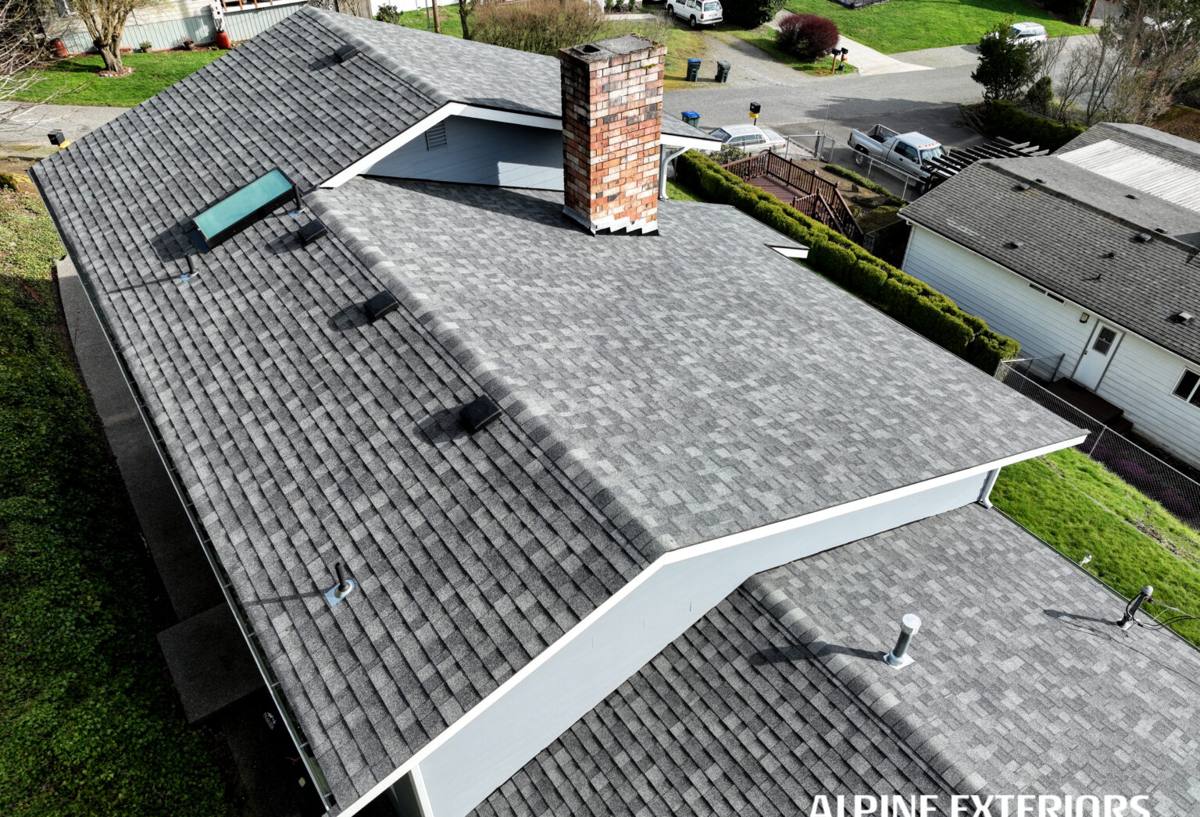
What This Climate Actually Does to a Roof
Salt Air and Corrosion
Airborne salt is corrosive to metal, full stop. It doesn't take a direct ocean-front lot to be affected — salt spray carries inland on wind and settles on roof surfaces, fasteners, and flashing even a mile or more from the water. Over years, that exposure can eat through unprotected or poorly coated metal, starting at cut edges, fastener heads, and anywhere the protective coating has been scratched or thinned during installation. The practical result is that not every metal roofing product sold in a hardware catalog is rated for this kind of exposure, and the coating and finish matter as much as the base metal.
Moss, Algae, and Standing Debris
Whatcom County's tree cover and damp winters mean moss and algae growth is a near-constant maintenance issue for any roof, metal included. Metal sheds moss more easily than asphalt shingles because there's no rough, granulated surface for spores to grip, but moss and organic debris can still build up in valleys, at panel overlaps, and around roof penetrations if those areas aren't detailed correctly. Trapped moisture under a mat of debris is where problems start, even on a metal surface that's otherwise holding up fine.
Wind-Driven Rain
Storms coming off the water don't just drop rain straight down — wind pushes it sideways and upward under laps, around vents, and into any gap in the flashing. A roof in this area needs every seam, fastener line, and penetration detailed as if wind-driven rain will find its way to it, because eventually it will. This is less about the metal itself and more about how the whole system — underlayment, panel laps, flashing, and sealant — is put together.
Comparing Metal Roofing Systems for This Area
Not every metal roofing style handles coastal exposure and moss the same way. Here's how the common options stack up for a home in the Semiahmoo area:
| System Type | How It Handles Salt Air | Moss/Debris Behavior | Typical Lifespan Here |
|---|---|---|---|
| Standing seam (concealed fastener) | Best — no exposed fastener heads to corrode | Sheds debris well, fewer trap points | Longest of the common options |
| Exposed-fastener metal panel | Good, but fastener heads and washers need periodic checking | Slightly more ledges where debris can catch | Solid, but shorter than standing seam |
| Metal shingle/shake profile | Good with proper coating; more seams than panel systems | More overlap edges to keep clear | Comparable to exposed-fastener panel |
Standing seam tends to be our default recommendation for homes with direct water exposure or heavy tree cover, simply because it has fewer places for salt and moisture to attack over time. That said, the right choice always depends on the home's roof shape, budget, and how it ties into existing gutters and trim — we'll walk through the honest trade-offs for your specific house rather than pushing one system for every job.
What a Correct Metal Roof Installation Involves
Underlayment That Backs Up the Metal
Metal panels are the visible layer, but the underlayment beneath them is what protects the deck if wind-driven rain gets past a seam or a panel is ever damaged. In this climate, we treat underlayment as a real second line of defense, not an afterthought — especially at eaves, valleys, and anywhere ice or standing water is more likely to sit.
Fasteners, Washers, and Coatings
Fastener choice matters more here than in a drier climate. Fasteners and washers need to be compatible with the panel metal to avoid galvanic corrosion, and they need a coating rated for coastal exposure. Mismatched metals — say, the wrong fastener alloy against a given panel type — can corrode faster than the roof around them, which is a preventable failure that comes down to using the right hardware for the job.
Flashing Where Leaks Actually Start
Almost every roof leak we're called out to inspect starts at a flashing detail, not in the open field of the roof. Chimneys, skylights, sidewall transitions, valleys, and vent penetrations all need flashing that's formed and layered correctly for the panel system being used. This is the part of a metal roof install that separates a crew that's done it many times from one still learning on your roof.
Ventilation That Keeps Moisture Moving
A metal roof over a poorly ventilated attic can trap moisture underneath it, which defeats a lot of the durability metal is supposed to offer. Proper intake and exhaust ventilation keeps air moving through the attic space, which matters in a region where the outside air itself is often damp for months at a time.
- Underlayment rated for the panel system and local moisture exposure
- Fasteners and washers matched to the panel metal to prevent galvanic corrosion
- Flashing formed and layered correctly at every penetration and transition
- Panel laps and seams detailed for wind-driven rain, not just vertical rainfall
- Attic ventilation checked and corrected as part of the job, not assumed adequate
Our Process for a Semiahmoo Metal Roofing Project
We start with an on-site look at the existing roof, deck condition, and any moisture or ventilation issues already present — a metal roof installed over a compromised deck or poor ventilation will show problems eventually, so we address the roof system as a whole rather than just the surface layer. From there we walk through panel and finish options with actual trade-offs for your home, not a one-size pitch, and put together a clear, written estimate before any work starts.
During installation, we pay close attention to the details that matter most in this climate: flashing at every penetration, correct fastener hardware, and proper underlayment coverage at eaves and valleys. We also clean up thoroughly, since old roofing debris and fasteners left on the ground are a hazard and a nuisance no homeowner should have to deal with after a project wraps.
Maintaining a Metal Roof in a Salt-Air, Mossy Climate
Metal roofing is lower-maintenance than most alternatives, but "low-maintenance" doesn't mean "no maintenance" — especially this close to the water. A little attention once or twice a year goes a long way toward getting the full lifespan out of the investment.
- Clear moss, needles, and debris from valleys and low-slope sections before they mat down
- Check gutters and downspouts for blockages that can cause water to back up under eave flashing
- Look for any scratched or bare spots in the panel finish where corrosion could start
- Confirm fasteners and washers on exposed-fastener systems are still tight and sealed
- Trim overhanging branches that keep sections of the roof shaded and damp
Cost Factors Worth Understanding
Metal roofing costs more upfront than asphalt shingles, and the final number depends on more than just square footage. Roof complexity — the number of valleys, penetrations, and transitions — drives labor time as much as the material choice does. Panel system (standing seam versus exposed-fastener) and finish quality both affect material cost, and any deck repair or added ventilation work found during tear-off will factor in as well. We give a firm, written estimate after seeing the actual roof, rather than a rough number over the phone, because guessing on a coastal roof with unknown deck condition does homeowners a disservice.
Why a Local Crew Matters for This Kind of Work
A metal roof installed correctly can outlast several rounds of asphalt shingle roofs, but that durability depends entirely on the installation quality, not just the product label. A crew that regularly works homes in and around Ferndale and the Semiahmoo area already knows how local exposure — salt air, moss pressure, wind-driven rain off the water — tends to show up in real installations, and builds accordingly instead of treating every job like it's in a dry inland subdivision. That familiarity shows up in the small decisions: which flashing details get extra attention, which fastener hardware holds up, and where debris tends to collect and needs a cleaner design solution.
If you're weighing metal roofing for a home near Semiahmoo, we're happy to take a look, talk through what your specific roof needs, and give you a straightforward, no-pressure estimate — use the form below to get started.