 Ferndale Siding
 Siding Repair Near Nooksack: A Different Kind of Job Than Most Contractors Assume
Homes in the Nooksack area deal with a specific mix of weather that most siding contractors never have to think seriously about: salt-tinged marine air moving in off the Sound, long stretches of driving rain that push water sideways into wall assemblies, and a moss season that can run eight or nine months out of the year in shaded, damp yards. None of that is dramatic on its own, but stacked together year after year, it's exactly the kind of slow, cumulative exposure that turns a small siding problem into a bigger one if it's patched instead of properly repaired.
A siding repair in this part of Whatcom County isn't just about matching a color or covering a hole. It's about understanding why that section failed in the first place — usually moisture, sometimes impact, occasionally a manufacturing or installation defect from years earlier — and fixing the actual cause, not just the symptom.
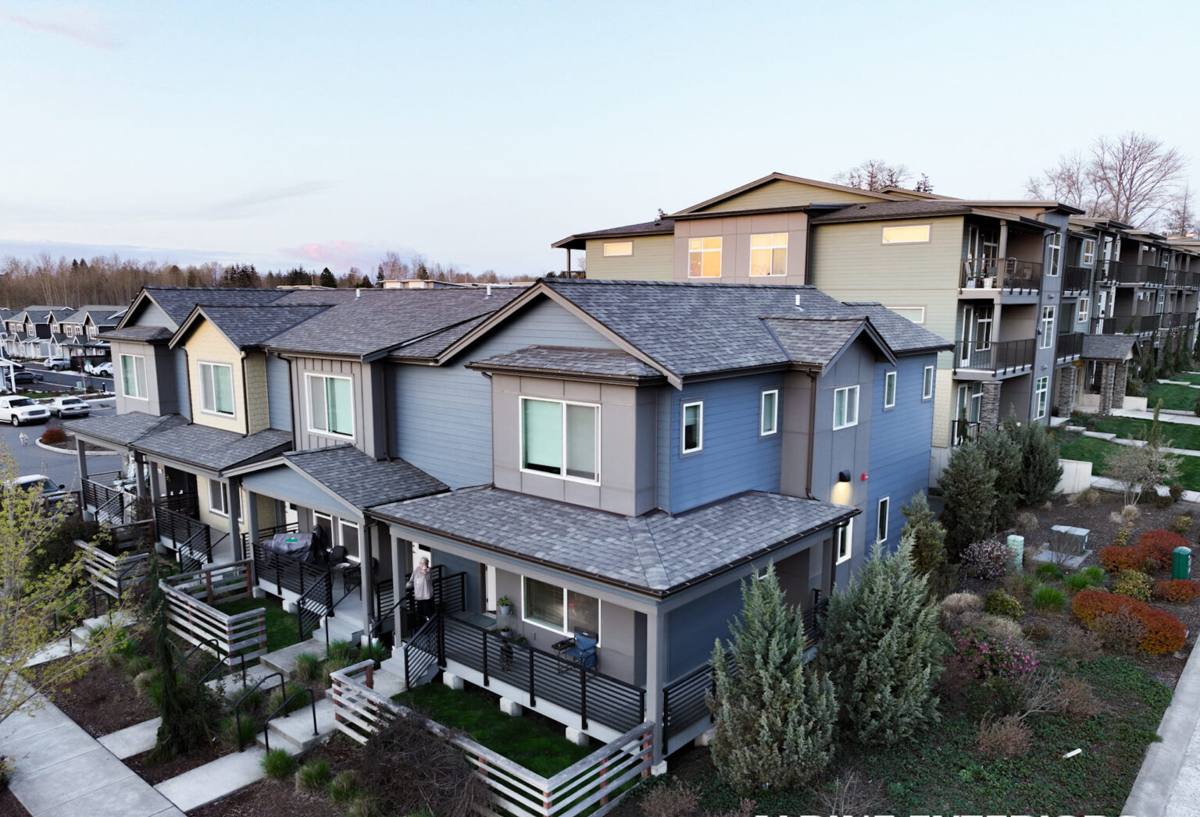
What Local Weather Does to Siding Over Time
Moisture That Doesn't Dry Out Fast
Rain here isn't just frequent, it's often wind-driven, which forces water into seams, laps, and fastener penetrations that would stay dry in a calmer climate. Combine that with cooler temperatures and lower evaporation rates, and any siding material that traps moisture — instead of shedding it or tolerating it — stays wet longer than it was designed to.
Moss, Algae, and Constant Dampness
Shaded north sides of houses, areas under tree cover, and low-airflow corners near foundations grow moss and algae readily in this climate. Moss holds moisture directly against the siding surface, and on materials that aren't dimensionally stable or properly sealed at the edges, that constant dampness is what eventually causes swelling, delamination, or rot at cut edges and butt joints.
Salt Air and Fastener Corrosion
Homes closer to the water or exposed to onshore weather see accelerated corrosion on fasteners, flashing, and trim hardware. When fasteners corrode and back out, or when flashing degrades, water finds a path behind the siding even if the siding face itself looks fine.
The Damage We Typically Find During a Repair Call
- Soft, spongy, or crumbling siding near the bottom courses, close to grade or splash zones
- Dark staining or black streaking at seams, corners, and butt joints
- Bubbling paint or a chalky, degraded factory finish on older material
- Cracked or split boards from impact — branches, ladders, or settling
- Gaps opening up at caulked joints where old caulk has failed
- Visible moss or algae buildup on shaded elevations, especially near the roofline or under eaves
- Warping, cupping, or bowing on lower-quality or moisture-compromised boards
The pattern we see most often on older homes in this area is damage concentrated on the north- and west-facing walls, at inside corners, and near ground contact — the spots where moisture sits longest and dries slowest.
What a Correct Siding Repair Actually Involves
Finding the Water Source First
Cutting out a damaged board and nailing in a new one without checking what let moisture in is a temporary fix, not a repair. A proper job starts by inspecting the house wrap or weather barrier behind the failed section, checking flashing at windows, doors, and butt joints, and confirming that water is actually being directed out and away rather than trapped.
Matching Material, Not Just Color
We install James Hardie fiber cement exclusively, which means any repair on a Hardie home uses the same product line, profile, and factory ColorPlus finish as the original installation — not a mismatched patch material that ages differently or reacts differently to moisture. If we're repairing a section of an older home with a different siding product, we'll walk you through honestly what's realistic to match and where full-panel or full-elevation replacement makes more sense than chasing a perfect patch.
Reinstalling to Manufacturer Spec
Proper fastener placement, correct clearance from grade and hard surfaces, correctly lapped and caulked joints, and intact flashing details all matter as much on a repair as they do on a full install. A repair done without those details just fails again in the same spot, usually within a season or two.
Repair or Full Replacement? How We Make That Call
| Situation | Repair Usually Makes Sense | Replacement Usually Makes Sense |
|---|---|---|
| Damage extent | Isolated to one or two boards or a single elevation | Spread across multiple walls or recurring in the same areas |
| Underlying cause | One-time impact damage, isolated flashing failure | Widespread moisture intrusion behind the wall assembly |
| Siding material | Hardie fiber cement, still within its service life | Aging vinyl, LP, or old cedar showing systemic wear |
| Home's age/history | Recent install, known maintenance history | Original siding is decades old or has an unknown repair history |
| Cosmetic match | Same product line and color still available | Discontinued color, faded finish, or mismatched product |
Most of the time the honest answer is somewhere in between — repair the section that's actually failed now, but flag the areas that are trending toward the same failure so you can plan for them instead of getting surprised.
Why We Don't Patch Hardie Siding With Vinyl, LP, or Other Products
It's tempting to view a repair as "just get something up there that covers the gap," especially if a fast, cheap material is available. We don't do that. Mixing siding products on one wall creates a patchwork of different expansion rates, different moisture behavior, and different finish life spans — the patch itself can become the next failure point, and it almost always looks different within a year or two as the materials weather at different rates. Fiber cement, vinyl, and engineered wood all move, absorb, and age differently, and putting them side by side defeats the point of a repair, which is to restore the wall to a uniform, weathertight system.
Our Process for Nooksack-Area Repair Calls
- On-site inspection of the damaged area and the surrounding wall assembly, not just the visible board
- Check of flashing, house wrap, and fastener condition behind the failure point
- Honest assessment of whether a targeted repair or a broader section replacement is the right call
- Written scope and price before any work starts — no surprise add-ons mid-job
- Repair using James Hardie material matched to your existing line, profile, and color
- Final check of caulking, flashing, and clearances to confirm the fix addresses the original cause
Cost Factors on a Typical Repair
| Factor | Why It Affects Price |
|---|---|
| Number of boards affected | More material and labor, plus more disassembly to reach hidden damage |
| Access and height | Second-story or steep-roof sections take longer and need more equipment |
| Hidden moisture damage | Rot in sheathing or framing behind the siding adds carpentry work beyond the siding itself |
| Color/profile availability | Matching an older ColorPlus run may require a close match rather than an exact one |
| Trim and flashing condition | Failed trim or flashing usually needs replacing alongside the siding, not after |
Why Hiring a Crew That Already Works This Area Matters
A contractor who regularly works in Ferndale and the surrounding Whatcom County communities has already seen how the local weather pattern plays out on real houses — which elevations fail first, how far moss and moisture problems typically extend once they're visible, and what a durable repair needs to hold up through another wet season. That's different from a crew passing through once who patches what's visible and moves on. We stand behind our repair work the same way we stand behind full installations, because a repair that fails again in a year isn't a repair — it's a delay.
Signs It's Time to Call for a Siding Repair
- Soft spots you can press in with a thumb, especially near the bottom of the wall
- Paint that's bubbling, peeling, or chalking unevenly in specific spots
- Visible gaps at seams or corners where caulk has cracked or pulled away
- Persistent moss or dark staining that keeps coming back after cleaning
- A section that was patched before and is showing damage again
- Any area where you can see daylight or feel a draft from inside near an exterior wall
If you're seeing any of that on a home in or near Nooksack, it's worth having someone look at it before the next stretch of driving rain, not after.
If you're dealing with damaged, aging, or previously patched siding on a home in the Nooksack area, we're happy to take a look and give you a straight answer on repair versus replacement. Reach out for a free, no-pressure estimate — there's a form below to get started.