 Ferndale Siding
 Blaine's Coastal Climate Puts Real Stress on Siding
Blaine sits close enough to the water that homes there deal with a different set of pressures than siding a few miles inland in Ferndale or Bellingham. Salt-laden air off the Strait of Georgia, wind-driven rain that comes in sideways during winter storms, and a moss and mildew season that can stretch nearly nine months out of the year all work against exterior materials that aren't built for it. Siding replacement in Blaine isn't just a cosmetic upgrade — it's a chance to correct whatever the original material and installation got wrong the first time.
Salt Air and Corrosion
Airborne salt doesn't just affect homes right on the waterfront. It travels on prevailing winds and settles on siding, trim, and fasteners well inland from the shoreline. Over years, that salt exposure accelerates corrosion in metal fasteners and flashing, and it can degrade certain paint and coating systems faster than the manufacturer's stated lifespan would suggest in a drier climate. Any material or fastener spec that works fine in Spokane can underperform in Blaine.
Wind-Driven Rain and Water Intrusion
Whatcom County's winter storms don't just drop rain — they push it horizontally into wall assemblies. Siding that relies on face-sealed joints or that isn't paired with a properly detailed water-resistive barrier and flashing system is far more likely to let moisture behind the cladding in Blaine than in a sheltered inland lot. Once water gets behind siding, it's the sheathing, framing, and insulation that pay the price, often silently for years before anyone sees a stain.
The Long Moss Season
Cool, damp, shaded conditions are exactly what moss, algae, and mildew need to take hold, and Blaine has all three for most of the year. Siding with any organic wood content gives these growths something to feed on. Even where growth is only cosmetic, the moisture it holds against the surface keeps the substrate wet longer after every rain, which shortens the service life of anything underneath.
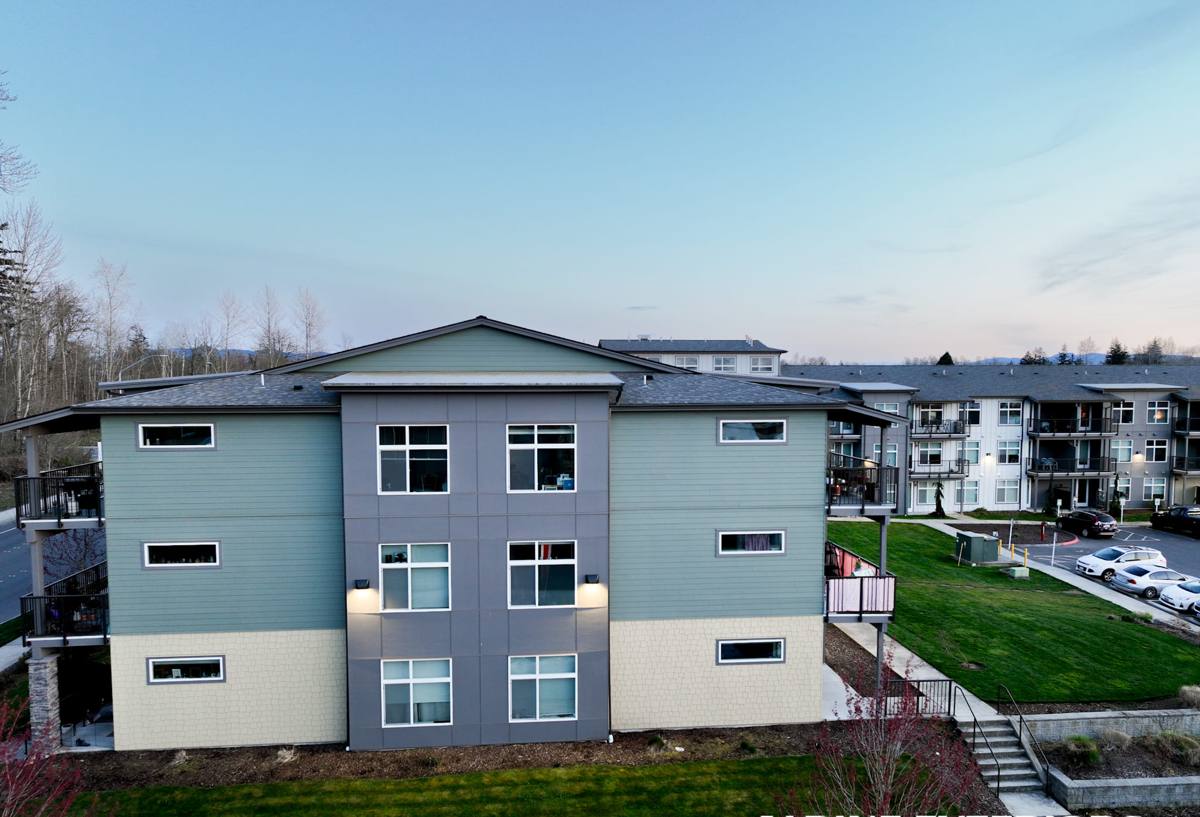
Signs a Blaine Home Needs Siding Replaced, Not Just Patched
Coastal homes often show damage in patterns that differ from inland houses — problems cluster on the weather-facing walls and around anything that penetrates the siding. Before recommending full replacement, we look for evidence that the damage is systemic rather than isolated.
- Soft, spongy, or crumbling siding when pressed, especially near the bottom courses or under windows
- Paint that's bubbling, peeling, or failing repeatedly in the same spots year after year
- Visible warping, cupping, or delamination of siding panels or lap boards
- Persistent moss or black streaking that returns within a season of cleaning
- Interior signs — musty smells, discolored drywall, or soft trim near exterior walls
- Rusting or failing fasteners visible at panel edges and seams
- Gaps opening up at butt joints, corners, or where siding meets trim and flashing
One or two of these on their own might mean a repair. Several of them together, especially on the same exposure, usually mean the wall assembly has been taking on water for a while and a full replacement is the honest recommendation.
What a Correct Siding Replacement Involves
Siding replacement done right in Blaine is as much about what's underneath the new siding as the siding itself. A new product installed over a compromised water-resistive barrier or bad flashing will fail the same way the old siding did, just more slowly.
Tear-Off and Inspection
Once old siding comes off, we inspect the sheathing and framing before anything new goes up. This is the point where hidden rot, saturated insulation, or failed flashing around windows and doors gets found — and it needs to be dealt with before new siding covers it back up.
Water-Resistive Barrier and Flashing
A new, continuous water-resistive barrier, properly lapped and taped, is installed before siding goes on. Flashing at windows, doors, decks, and any other wall penetration gets detailed to shed water outward and downward, not into the wall. In a climate that drives rain sideways for months of the year, this layer matters more than the siding color or profile most homeowners focus on.
Installation to Manufacturer Spec
Fastener type, spacing, nailing pattern, clearances from grade and roofing, and joint treatment all have to follow the manufacturer's specification for the product and the exposure. Cutting corners here is exactly what shows up as the warping, gapping, and fastener failure we see on older Blaine homes during inspections.
Why We Install Only James Hardie Fiber Cement
We don't install vinyl, LP SmartSide, primed spruce, cedar, or other fiber cement brands. That's a deliberate standard, not a lack of options. In a climate like Blaine's — salt air, sustained rain exposure, and heavy moss pressure — the trade-offs of those other materials show up faster and more visibly than they would somewhere drier and more sheltered.
Wood-based products, including engineered wood siding, have organic content that moss and mildew can use as a food source, and they're more sensitive to moisture cycling over time. Vinyl can perform reasonably well, but it relies on a face-seal approach, can become brittle over time, and offers less design flexibility for homeowners who want a specific look. James Hardie fiber cement is engineered specifically to resist moisture, doesn't support fungal growth, and holds paint and factory finishes far longer under coastal conditions. It's also non-combustible, which matters increasingly for insurance and wildfire-adjacent building considerations even on the wet side of the state.
James Hardie's HZ5 product line is engineered for climates like ours — cold, wet, and humid — with a formulation designed to resist moisture damage, cracking, and warping better than standard fiber cement. Paired with the factory-applied ColorPlus finish, which is baked on and backed by its own warranty against fading and peeling, Blaine homeowners get a wall system that's built for the specific weather it will actually face rather than a generic national spec.
How Materials Compare for a Blaine Exterior
| Material | Moisture Resistance | Moss/Algae Susceptibility | Maintenance | Typical Lifespan Here |
|---|---|---|---|---|
| James Hardie Fiber Cement | Engineered for wet climates (HZ5) | Low — non-organic substrate | Periodic wash, repaint on longer cycle | 30+ years with correct install |
| Vinyl Siding | Face-seal dependent, can allow water behind panels | Moderate | Low, but limited repair options if damaged | 15-25 years, shorter in wind-driven rain |
| Wood/Cedar | Absorbs moisture, prone to cupping | High | Frequent painting/staining, moss treatment | 10-20 years without heavy upkeep |
| Engineered Wood (LP SmartSide) | Better than raw wood, still organic-based | Moderate to high | Regular inspection of edges and seams | 20-25 years, sensitive to installation quality |
These are general performance patterns, not guarantees — actual results depend heavily on installation quality, exposure, and upkeep. But the pattern holds across the coastal Pacific Northwest: materials without inherent moisture and organic-growth resistance need more maintenance to reach the same service life that Hardie delivers with routine care.
Our Process, Start to Finish
1. On-Site Assessment
We walk the exterior with you, check exposures, and note where wind, rain, and shade are likely causing the most wear. This is also when we flag any areas that may need deeper repair once tear-off begins.
2. Estimate and Product Selection
We go over Hardie's plank, panel, and shingle options, along with ColorPlus finish choices, and put together a written estimate scoped to your home's actual exposures — not a one-size-fits-all package.
3. Tear-Off and Structural Check
Old siding comes off, sheathing and framing get inspected, and any rot or moisture damage found gets addressed and documented before new siding goes on.
4. Water Management Layer
New water-resistive barrier and flashing go in first, detailed around every window, door, and penetration to direct water out and down.
5. Hardie Installation
Siding is installed to manufacturer spec for fastening, spacing, and clearances, with attention to caulking and joint treatment appropriate for our wet-side climate.
6. Final Walkthrough
We walk the finished job with you, cover basic care, and make sure everything meets what was scoped in the estimate.
Why a Crew That Already Works Blaine Matters
Blaine's building department, permitting expectations, and typical lot conditions differ enough from other parts of Whatcom County that local experience saves time and avoids surprises. A crew that regularly works the area already understands the wind and rain exposure patterns specific to different parts of town, knows what moss and moisture damage tends to look like on local homes, and isn't learning coastal detailing for the first time on your project. That familiarity shows up in fewer callbacks and fewer surprises once tear-off starts.
It also means faster turnaround. A contractor based in Ferndale and already scheduling work throughout Whatcom County, including Blaine, can typically get crews and materials on site faster than one dispatching from farther away, and can be more responsive if a warranty or follow-up question comes up after the job is done.
Caring for Hardie Siding After Installation
One of the practical benefits of switching to fiber cement in a climate like Blaine's is how little ongoing work it demands compared to wood-based alternatives.
- Rinse the exterior with a garden hose once or twice a year to clear salt residue and organic buildup
- Avoid pressure washing directly at joints and seams, which can force water behind panels
- Keep gutters clear so overflow doesn't run down the siding face repeatedly
- Trim back vegetation and tree cover that keeps any wall in constant shade and dampness
- Have caulking at trim and penetrations checked every few years and refreshed if it's cracking
None of this is heavy maintenance — it's the kind of upkeep most homeowners already do, just applied consistently on a coastal schedule rather than an inland one.
What Affects the Cost of a Blaine Siding Replacement
Every home is different, but a few factors consistently move the price on jobs in this area: the amount of tear-off and hidden repair needed once old siding comes off, the home's overall square footage and number of stories, the complexity of trim and architectural detail, and the Hardie product line and profile chosen. Homes that have gone longer without maintenance, or that back up to heavy tree cover, tend to need more sheathing repair once the old siding is removed, which is something we can only quote accurately after an in-person look.
If your Blaine home is showing signs of wear from salt air, driving rain, or moss buildup, we're happy to take a look and give you a straightforward, no-pressure estimate using the form below.