 Ferndale Siding
 Fairhaven's Coastal Climate Is Harder on Siding Than It Looks
Fairhaven sits close enough to the water that homes here deal with a different set of conditions than siding further inland in Ferndale or the rest of Whatcom County. Salt-laden air off Bellingham Bay accelerates corrosion on fasteners and hardware, driving rain off the Strait of Georgia pushes water sideways into seams and laps that would stay dry in a calmer climate, and the region's long, damp fall-through-spring stretch gives moss and algae months to take hold on north-facing walls and anything shaded by trees. None of this is dramatic on its own, but stacked together year after year, it's exactly the combination that exposes weak siding installations first.
We see the pattern often: a house that looks fine from the street has soft sheathing behind a window head, or paint that's failed on the shaded side years before the sunny side shows any wear. Fairhaven's mix of older housing stock and newer construction means we run into both problems — original wood siding that's simply reached the end of its service life, and newer vinyl or engineered wood siding that was never really built for this level of sustained moisture exposure.
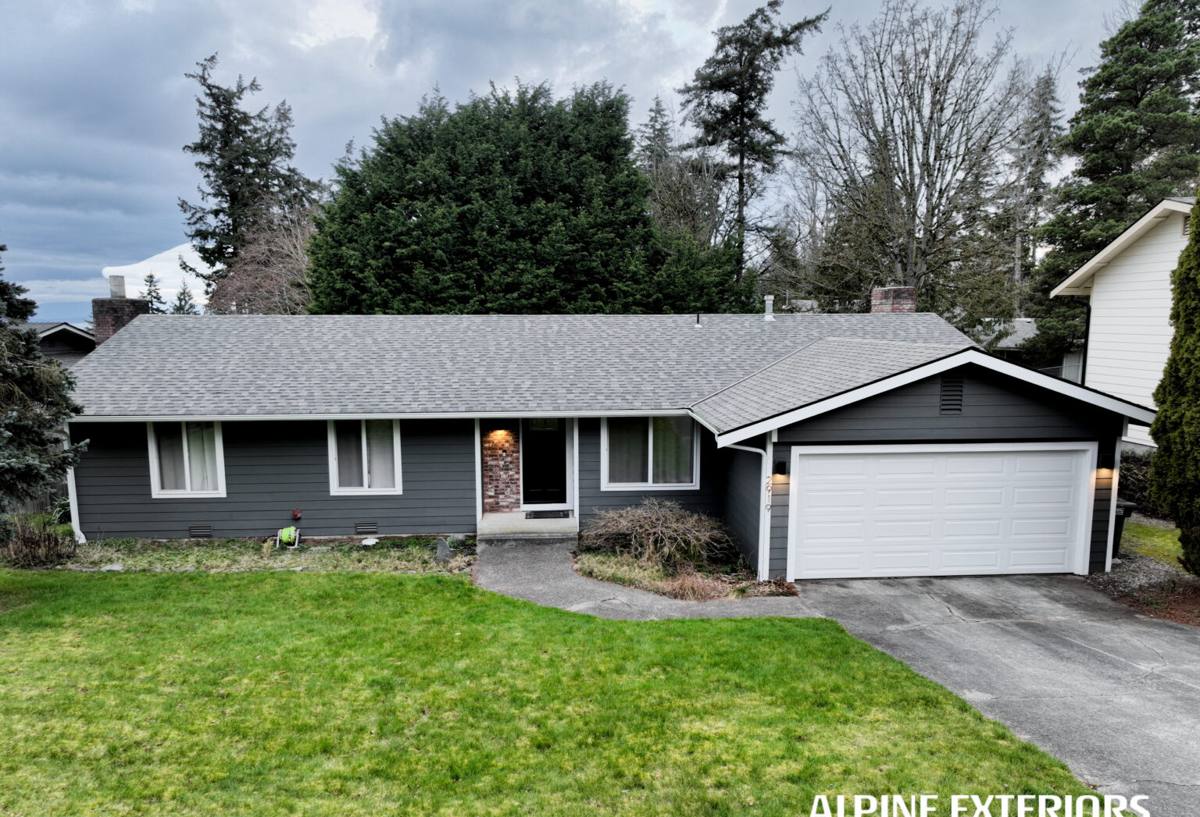
Signs a Fairhaven Home Needs Replacement, Not Just Repair
Not every siding problem calls for a full tear-off. But there's a point where patching individual boards or caulking gaps stops being a real fix and starts being a way to delay an inevitable, larger job — often at greater cost once rot has spread into the framing.
- Soft, spongy, or crumbling material when you press on it, especially near the bottom courses and around window and door trim
- Paint or finish that keeps failing in the same spots within a year or two of repainting
- Persistent moss or dark staining on siding that stays damp for extended periods, particularly on north- and west-facing walls
- Visible gaps, warping, or buckling panels, which usually means moisture has already gotten behind the siding
- Rising energy bills that point to a failing weather barrier rather than just an insulation issue
- Siding that's more than 20-25 years old, regardless of how it looks on the surface
When Repair Still Makes Sense
Isolated damage — a cracked board from a fallen branch, a section damaged during other exterior work — can often be repaired without replacing the whole elevation, as long as the rest of the siding and the water barrier behind it are still sound. A straightforward inspection is usually enough to tell the difference between a repair job and a replacement job.
What a Correct Siding Replacement Actually Involves
Siding replacement is easy to do poorly and easy to sell as "just swapping the outside skin of the house." Done correctly, especially in a wet coastal microclimate like Fairhaven's, it's really a system of layers working together, and every layer matters.
Full Tear-Off, Not Overlay
Installing new siding directly over old siding is faster and cheaper, but it traps whatever moisture or damage already exists underneath, and it prevents a proper inspection of the sheathing and framing. In a climate that gets sustained rain and salt air, that's a bad trade. We remove the old siding down to the sheathing so any hidden rot, insect damage, or failed flashing gets found and fixed before anything new goes up.
Water-Resistive Barrier and Flashing
The siding itself is the least important waterproofing layer on the wall — the weather-resistive barrier (WRB) underneath, and the flashing at every window, door, and penetration, are what actually keep water out of the structure. In a driving-rain environment, flashing details that "mostly work" in a drier climate will eventually fail here. We install a continuous WRB with properly lapped seams and correctly integrated flashing at every opening, not just caulk over gaps and call it weatherproofed.
Ventilation and Fastening
Siding needs a way for incidental moisture to drain and dry out, and it needs to be fastened according to the manufacturer's specification for the wind and exposure conditions on the specific wall. Skipping either of these is one of the most common ways a siding job looks fine for a year or two and then starts failing.
Why This Company Installs Only James Hardie Fiber Cement
We install James Hardie fiber cement siding exclusively, and we don't offer vinyl, LP SmartSide, Cemplank, Allura, primed spruce, or cedar. That's a deliberate standard, not a lack of options. In a climate that combines salt air, sustained rain, and a long moss season, the material differences between these products stop being marketing points and start being the difference between siding that holds up and siding that needs constant attention.
| Factor | James Hardie Fiber Cement | Vinyl | Engineered Wood (LP SmartSide) | Cedar |
|---|---|---|---|---|
| Moisture behavior | Dimensionally stable, doesn't absorb and swell | Doesn't rot, but can warp and gap over time | Wood-based core is vulnerable if the finish is compromised | Absorbs moisture, needs consistent sealing/staining |
| Combustibility | Non-combustible | Melts/deforms under heat | Combustible | Combustible |
| Finish durability | Factory-applied ColorPlus finish, doesn't rely on field paint | Color molded in, can fade | Field-painted, repaints needed over time | Field-finished, frequent maintenance |
| Pest/rot resistance | Not a food source, resists rot | Not a food source | Vulnerable if moisture gets in | Vulnerable without upkeep |
| Typical warranty | Long-term, transferable manufacturer warranty | Varies by product line | Manufacturer warranty, finish-dependent | Minimal to none on the material itself |
Hardie's HZ5 product line is engineered specifically for climates like ours — regions with sustained moisture exposure — and it's built to resist the freeze-thaw and moisture cycling that's common in western Whatcom County. The factory-applied ColorPlus finish also matters more here than in a drier climate, because it removes field paint as a point of failure; paint applied on-site during a wet stretch, or that fails prematurely on a shaded wall, is one of the more common callbacks we see with other materials.
Our Siding Replacement Process
- On-site inspection and honest assessment of whether the home needs full replacement, partial replacement, or repair
- Detailed written estimate covering material, labor, and any anticipated sheathing or framing repair
- Full tear-off of existing siding down to the sheathing
- Inspection and repair of any rot, soft sheathing, or damaged framing found underneath
- Installation of a continuous water-resistive barrier with correctly lapped seams
- Flashing installed at all windows, doors, and penetrations before any siding goes on
- James Hardie panels or lap siding installed per manufacturer fastening and clearance specifications
- Trim, caulking, and detail work finished to match the home's existing lines
- Final walkthrough and site cleanup
Cost Factors for a Fairhaven Siding Replacement
Every home is different, and we won't quote a number without seeing the house, but the factors that actually move the price are consistent from job to job.
| Factor | Why It Affects Cost |
|---|---|
| Home size and wall area | More square footage means more material and labor, straightforwardly |
| Siding profile chosen | Lap siding, panel siding, and shingle-style Hardie products differ in material and install time |
| Condition of the sheathing underneath | Rot or moisture damage found during tear-off adds repair work before new siding can go on |
| Trim and architectural detail | Multiple gables, dormers, or trim-heavy elevations take more time than flat, simple walls |
| Site access | Multi-story sections, steep lots, or tight waterfront-adjacent access can slow staging and installation |
| Number of window and door openings | Each opening needs individual flashing work, which adds labor regardless of siding material |
Maintaining New Siding Through Whatcom County's Moss Season
Correctly installed James Hardie siding is low-maintenance, but "low-maintenance" isn't "no-maintenance" in a climate like this. A little seasonal attention goes a long way toward getting the full service life out of the material.
- Rinse siding with a garden hose once or twice a year, focusing on shaded, north-facing walls where moss and algae take hold first
- Keep gutters and downspouts clear so overflow doesn't run down the siding face
- Trim back vegetation that shades walls or blocks airflow, since standing moisture and poor drying are what let moss establish in the first place
- Inspect caulking at trim and penetrations annually and re-caulk any joints that have opened up
- Have flashing and trim checked periodically, since these areas — not the siding panels themselves — are usually where problems start
Why It Matters That We Already Work in Fairhaven and Ferndale
Waterfront-adjacent neighborhoods like Fairhaven don't behave exactly like inland parts of Ferndale or the rest of Whatcom County, even though they're only minutes apart. Salt exposure, wind-driven rain patterns, and shading from mature trees and tighter lots all vary block by block, and a crew that's already worked this specific stretch of coastline knows where to pay extra attention — which walls take the worst weather, which details tend to fail first, and how local permitting and code requirements apply to exterior work here. That local pattern recognition is the difference between a generic install and one that's actually built for the conditions on your specific home.
If your Fairhaven home's siding is showing its age, or you're not sure whether you're looking at a repair or a full replacement, we're happy to take a look. Request a free, no-pressure estimate using the form below, and we'll give you a straight answer about what your home actually needs.