 Ferndale Siding
 Why Nooksack Homes Need Siding Built for This Climate
Nooksack sits in a part of Whatcom County where the weather doesn't take a season off. Homes here deal with months of driving rain, a marine-influenced air that carries salt inland from Puget Sound and the Strait of Georgia, and enough shade and dampness to grow moss on almost anything that sits still long enough. Siding in this area isn't just a cosmetic layer — it's the thing standing between your framing and a climate that actively works to break materials down. When siding fails here, it's rarely one dramatic event. It's a slow accumulation of trapped moisture, softened panels, and moss creeping up from the ground line until a homeowner finally notices the wall doesn't feel right anymore.
A siding replacement done for this climate has to account for all three of those pressures at once: standing up to sustained rain rather than the occasional shower, resisting the slow corrosion and finish breakdown that salt air causes over years, and shedding moisture fast enough that moss and algae don't get the foothold they need. That's a different job than replacing siding in a dry inland climate, and it changes what "correct installation" actually means.
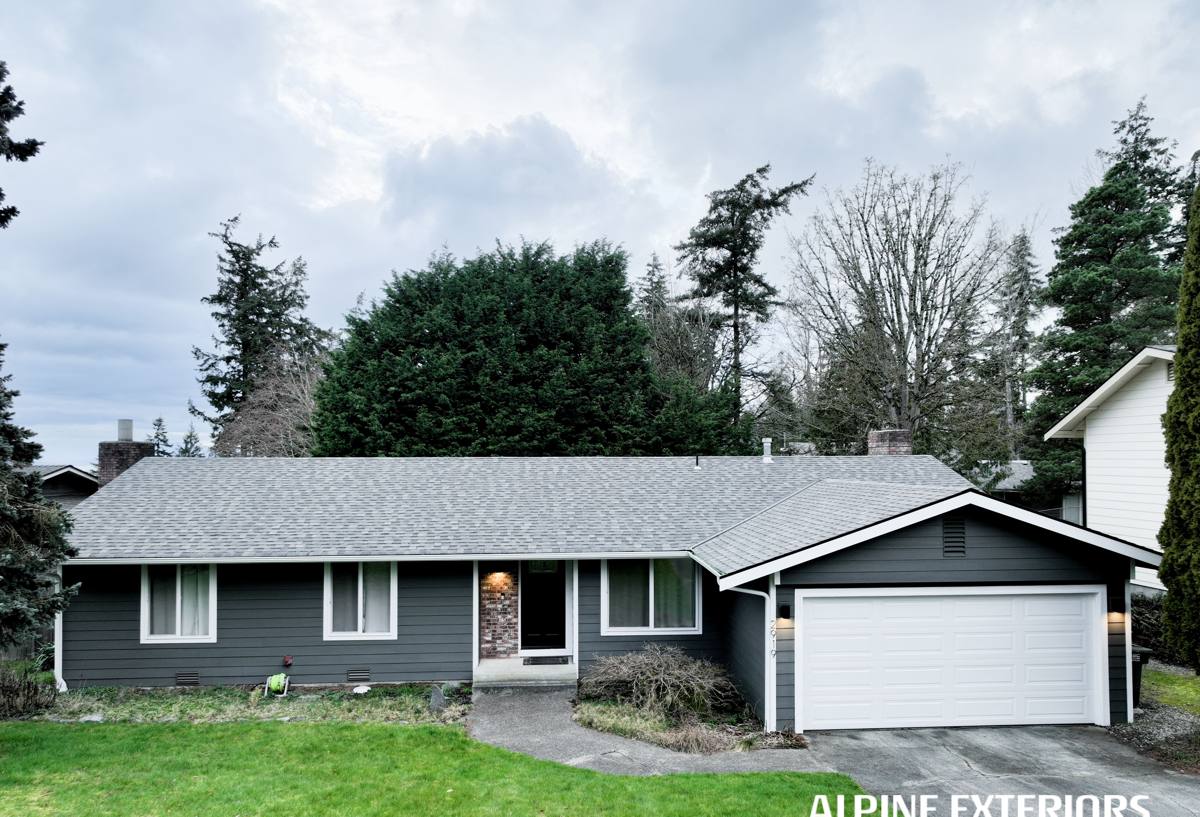
Signs Your Siding Has Reached the End of Its Life
Most siding failures in this area show up gradually, and homeowners often live with early warning signs for a year or two before calling anyone. Catching the problem early usually means a straightforward replacement; waiting usually means sheathing repair gets added to the job.
- Dark green or black staining that comes back within weeks of being cleaned off, especially on north-facing or shaded walls
- Panels that feel soft, spongy, or crumble slightly when pressed near the bottom edges or seams
- Visible cupping, warping, or bowing, particularly on lower courses closest to grade or splash-back zones
- Paint that's peeling, bubbling, or needing repainting far more often than it used to
- Cracked or separated caulk joints around windows, doors, and trim
- A musty smell inside near exterior walls, which can point to moisture already working its way through
Any one of these on its own might just mean a cleaning or a caulk touch-up. Two or three together, especially combined with visible softness in the material, usually mean the siding system itself has broken down and a patch job won't hold.
Why Moss Is More Than a Cosmetic Problem
It's tempting to treat moss as a pressure-washing chore, but moss holds moisture directly against the siding surface for extended periods. On materials that aren't engineered to resist that kind of sustained dampness, that constant moisture contact is what starts delamination, rot, and finish failure in the first place. A long moss season doesn't just make a house look neglected — it accelerates whatever weakness already exists in the siding underneath it.
Material Comparison for a Wet, Mossy, Salt-Influenced Climate
Not every siding material handles this combination of conditions the same way. Here's how the common options actually perform once they've been on a Whatcom County wall for a decade or more, rather than how they perform on a spec sheet.
| Material | Moisture Behavior | Moss/Algae Resistance | Maintenance Burden | Typical Real-World Lifespan Here |
|---|---|---|---|---|
| Vinyl | Doesn't absorb water itself, but seams and gaps let moisture behind the panel where it can sit against sheathing | Low — smooth but porous-feeling surface still hosts algae growth in shaded areas | Low upfront, but cracks and fades with UV and cold snaps over time | Variable; fasteners and seams are the weak point in wind-driven rain |
| Engineered Wood (LP-style) | Wood-based substrate is vulnerable if any edge, seam, or fastener point isn't perfectly sealed | Moderate — factory treatment helps, but any breach in the coating exposes wood fiber | Higher — depends on strict, unbroken caulking and paint maintenance | Strongly dependent on installation precision and ongoing upkeep |
| Cedar / Primed Spruce | Natural wood, absorbs and releases moisture constantly, which drives movement and checking | Low without regular treatment — wood is a natural food source for moss and mildew | High — needs periodic refinishing to keep moisture out | Shortest of the group in sustained wet climates without diligent upkeep |
| Fiber Cement (James Hardie) | Non-combustible, dimensionally stable material that doesn't swell, warp, or rot from moisture exposure | High — dense, engineered surface gives moss and algae far less to hold onto | Low — factory-applied finish holds up without repainting on a short cycle | Long-term, backed by manufacturer engineering for this climate zone |
This is the comparison that drove our company to standardize on one product. We've seen too many wood-based and engineered-wood installs fail early in exactly this climate — not because the product was poorly made, but because sustained coastal moisture and long moss seasons expose every small gap in installation over time. Fiber cement gives us a material that's engineered to tolerate the mistakes that are hardest to fully eliminate on a real job site, in real weather.
What a Correct Siding Replacement Actually Involves
The material matters, but installation quality is what actually determines whether siding lasts 10 years or 40 in this environment. A correct replacement isn't just removing old panels and nailing up new ones.
Tear-Off and Sheathing Inspection
Once the old siding comes off, the sheathing underneath tells the real story. Soft spots, staining, or rot at this stage need to be cut out and replaced before anything new goes up — covering damaged sheathing with new siding just hides a problem that will resurface.
Weather-Resistive Barrier and Drainage Gap
A properly lapped weather-resistive barrier goes on before any siding, and in a climate with this much sustained rain, a drainage gap behind the siding matters. That gap lets any moisture that does get behind the panels drain and dry out instead of sitting against the wall.
Flashing and Trim Details
Windows, doors, and any horizontal trim are where water intrusion actually starts on most homes. Flashing has to be layered correctly — each piece lapping over the one below it — so water is always directed outward and down, never trapped behind a joint.
Fastening and Finish
Fastener spacing, type, and placement all affect how well siding resists wind-driven rain, and factory-finished products need to be cut, nailed, and caulked according to the manufacturer's specifications to keep their warranty intact.
Our Process for Nooksack-Area Homes
- On-site inspection and honest assessment — we look at your current siding, sheathing condition where visible, and any moisture or moss patterns specific to your lot before recommending anything
- Written estimate — a clear breakdown of material, labor, and any sheathing repair we expect to need, with no vague allowances
- Site prep and protection — landscaping, walkways, and windows protected before tear-off begins
- Tear-off and sheathing repair — old siding removed, sheathing inspected and repaired where needed before moving forward
- Weather barrier, drainage gap, and flashing installation — the parts of the job that don't show once siding goes up, but determine how it performs for the next 20+ years
- Siding installation — installed to manufacturer specification for fastening, spacing, and caulking
- Trim, caulking, and touch-up — clean, consistent detailing at every joint and corner
- Final walkthrough — we go over the finished work with you before calling the job done
Why We Install Only James Hardie Fiber Cement
We made the decision to install exclusively James Hardie products after years of watching which siding systems actually held up in this part of Washington and which ones didn't. Hardie's HZ5 product line is engineered specifically for climate zones like ours, with a coastal region product line built to handle sustained moisture and marine air. The ColorPlus factory finish is baked on under controlled conditions, which gives it more consistent, longer-lasting color and adhesion than field-applied paint can match — a real advantage when repainting a full house exterior is expensive and disruptive.
Fiber cement is also non-combustible, which matters increasingly in the Pacific Northwest as wildfire risk becomes a bigger part of insurance and building conversations even west of the mountains. And because Hardie backs its products with a strong, transferable warranty when installed by a certified installer, homeowners get a level of protection that most engineered-wood and vinyl products simply don't offer in the same way.
We don't install LP SmartSide, vinyl, Cemplank, Allura, primed spruce, or cedar — not because those products can't be installed competently, but because we've standardized our crew, training, and warranty backing around one system we trust to perform in this specific climate, year after year, without surprises.
What Drives the Cost of Siding Replacement Here
| Factor | Why It Matters |
|---|---|
| Home size and wall area | More square footage means more material and labor hours, the largest single driver of total cost |
| Number of existing siding layers | Homes with siding installed over older siding take longer to tear off and haul away |
| Sheathing or framing repair needed | Rot found during tear-off has to be addressed before new siding goes on, which adds material and labor |
| Trim and water management upgrades | Adding or upgrading flashing, drip caps, and drainage details costs more upfront but reduces future moisture problems |
| Accessibility | Multi-story sections, steep grades, or heavy tree cover close to the house can slow installation |
| Siding profile and accessories | Lap width, trim style, and corner details affect both material cost and installation time |
We'll walk through each of these factors specific to your home during the estimate, so the number you get reflects your actual house rather than a generic average.
Keeping Siding Looking Right After Installation
Correctly installed fiber cement needs far less attention than wood or engineered-wood alternatives, but a little seasonal care goes a long way in this climate:
- Rinse siding with a garden hose (not a high-pressure washer aimed directly at seams) once or twice a year to clear pollen, dust, and early moss growth
- Trim back shrubs and tree branches so foliage isn't holding moisture directly against the wall
- Check caulking around windows, doors, and trim annually and re-caulk any joints that have cracked or separated
- Keep gutters clear so overflow isn't running directly down the siding face
- Address any small mechanical damage (a ladder scuff, a stray baseball) promptly rather than letting it sit exposed
Why Hiring a Crew That Already Works This Area Matters
Siding installation in Whatcom County isn't identical to siding installation in a drier, milder climate, and a crew that hasn't worked here regularly can miss details that matter — drainage gap sizing for sustained rain, flashing choices suited to salt-tinged air, or simply knowing which wall orientations on a given lot are going to fight moss the hardest. A crew that already works in and around Nooksack and Ferndale has seen how houses in this specific area age, which means fewer surprises during tear-off and a better-informed recommendation from the first inspection.
Local familiarity also means straightforward accountability — permitting through the right local authority, a crew that's easy to reach if a question comes up after the job is done, and a reputation built on work that's still standing up years later, not just work that looked good on install day.
If your siding is showing moss staining, soft spots, or paint that won't hold anymore, we're happy to take a look and give you a straight assessment — no pressure, no inflated scare tactics, just an honest read on what your home needs. Reach out for a free estimate and we'll walk the property with you.