 Ferndale Siding
 Why Lynden Roofs Take a Beating
Lynden sits inland from Bellingham Bay, but that doesn't spare it from the weather that defines Whatcom County. The same Pacific storm systems that push salt-laden marine air across the coastline carry driving rain and gusting wind straight into the Nooksack Valley. Add in a fall-through-spring stretch where the roof rarely gets a chance to fully dry out, and you have conditions that wear a roof down faster than most homeowners expect — even when nothing dramatic ever seems to "happen" in a single storm.
Storm damage in Lynden is rarely just one big event. It's usually a mix of wind that lifts and loosens shingles or panels, wind-driven rain that finds every gap those loosened materials create, and a long moss season that keeps roof surfaces damp and slowly breaks down the materials underneath. By the time a leak shows up inside the house, the roof has often been compromised for months.
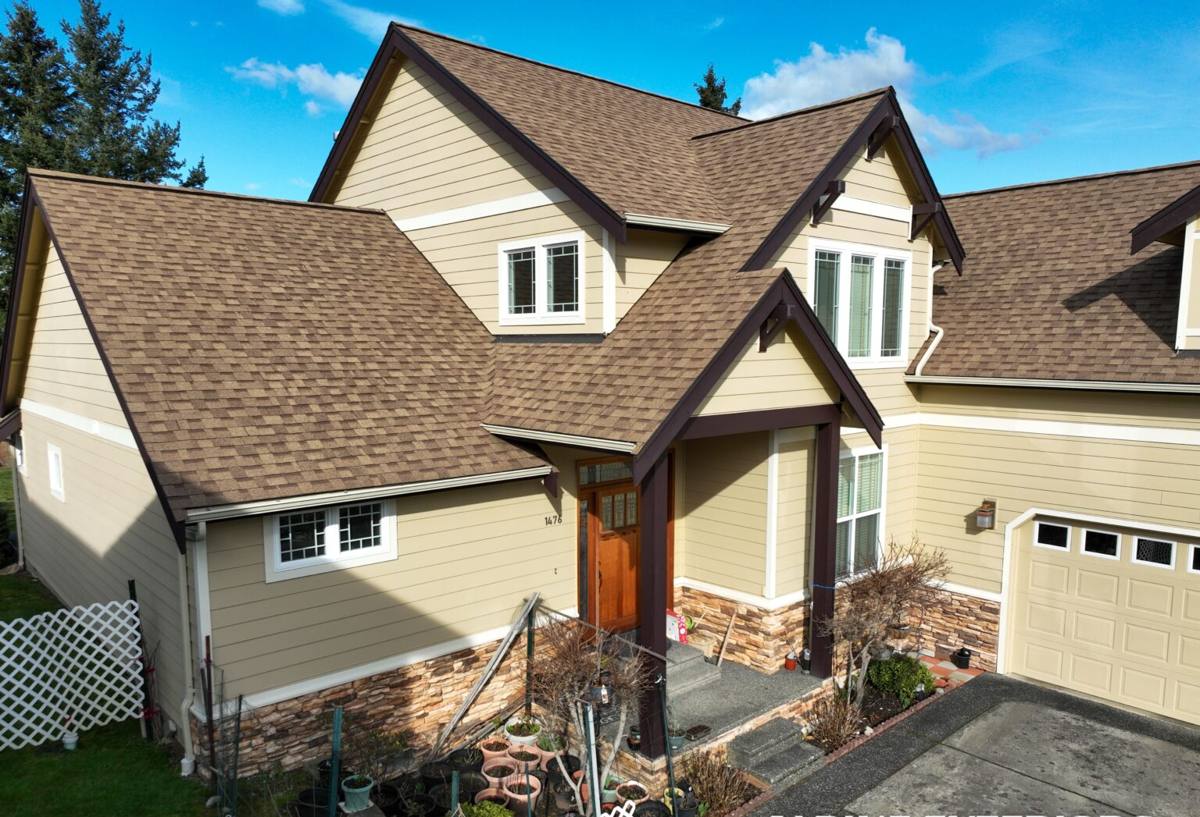
How Storm Damage Shows Up on Local Homes
Wind Damage
Sustained wind and sharp gusts off passing storm fronts can lift shingle tabs, crease or dent metal panels, and pull fasteners loose without stripping anything off the roof entirely. That's the tricky part — a wind-damaged roof often looks fine from the ground. The damage is in the seal strips, the fastener grip, and the flashing edges, not in obvious missing pieces.
Wind-Driven Rain
Whatcom County storms don't usually deliver rain straight down. It comes in sideways, which means it gets pushed up under shingle edges, around chimney and vent flashing, and into any gap that wind has already opened. This is why a roof that "held up fine" in a storm can still develop a leak two or three storms later — the entry point was created early, and it just took repeated rain events to push water far enough to reach the interior.
Moss and Prolonged Moisture
Lynden's long wet season keeps roof surfaces shaded and damp for extended stretches, especially on north-facing slopes and under tree cover. Moss doesn't just sit there — it holds moisture against the roofing material, works into shingle layers and panel seams, and accelerates the breakdown of anything already stressed by wind or impact. A storm-damaged roof with moss growth on it deteriorates noticeably faster than one that's kept clean.
Signs a Lynden Homeowner Shouldn't Ignore
- Granules collecting in gutters or at downspout outlets after a windstorm
- Shingles that look curled, lifted, or slightly out of line compared to the rest of the field
- Dented, creased, or lifted metal flashing around chimneys, vents, or skylights
- A musty smell or discoloration on ceilings or in the attic after a heavy rain event
- Visible daylight through the roof deck when viewed from inside the attic
- Moss buildup concentrated in one area, which often points to a spot holding extra moisture
- Any debris impact — branches, hail, or blown debris — even if the roof "looks okay" afterward
Any one of these on its own might not mean much. Two or three together, especially after a named storm or a stretch of high wind, is worth a professional look before the next rain event finds the weak point for you.
What a Correct Storm Damage Repair Actually Involves
A lot of "storm repairs" done wrong are really just patch jobs — a bead of sealant over a visible gap, a few replacement shingles nailed over the damaged area, done. That approach hides a problem instead of fixing it. A correct repair addresses three layers, not just the surface:
- The roofing material itself — replacing or resecuring shingles, panels, or tiles that are cracked, lifted, or missing their seal.
- The underlayment and deck — checking that water hasn't already reached the layer beneath the roofing material, and that the deck itself hasn't started to soften or delaminate.
- Flashing and transitions — chimneys, vents, valleys, and roof-to-wall intersections are where storm damage most often creates a long-term leak path, and they're the most commonly rushed part of a quick patch.
Skipping any of these three means the repair looks complete but isn't. We've reworked plenty of roofs where a previous repair addressed the visible shingle damage but never checked what was happening underneath it.
Our Process for Storm Damage Repairs in Lynden
1. Inspection and Documentation
We start with a full roof inspection, not just a look at the area you called about. Storm damage is rarely isolated to one spot — wind stresses the whole roof, and we've found secondary damage on the opposite slope more times than not. We document what we find with clear notes and photos, which matters whether you're paying out of pocket or working with an insurance claim.
2. Honest Scope of Work
We tell you what actually needs repair versus what's cosmetic or can wait. If the damage is limited to a section, we repair that section correctly rather than upselling a full replacement you don't need. If the damage is more extensive than it looks from the ground — or if it's the third repair on an aging roof — we'll say that too.
3. The Repair Itself
We match materials to what's already on the roof where possible, replace underlayment in any area that's seen water intrusion, and rebuild flashing details properly rather than resealing over old flashing that's already failing. Fasteners and seal strips get full attention, not just the pieces that are visibly displaced.
4. Final Check and Cleanup
Before we leave, we walk the repair with you, confirm drainage and flashing transitions are functioning, and clear the site of debris and old material. Storm repair work should leave your roof in better condition at every layer, not just look resolved from the street.
Repair or Replace? How We Make That Call
Not every storm-damaged roof needs to come off. But a roof near the end of its service life, or one that's taken repeated storm hits over several seasons, may cost more to keep patching than to replace outright. Here's how we generally weigh it:
| Factor | Leans Toward Repair | Leans Toward Replacement |
|---|---|---|
| Age of roof | Under 12–15 years | Nearing or past expected service life |
| Extent of damage | Localized to one area or slope | Spread across multiple sections |
| Underlying deck condition | Solid, dry, no rot | Soft spots, delamination, or repeated leak history |
| Repair history | First or second repair | Third-plus repair in a few years |
| Material availability | Matching material still available | Discontinued or mismatched material |
We'll walk you through where your roof falls on this table before recommending either path — the goal is the right call for your roof, not the bigger invoice.
Working With Insurance on a Storm Claim
Many storm damage repairs in Lynden get filed as insurance claims, and the paperwork side matters as much as the repair itself. We provide clear documentation — photos, a written scope, and an honest assessment of cause and extent of damage — that you can hand to your adjuster. We don't inflate scope to pad a claim, and we don't downplay damage to make a job look smaller than it is. Our job is to give you and your insurer an accurate picture so the claim reflects the actual repair needed.
If you're not sure whether your situation warrants a claim at all, we can do the inspection first and help you decide. Not every repair needs to go through insurance, and filing unnecessarily can affect future premiums.
Why a Crew That Already Works in Lynden Matters
Storm damage repair isn't a one-size-fits-all trade. A crew that regularly works roofs in Lynden and the surrounding Whatcom County area already knows which roof styles and materials are common locally, how the area's wind patterns tend to hit roofs, and what moss and moisture do to a roof left unchecked through a wet season. That familiarity shows up in faster, more accurate diagnosis — we're not guessing at how the local climate behaves, we're repairing to it.
It also matters for response time. Storm damage doesn't wait for a convenient schedule, and a crew based locally can get out to assess and tarp exposed areas faster than one traveling in from farther away. A small leak addressed in a day or two is a repair. The same leak ignored for a couple of weeks during a wet stretch can turn into a deck replacement.
After the Repair: Keeping Storms From Doing It Again
A good repair is only half the equation — the other half is reducing how much damage the next storm can do. A few habits go a long way for Lynden homes:
- Keep gutters and downspouts clear so wind-driven rain has somewhere to go
- Trim back overhanging branches that shade roof sections and feed moss growth
- Schedule moss treatment or removal before it has a chance to work into roofing material
- Have flashing and seal strips checked after any major wind event, even without visible damage
- Get a roof inspection at least once a year, ideally before the wet season sets in
- Address small issues — a lifted shingle corner, a loose fastener — before the next storm finds them
None of this eliminates storm risk entirely — nothing does in this climate — but it narrows the window where wind and rain can turn a minor weak point into real damage.
If a recent storm has you wondering about the condition of your roof, we're happy to take a look. We offer free, no-pressure estimates for storm damage repair in Lynden — just fill out the form below and we'll get in touch.