 Ferndale Siding
 Storm Damage Roof Repair for Sudden Valley Homes
When a windstorm rolls through Whatcom County, Sudden Valley tends to take it differently than the flatter, more open parts of the county. The tree cover around the lake changes how wind moves across a roof, and the shade that makes the neighborhood so pleasant in summer is the same shade that keeps roofs damp and mossy for months at a time. Storm damage out here is rarely a single dramatic event — it's usually one storm exposing weaknesses that a previous storm, or a full season of moss growth, already started.
Our crew works storm calls throughout Whatcom County, and we treat Sudden Valley roof repair as its own category of job, not a generic "storm damage" service. The combination of lake humidity, dense tree canopy, and the driving rain that comes through this part of Washington calls for a repair approach that accounts for all three, not just whatever is visibly broken after the wind dies down.
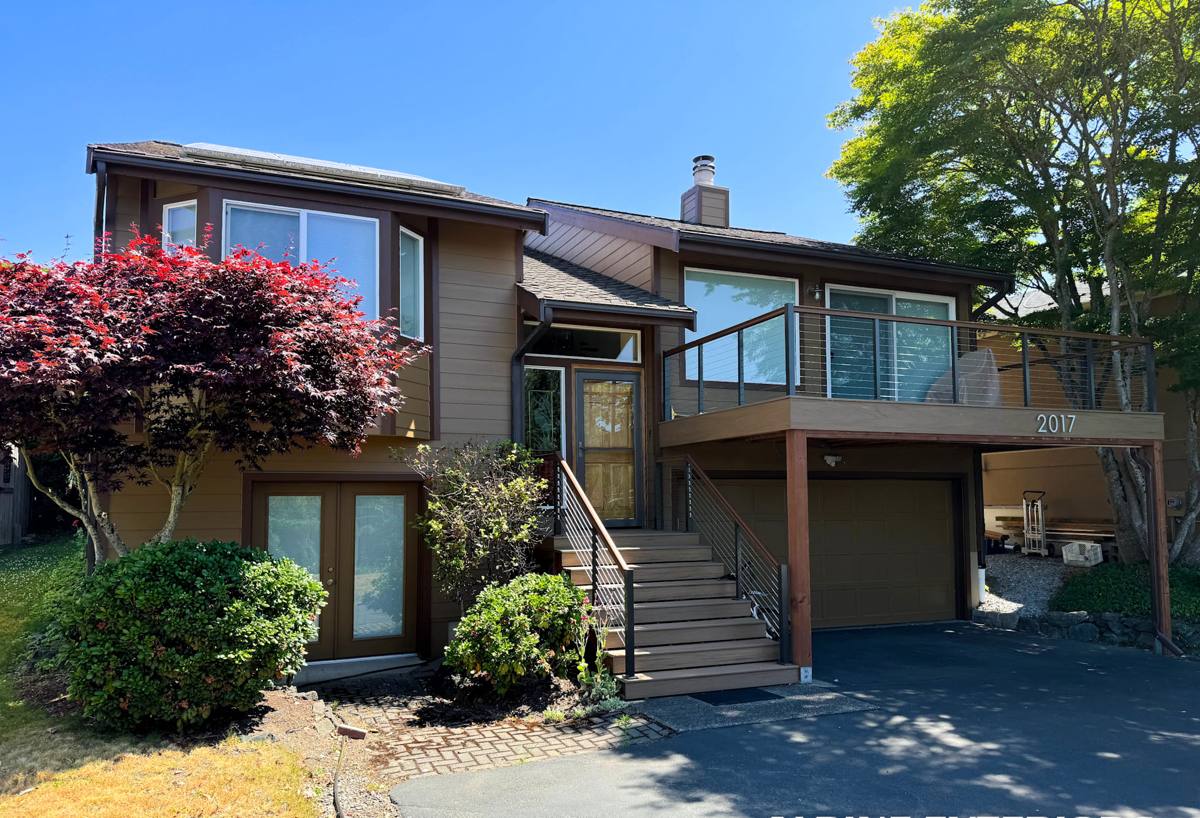
What Local Weather Actually Does to a Roof Here
Wind and Driving Rain
Whatcom County storms rarely come straight down. Wind pushes rain sideways and forces it up under shingle tabs, around flashing edges, and into any gap that wouldn't leak in a calm rain. On a roof that's already lost a few shingles or has lifted flashing from age, one hard blow can drive enough water underneath the roofing to soak sheathing before anyone notices a ceiling stain.
A Long Moss Season
Tree cover and lake-area humidity mean moss has a long growing window in this part of the county. Moss holds moisture directly against shingle granules and roof decking, which shortens the life of the roofing material and, more importantly for storm response, hides the early signs of damage. A roof with heavy moss can look intact from the ground while wind and rain are already working underneath it.
Salt Air and Metal Fatigue
Whatcom County's coastal exposure means salt-laden air is part of the climate picture across the region, not just right on the water. Over years, that air accelerates corrosion on unprotected fasteners, exposed flashing edges, and lower-grade metal components. It's a slow process, but it's exactly the kind of weak point a storm finds first — a corroded nail or a pitted flashing seam that was fine last year can fail the moment wind and rain hit it hard.
None of these three factors causes storm damage by itself. Together, they mean a Sudden Valley roof under real storm stress needs a different inspection than a roof in a drier, more exposed part of the county — one that specifically checks for hidden moisture, moss-related material loss, and long-term corrosion, not just obvious missing shingles.
Signs Your Roof Took Storm Damage
After a windstorm, most homeowners check for the obvious — missing shingles, a downed branch, visible dents in gutters. Those matter, but a few less obvious signs are just as important to catch early:
- Granules collecting in gutters or at downspout outlets, which signal shingle wear accelerated by wind abrasion
- Shingle tabs that are lifted or curled but not fully detached — these leak long before they blow off
- Flashing around chimneys, vents, or skylights that looks bent, separated, or pulled away from the surface it seals
- Fresh moss buildup at the edge of a repaired or older section, which traps water against the deck
- New or spreading water stains on interior ceilings, especially near exterior walls or valleys
- Sagging or soft spots when walking the roofline visually from the ground — never walk a storm-damaged roof yourself
- Debris embedded in the roofing surface, which can puncture or bruise shingles even without knocking them loose
If you notice any of these after a storm, the roof needs a real inspection, not just a glance. Water that gets under roofing during one storm often doesn't show up as a ceiling stain until the next one.
What a Correct Storm Repair Actually Involves
A lot of storm repair work in this industry is done fast and cheap — a few replacement shingles, a bead of sealant over a flashing gap, done. That kind of patch can hold for a while, but it doesn't address what actually let the storm cause damage in the first place, and on a moss-prone, moisture-heavy roof like the ones common in Sudden Valley, it tends to fail again within a season or two.
| Quick Patch Approach | Correct Storm Repair |
|---|---|
| Replaces only the shingles that are visibly gone | Checks surrounding shingles and underlayment for wind-driven water intrusion |
| Seals flashing gaps with caulk or roofing cement | Re-sets or replaces flashing so it sheds water correctly without relying on sealant alone |
| Ignores moss unless it's directly over the damaged area | Clears moss and treats the cause of moisture retention nearby |
| Doesn't inspect decking underneath | Checks decking for soft spots or rot where water may have already penetrated |
| Matches materials loosely | Matches shingle type, color, and exposure pattern so the repair doesn't stand out or age differently |
The difference matters most on older roofs or roofs that have already taken a few storms without a proper inspection. A patch on top of hidden moisture damage just delays a bigger repair.
Our Process for a Sudden Valley Storm Call
- Inspection first. We walk the roof (safely, with proper equipment) and check attic space where accessible, looking specifically for wind-driven water intrusion, moss-related deck damage, and corroded fasteners or flashing — not just missing shingles.
- Honest assessment. We tell you what's actually damaged, what's pre-existing wear that the storm exposed, and what can reasonably wait. We don't pad a storm call into a full re-roof recommendation unless the roof genuinely needs one.
- Temporary protection if needed. If there's active water intrusion, we get the area weathertight before the next rain, especially important given how frequently storms stack up here during the wet season.
- Permanent repair. Shingles, flashing, decking, and fasteners are replaced or corrected properly — not just covered — using materials matched to what's already on the roof wherever possible.
- Final check. We confirm the repair sheds water correctly under the same wind-driven rain conditions that caused the original damage, not just that it looks sealed.
Storm Damage and Insurance Claims
Many storm repairs in Whatcom County involve a homeowner's insurance claim, particularly when wind damage is significant or a tree limb is involved. We can document damage clearly with photos and a written assessment that an adjuster can use, and we're glad to walk a homeowner through what's typically covered versus what falls under normal wear — like long-term moss damage that built up over several seasons rather than one storm event. We're not a public adjuster and don't promise claim outcomes, but a clear, honest damage report tends to make the claims process smoother either way.
What Storm Repair Costs Depend On
| Factor | Why It Matters |
|---|---|
| Extent of shingle loss | A handful of shingles is a different job than a full slope stripped by wind |
| Underlying deck condition | Rotted or soft decking found during repair adds material and labor |
| Flashing complexity | Chimneys, skylights, and multiple roof valleys take more time to re-seal correctly than a simple gable roof |
| Moss and moisture cleanup | Roofs with heavy moss buildup often need cleaning and treatment alongside the repair itself |
| Access and roof pitch | Steeper roofs and limited access around trees or landscaping affect labor time |
Because these factors vary so much house to house, we give firm numbers only after a hands-on inspection. A rough estimate over the phone without seeing the roof isn't honest to either of us.
Why a Crew That Already Works Sudden Valley Matters
Storm damage repair isn't just a roofing skill — it's a familiarity skill. A crew that regularly works this part of Whatcom County already knows how wind tends to move through tree-lined, lake-adjacent neighborhoods, how long moss typically takes to become a real problem on the roof pitches common here, and which flashing and fastener choices actually hold up against years of salt-laden air rather than just looking fine when they're installed.
That familiarity shows up in small but real ways: knowing to check attic ventilation because trapped moisture behind moss is a recurring issue in shaded lots, knowing which flashing details tend to fail first on the roof styles common in the area, and not treating every storm call as identical when local conditions clearly aren't.
It also matters for response time. Storm damage that sits unaddressed for a week — waiting on a crew from outside the area to schedule a trip — gives water more time to spread under the roofing. A local crew can typically get eyes on the roof faster, which limits how much a small problem turns into a bigger one.
Maintenance That Reduces Future Storm Damage
- Keep gutters and downspouts clear so wind-driven rain has somewhere to drain instead of backing up under roof edges
- Address moss buildup before it spreads across a full slope, not after
- Have flashing checked every few years, especially around chimneys and skylights, since these are the first points that fail in a storm
- Trim back branches that overhang the roofline to reduce both debris impact and shade-driven moisture
- Get a post-storm inspection after any significant windstorm, even if nothing looks obviously wrong from the ground
None of this prevents every storm from causing damage, but it removes the weak points that turn an ordinary Whatcom County windstorm into a real repair bill.
If a recent storm left your Sudden Valley roof with missing shingles, lifted flashing, or a ceiling stain that wasn't there before, we're happy to take a look. Fill out the form below for a free, no-pressure estimate — we'll tell you honestly what's damaged, what caused it, and what it'll take to fix it right.