 Ferndale Siding
 New-Construction Windows for Sudden Valley Homes
Sudden Valley sits close enough to Bellingham Bay and the surrounding Whatcom County waterways that new-construction window work here has to account for more than just fitting glass into a rough opening. Salt-tinged air off the water, long stretches of driving rain, and a moss season that can stretch from October through April all put real demands on a window installation before the homeowner ever notices a problem. New-construction windows — the kind installed with a nailing fin into a framed opening during a build or full remodel, as opposed to a retrofit into an existing frame — give us the best chance to get the flashing, sealing, and drainage right the first time. That matters more here than in drier parts of the state, because a mistake in a Whatcom County installation doesn't show up as a quick stain on drywall. It shows up months later as soft framing, mold behind the trim, or a window that's been slowly letting water track down the wall cavity since the day it went in.
We work new-construction window jobs in and around Sudden Valley regularly, which means we're not guessing at how this neighborhood's homes hold up to weather off the lake and the bay. We know what a properly flashed opening needs to look like out here, and we build every installation around that.
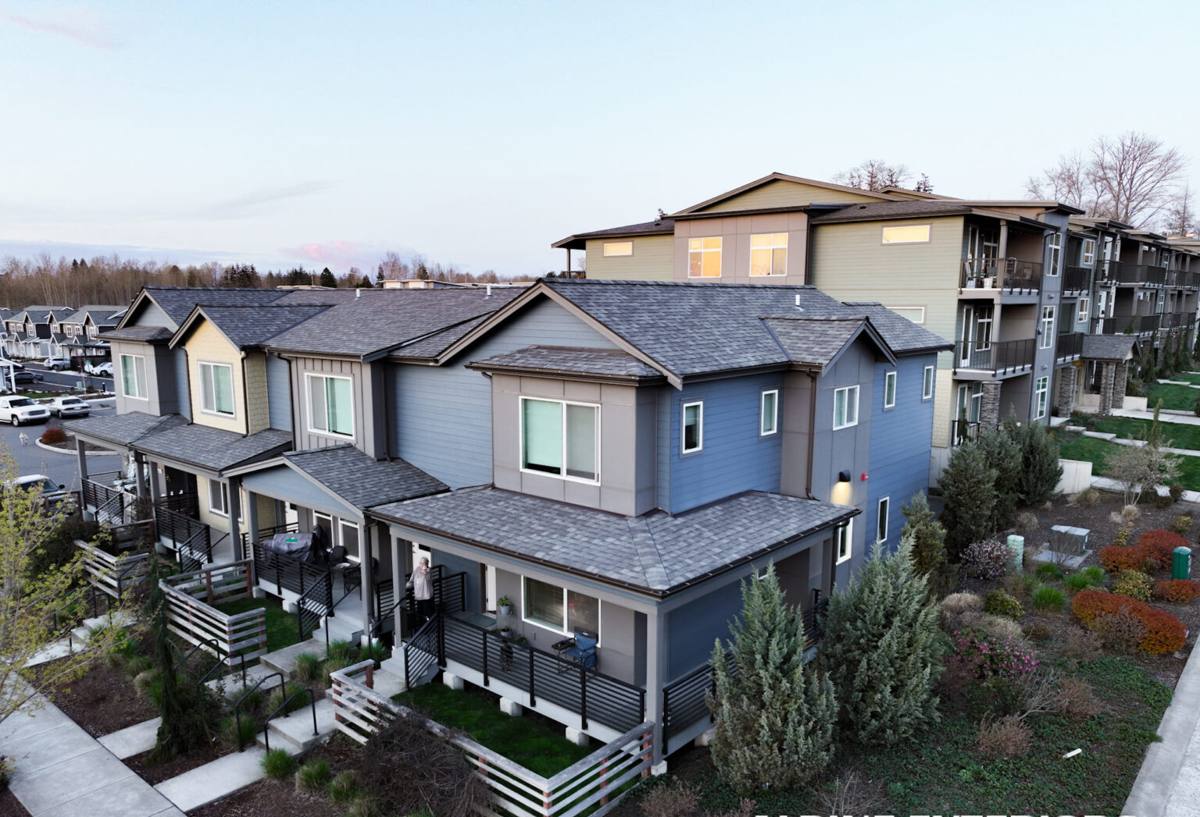
What Sudden Valley's Climate Actually Does to a Window Opening
It helps to be specific about what we're protecting against, because "it rains a lot in Washington" undersells the actual mechanics of window failure in this area.
Salt Air and Metal Fatigue
Proximity to Bellingham Bay means airborne salt is a real factor on window hardware, cladding fasteners, and any exposed metal flashing. Salt-laden moisture accelerates corrosion on lower-grade fasteners and hardware faster than it would inland. It doesn't ruin a window overnight, but over years it can degrade cheap components — hinges, cranks, screws — well before the glass or frame itself would otherwise need attention.
Driving Rain, Not Just Rain
Ferndale-area weather often comes with wind-driven rain rather than straight-down rain. Wind-driven moisture gets pushed sideways and upward into gaps that a vertical-only rain would never reach — under sills, behind trim, into corners of the rough opening. This is exactly why flashing sequence and sill pan details matter so much more here than in a climate with calmer rainfall.
Moss Season and Sustained Dampness
The long moss season isn't just a roof issue. Extended damp periods mean any water that does get past a poorly sealed window has more time sitting against wood framing before a dry stretch lets it evaporate out. Moss and organic growth on north-facing siding and trim near windows is also a sign that a surface stays wet longer than it should — worth noting during any exterior inspection, window-related or not.
Why New-Construction Windows Are the Right Call for a Build or Full Remodel
New-construction windows have a nailing flange built into the frame, which gets fastened directly to the sheathing and integrated into the home's weather-resistive barrier (WRB) and flashing system. This is different from a retrofit or "pocket" window, which fits inside an existing frame and relies more heavily on sealant at the perimeter rather than a fully integrated flashing system.
For new construction, additions, or a remodel where we're opening walls down to the studs anyway, new-construction windows are almost always the better choice. The flange lets us build a proper drainage plane around the window — house wrap, flashing tape, sill pan, head flashing — layered the way water actually moves, so any moisture that gets past the exterior cladding is directed back out rather than trapped against the framing. That layered approach is the single biggest factor in whether a window installation holds up through a Whatcom County winter or starts causing hidden damage within a few years.
When Retrofit Makes More Sense Instead
If the wall isn't already open — for example, replacing windows in an otherwise finished home without touching the siding — a retrofit window is usually the more practical and less invasive option. We'll tell you plainly if your project is better suited to retrofit; new-construction windows done without opening the wall properly can actually create more problems than they solve.
What a Correct New-Construction Window Installation Involves
The window itself is often the easy part. The installation sequence around it is where quality gets decided.
- Rough opening check. Confirm the opening is square, plumb, and sized correctly with proper clearance — not tight-fit, which can bind the window or block drainage.
- Sill pan flashing. A sloped, sealed pan under the window directs any water that gets past the window itself back outside rather than letting it pool on the sill or run into the wall cavity. This is one of the most commonly skipped steps on rushed jobs, and it's one of the most important in a climate like this one.
- Water-resistive barrier integration. The house wrap or building paper has to be cut, lapped, and taped in the correct shingle-style order — each layer overlapping the one below it — so water sheds downward and outward, never inward.
- Setting the window. Level, plumb, square, and fastened per the manufacturer's schedule. An out-of-square window stresses the frame, can bind the sash or crank mechanism, and often leaks at the corners.
- Flashing tape at jambs and head. Applied over the nailing fin in the correct sequence — sides first, then head — so every layer drains onto the one below it, never against the flow of water.
- Head flashing. A drip cap or head flashing above the window kicks water away from the top of the opening before it ever reaches the flange.
- Insulation and air-sealing at the interior. Low-expansion foam or backer rod and sealant around the interior perimeter, sized so it doesn't bow the frame.
- Interior and exterior trim. Installed last, once the flashing and sealing underneath has been confirmed — trim should never be relied on as the primary water barrier.
Skip or rush any one of these steps and the window can look perfect from the curb while still failing where it counts — inside the wall, where nobody sees it until there's a problem.
Our Process on Sudden Valley Jobs
We keep the process straightforward and we don't skip steps to save time.
1. On-Site Assessment
We walk the project, look at framing plans if it's new construction, or assess the existing wall assembly if it's a remodel. We talk through window count, sizes, styles, and any specific exposure concerns — a wall facing prevailing wind and rain off the water gets treated differently than a sheltered wall.
2. Product Selection
We help you pick window lines and glass packages suited to the exposure, not just the budget. A window on a rain-exposed elevation may warrant a different sealant detail or frame material than one on a covered porch wall.
3. Flashing and Drainage Plan
Before a single window goes in, we confirm the flashing sequence for the specific wall assembly — house wrap type, sheathing, cladding — so every layer integrates correctly.
4. Installation
Set, flashed, sealed, and insulated per the sequence above, with each window checked for square and operation before we move to trim.
5. Final Walkthrough
We check operation on every window — smooth opening and closing, tight seals, no binding — and walk the exterior with you before calling the job done.
Choosing Frame Materials for This Climate
There's no single "best" window material for every home — it depends on exposure, budget, and the look you want. Here's how the common options stack up for a driving-rain, salt-air environment like Sudden Valley.
| Frame Material | Moisture Resistance | Maintenance | Notes for This Climate |
|---|---|---|---|
| Vinyl | Good — won't rot or corrode | Low | Budget-friendly; quality varies significantly by manufacturer |
| Fiberglass | Excellent — very stable, low expansion | Low | Handles temperature and moisture swings well; higher upfront cost |
| Aluminum-clad wood | Good exterior, but relies on cladding integrity | Moderate | Attractive interior wood look; cladding seams need to be well-sealed near salt air |
| All-wood | Requires diligent upkeep | High | Beautiful but needs regular refinishing to hold up to long wet seasons |
We'll walk through these trade-offs with you directly rather than pushing one line of product — the right call depends on which wall the window sits on and how much upkeep you want to sign up for down the road.
Glass Packages Worth Considering
For Whatcom County's mix of cool, wet winters and mild summers, a few glass options come up often:
- Double-pane, low-E glass is the practical baseline for most Sudden Valley homes — good insulation value without a big cost jump.
- Argon or krypton gas fill between panes adds a modest insulation boost, worth it on north- and west-facing exposures that take the brunt of the weather.
- Triple-pane glass is a step up in both insulation and sound dampening, and can be worth it on rooms directly exposed to wind and driving rain, though it adds cost and weight.
- Impact-resistant or laminated glass is less critical here than in storm-prone regions, but can add a layer of security and sound control for homeowners who want it.
Pre-Install Checklist for Homeowners
If you're planning a new-construction or full-remodel window project in Sudden Valley, these are worth confirming before work starts:
- Rough openings match the ordered window sizes, with correct clearance — not a tight fit
- House wrap or building paper is in good condition and properly lapped before windows go in
- A sill pan flashing detail is included in the installation plan, not just perimeter sealant
- Flashing tape sequence (sides, then head) is specified, not left to on-site improvisation
- Window style and swing/operation type match how you'll actually use the room
- Frame material is matched to the wall's exposure, not chosen on price alone
- Manufacturer warranty terms are in writing, including what voids them (often improper installation)
Why a Sudden Valley–Familiar Crew Matters
New-construction window installation isn't exotic work, but the difference between a crew that's done it dozens of times in this specific area and one that hasn't shows up in the details — how the flashing is sequenced around a particular siding type, how much clearance to leave given the moisture load, which elevations need the most attention on a given lot. A crew that regularly works Ferndale and the wider Whatcom County area already knows how driving rain off the bay behaves against a wall, what a moss-prone shaded wall needs versus a sun-exposed one, and how salt air affects hardware choices over time. That's not something you can fully substitute with a generic installation manual, no matter how good the window itself is.
We also stand behind our installation work specifically — separate from the manufacturer's product warranty — because we know the flashing and sealing details are ours to get right, and we treat them that way.
If you're planning new-construction windows for a build or remodel in Sudden Valley, we're happy to walk the site, look at your plans, and give you a straightforward, no-pressure estimate. Use the form below to get started.