 Ferndale Siding
 Siding in Sudden Valley Has to Handle a Specific Kind of Weather
Sudden Valley sits close enough to Bellingham Bay and Lake Whatcom that homes here deal with a combination most siding was never designed for: airborne salt from the marine air moving inland, long stretches of driving rain off the water, and shaded, tree-covered lots that hold moisture and grow moss for most of the year. Add the elevation changes and tree cover common to the neighborhood, and you get siding that stays damp longer than it would on a more open, sun-exposed lot in town.
None of that is unusual for Whatcom County. What matters is whether the siding installed on a given house was built for it, and whether it was installed in a way that lets water get out as fast as it gets in. That's the whole job, really — pick a material that doesn't degrade under those conditions, then install it so the building envelope behind it stays dry.
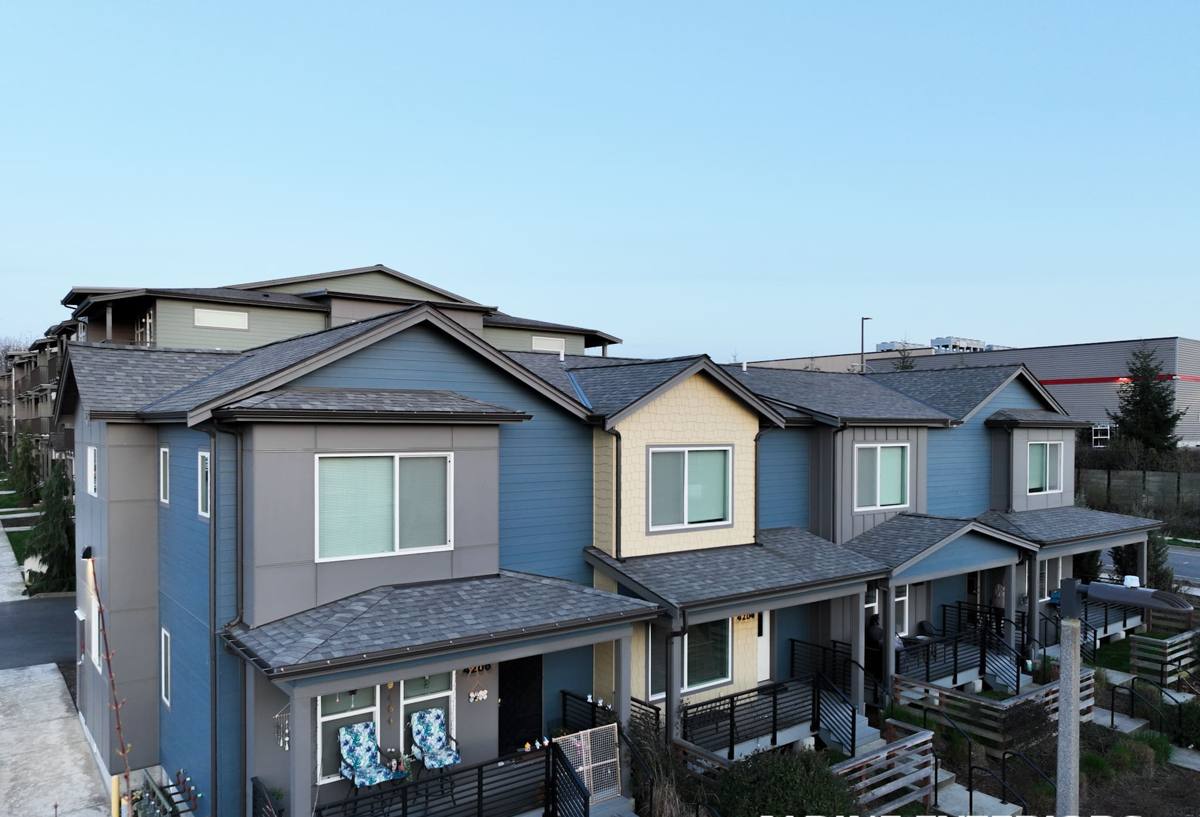
What "Correct" Siding Installation Actually Involves
A siding job that looks fine for two years and then fails at year six almost always fails for the same reasons: no drainage plane, panels nailed too tight, seams that weren't flashed, or trim that traps water against the wall. None of these mistakes show up on install day. They show up during the next long moss season, when the wall behind the siding never gets a chance to dry out.
The parts that don't get skipped on a proper install
- Weather-resistive barrier installed continuously, lapped correctly, with no gaps at penetrations
- A drainage gap or rainscreen so water that gets behind the siding has somewhere to go besides the sheathing
- Flashing at every horizontal transition — window heads, trim boards, roof-to-wall intersections
- Correct fastener pattern and nail set depth so panels aren't crushed or left loose
- Proper joint spacing and caulking at butt joints, sized for the material's expansion and contraction
- Ventilated, back-primed trim at any wood-to-siding transition
Skip any one of these and the siding can look identical to a correctly installed job for years — the difference only shows up once moisture starts finding its way in.
Why We Only Install James Hardie Fiber Cement
We don't install vinyl, LP SmartSide, primed spruce, cedar, or other fiber cement brands. That's a standing decision, not a sales pitch for this one page. In a climate like Sudden Valley's — persistent damp, salt-laden air, heavy shade — the material itself has to be inert to moisture and rot, not just resistant to it, and it has to hold a factory finish that doesn't need recoating every few years on a house that's hard to get scaffolding around.
James Hardie fiber cement is non-combustible, doesn't swell or delaminate the way engineered wood products can when they take on repeated moisture, and comes with a factory-applied ColorPlus finish that's baked on rather than field-painted — which matters when a home is going to spend months a year sitting under wet, low-light conditions. It's also backed by a strong transferable warranty, which is worth more on a house that will change hands eventually than a warranty on a product installed by a crew you can't verify years later.
We standardized on one product line because it lets us guarantee the install, not just sell the material. When something goes wrong on a fiber cement job, it's almost always the installation, not the board — so we control that variable by only ever installing the one system we've trained our crews on.
HardiePlank, HardiePanel, or Shingle — What Fits Sudden Valley Homes
| Product | Typical Use | Why It Fits This Area |
|---|---|---|
| HardiePlank lap siding | Most single-family homes, traditional lap look | Wide range of exposures; sheds water efficiently on sloped or wooded lots |
| HardiePanel vertical siding | Modern facades, accent walls, gables | Fewer horizontal laps means fewer places for standing moisture to collect |
| HardieShingle | Craftsman and cottage-style homes | Matches the look of cedar shingle without the moisture upkeep cedar demands |
| HZ10 vs HZ5 engineered lines | Selected by climate zone | HZ10 is engineered for wetter, harsher climates — the right call for this area |
Salt Air, Rain, and Moss — What They Actually Do to a Wall
Salt air
Airborne salt accelerates corrosion on any exposed metal fasteners, flashing, and hardware, and it can degrade lesser paint finishes faster than inland exposure would. Fiber cement itself doesn't corrode, but every fastener and flashing detail behind it needs to be rated for the exposure, not just whatever came in the standard box.
Driving rain
Wind-driven rain doesn't just run down a wall — it can push sideways and upward under poorly lapped siding or unflashed trim. This is the single biggest reason drainage planes and correct flashing matter more here than they would in a drier climate. The siding is the first line of defense, not the only one.
Moss and prolonged shade
Shaded, tree-covered lots keep siding damp longer after every rain event, which is exactly the condition moss and mildew need. Vinyl and wood-based sidings can hold surface moisture and stain or soften over time in these spots. Factory-finished fiber cement resists that surface degradation and cleans up with a simple wash rather than a repaint.
Our Process for a Sudden Valley Siding Installation
- On-site assessment — we look at sun exposure, tree cover, drainage around the foundation, and the condition of the existing sheathing before quoting anything.
- Tear-off and sheathing check — old siding comes off and we inspect for rot or moisture damage before anything new goes up. This is where hidden problems get caught, not covered over.
- Weather barrier and drainage gap installation — this step is what separates a siding job that lasts from one that doesn't, and it's invisible once the project is done.
- Flashing at every transition — windows, doors, roof lines, and trim boards get flashed to shed water outward, not into the wall.
- Hardie installation to manufacturer spec — correct fastener spacing, joint gaps, and nail set depth, following James Hardie's published installation requirements rather than shortcuts.
- Caulking, trim, and paint touch-up — factory ColorPlus finish means minimal field painting, mostly limited to cut edges and trim.
- Final walk-through — we go over the finished job with you before calling it done.
Why It Matters to Hire a Crew That Already Works This Neighborhood
Sudden Valley's mix of wooded lots, lake-adjacent moisture, and varied elevation means every house has its own drainage quirks. A crew that's worked the area knows which lots tend to hold water longer, which roof lines create runoff problems onto the siding below, and how the local moss and mildew pattern shows up before it becomes a real problem. That local pattern-recognition is worth more than a generic install crew that's never dealt with Whatcom County's specific combination of salt air, shade, and rain.
It also matters for warranty follow-through. A transferable James Hardie warranty is only as good as the paperwork and installation record behind it — that's easier to stand behind when the same company that installed it is still working in the same neighborhood years later.
What to Check Before You Hire Anyone for This Job
- Do they install to James Hardie's published fastening and clearance specs, not just "however it goes up fastest"?
- Will they show you the weather barrier and drainage plane before it's covered, not just the finished panels?
- Do they carry manufacturer certification or documented Hardie installation training?
- Is the warranty transferable if you sell the home?
- Can they explain how they'll handle flashing at your specific roof lines, windows, and trim — not a generic answer?
- Are they licensed and insured for work in Whatcom County?
Cost Factors for a Sudden Valley Project
| Factor | How It Affects the Job |
|---|---|
| Tear-off condition | Rot or moisture damage found during removal adds sheathing repair before new siding goes on |
| Home size and stories | More wall area and taller walls mean more material, staging, and labor time |
| Product line chosen | Lap, panel, and shingle profiles carry different material and labor costs |
| Trim and architectural detail | Gables, dormers, and multiple roof-to-wall transitions add flashing and cut time |
| Site access | Wooded, sloped, or tight lots can affect staging and scaffolding needs |
We give honest, itemized estimates after seeing the house in person — not a number pulled from a square-footage formula that ignores what your specific lot and roofline actually require.
If your Sudden Valley home needs new siding or you're planning ahead of a problem you've already noticed, we're glad to take a look and give you a straight answer about what it needs. Reach out for a free, no-pressure estimate using the form below.