 Ferndale Siding
 Why Siding Wears Out Faster in Sudden Valley
Sudden Valley sits in the trees along Lake Whatcom, and that setting is part of what makes it a great place to live — and part of what's hard on exterior siding. Heavy tree cover keeps walls shaded and damp long after a storm has passed. Moisture coming off the lake adds to the humidity load on top of the marine, salt-tinged air that moves through all of Whatcom County off the Sound. Add driving rain that comes in sideways during fall and winter storms, and you have a combination that punishes siding that isn't built or installed for it.
None of this means siding is doomed here. It means the material and the installation both have to account for standing moisture, limited direct sun, and a genuinely long moss season — not the drier, more open conditions you'd design for on the other side of the state.
Shade, Moisture, and Moss
Walls that face north or sit close to mature trees can stay damp for days. That's exactly the environment moss and algae need to take hold, and once they're established on siding, they hold water against the surface and accelerate whatever's underneath — paint failure, swelling in wood-based products, or in bad cases, rot in the sheathing. On a lot with heavy canopy, this isn't a cosmetic issue you can ignore; it's a sign the siding and the drainage plane behind it are being tested constantly.
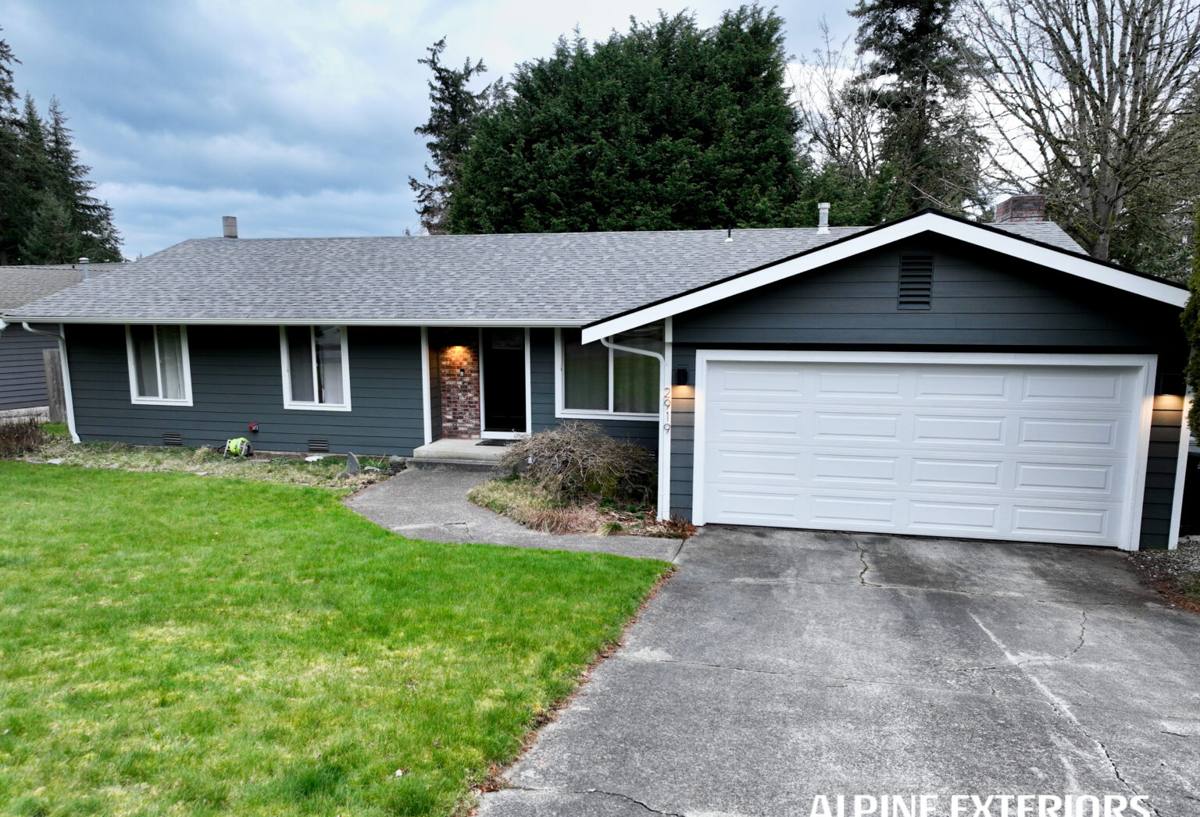
Signs Your Siding Needs Replacement, Not Just Repair
Homeowners often call us for a patch or a repaint and find out the siding itself has reached the end of its useful life. A few signs tell us replacement is the honest answer:
- Soft or spongy spots when you press on the siding, especially near the bottom courses or under windows
- Persistent moss or dark streaking that comes back within a season of cleaning
- Paint that's bubbling, peeling, or won't hold no matter how often it's redone
- Visible gaps, warping, or cupping in individual boards or panels
- Soft trim or fascia boards adjacent to the siding
- A musty smell or damp drywall on an interior wall that shares an exterior wall with problem siding
Any one of these can sometimes be repaired locally. Several of them together, especially on a home more than 20-25 years old, usually mean the whole wall system has absorbed more moisture than it can shed, and repair work would just be patching a symptom.
What a Correct Siding Replacement Actually Involves
Replacing siding is not just removing old boards and nailing up new ones. Done right, it's a rebuild of the entire moisture-management system on the wall.
Tear-Off and Sheathing Inspection
Once old siding comes off, we inspect the sheathing underneath for rot, delamination, or soft spots — this is often where hidden damage from years of trapped moisture shows up. Any damaged sheathing gets replaced before anything new goes on. Skipping this step is one of the most common shortcuts in the industry, and it's the reason a "new" siding job can still fail within a few years.
Weather-Resistive Barrier and Flashing
A new weather-resistive barrier goes over the sheathing, and flashing gets properly installed and lapped at every window, door, and penetration so water is directed out and down, never behind the barrier. In a climate with this much driving rain, flashing details around windows and roof-to-wall intersections matter as much as the siding material itself.
Fastening and Clearances
Correct fastener type, spacing, and depth affect how well siding holds up over decades, not just years. We also maintain proper clearance between the siding's bottom edge and the ground, decks, and roof lines — a common mistake that traps moisture against the bottom courses and is often where rot starts first.
Comparing Siding Materials for a Lake-and-Timber Setting
Not every siding product handles shaded, moisture-heavy lots the same way. Here's how the common options actually compare on the factors that matter most in a setting like Sudden Valley.
| Material | Moisture & Moss Behavior | Maintenance | Fire Resistance | Typical Longevity |
|---|---|---|---|---|
| James Hardie fiber cement | Engineered to resist moisture absorption; factory finish resists algae staining | Low — occasional wash, no repainting with ColorPlus finish | Non-combustible | Decades when installed to spec |
| Vinyl | Doesn't rot, but can trap moisture behind it if installed poorly; can warp in heat | Low, but fades and becomes brittle over time | Combustible, can melt or deform near heat sources | Variable, shorter in harsh sun/cold cycles |
| Wood or engineered wood (e.g. primed spruce, LP SmartSide) | Absorbs moisture readily; prone to swelling, moss, and rot in shaded, damp conditions | High — regular repainting and moisture monitoring | Combustible | Shorter in wet, shaded climates without diligent upkeep |
This is exactly why we standardized on James Hardie fiber cement rather than the wood-based or vinyl alternatives many manufacturers still push. In a lot like the ones common in Sudden Valley — shaded, close to water, exposed to long wet stretches — the material's ability to shrug off moisture and hold its finish matters more than upfront cost.
Cost Factors for a Sudden Valley Siding Replacement
Every home is different, but the same handful of factors drive most of the price variation we see on jobs in this area.
| Factor | Why It Matters | Typical Price Impact |
|---|---|---|
| Extent of hidden sheathing damage | Rot found during tear-off must be repaired before new siding goes on | Medium to High |
| Home size and wall complexity | More corners, gables, and dormers mean more cutting and flashing detail | Medium |
| Access and tree clearance | Tight lots or overhanging branches slow staging and material handling | Low to Medium |
| Trim, fascia, and soffit condition | Adjacent wood elements often need repair or replacement alongside siding | Medium |
| Siding profile and accessories chosen | Lap width, trim style, and accent details affect material and labor | Low to Medium |
We walk every home before quoting so the number you get reflects your actual wall condition, not a generic estimate that changes once tear-off starts.
Working Around Sudden Valley's Site Conditions
HOA and Community Guidelines
Many homes in Sudden Valley fall under community association guidelines that govern exterior colors and materials. We build that into the timeline from the start — helping you pick compliant color and profile options up front avoids delays waiting on approvals mid-project.
Access and Tree Cover
Wooded lots mean careful staging: protecting landscaping, working around low branches, and managing debris and dust in tighter side yards. Crews who haven't worked lots like these before often lose time relearning this on your job. Ours don't.
Why We Install Only James Hardie Fiber Cement Here
We don't offer vinyl, LP SmartSide, Cemplank, Allura, or primed wood siding as options, and that's a deliberate standard, not a lack of access to those products. James Hardie's fiber cement is non-combustible, which matters anywhere wildfire smoke and dry summer stretches are a growing concern in the Pacific Northwest. Its ColorPlus factory finish is baked on rather than field-painted, which holds up better against the algae and moss staining that shaded, moist lots like these produce. Hardie's HZ5 product line is engineered specifically for wetter, harsher climate zones — which describes Whatcom County's marine weather well. And the warranty is transferable and backed by a large, established manufacturer, not a program that depends on a small regional supplier staying in business. We've chosen to install one product system correctly rather than offer several and hope each performs.
Our Siding Replacement Process
- On-site inspection of your current siding, sheathing, and trim, with honest notes on what's failing and why
- A written proposal that separates material, labor, and any anticipated sheathing repair so you know what you're paying for
- Site protection and prep, including landscaping and walkway coverage before tear-off begins
- Full tear-off, sheathing inspection and repair as needed, new weather-resistive barrier and flashing installation
- James Hardie siding installation to manufacturer fastening and clearance specifications
- Daily cleanup and a final walkthrough where we point out details, not just hand you an invoice
- Warranty registration so the manufacturer coverage is on file in your name
Choosing a Contractor Who Already Works This Neighborhood
A crew that's already done siding replacement in Sudden Valley isn't guessing at how the site conditions will play out. Before you hire anyone for a job like this, it's worth asking:
- Are you a certified James Hardie installer, and can you explain their fastening and clearance requirements without looking them up?
- Have you worked on homes in this community before, and do you understand its HOA approval process?
- What happens if you find rotted sheathing once tear-off starts — is that a change order surprise or already part of the plan?
- Is your bid itemized, or is it one lump number I can't verify?
- What's covered under warranty, and is it transferable if I sell the home?
A contractor who answers these plainly, without hedging, is one who's actually done this work in conditions like yours — not just siding in general, but siding on a shaded, moisture-heavy lot where the wrong shortcuts show up fast.
If your siding is showing moss, soft spots, or paint that won't hold, we're happy to take a look and give you a straight answer on repair versus replacement. Fill out the form below for a free, no-pressure estimate.