 Ferndale Siding
 Windows Built for Sudden Valley's Specific Conditions
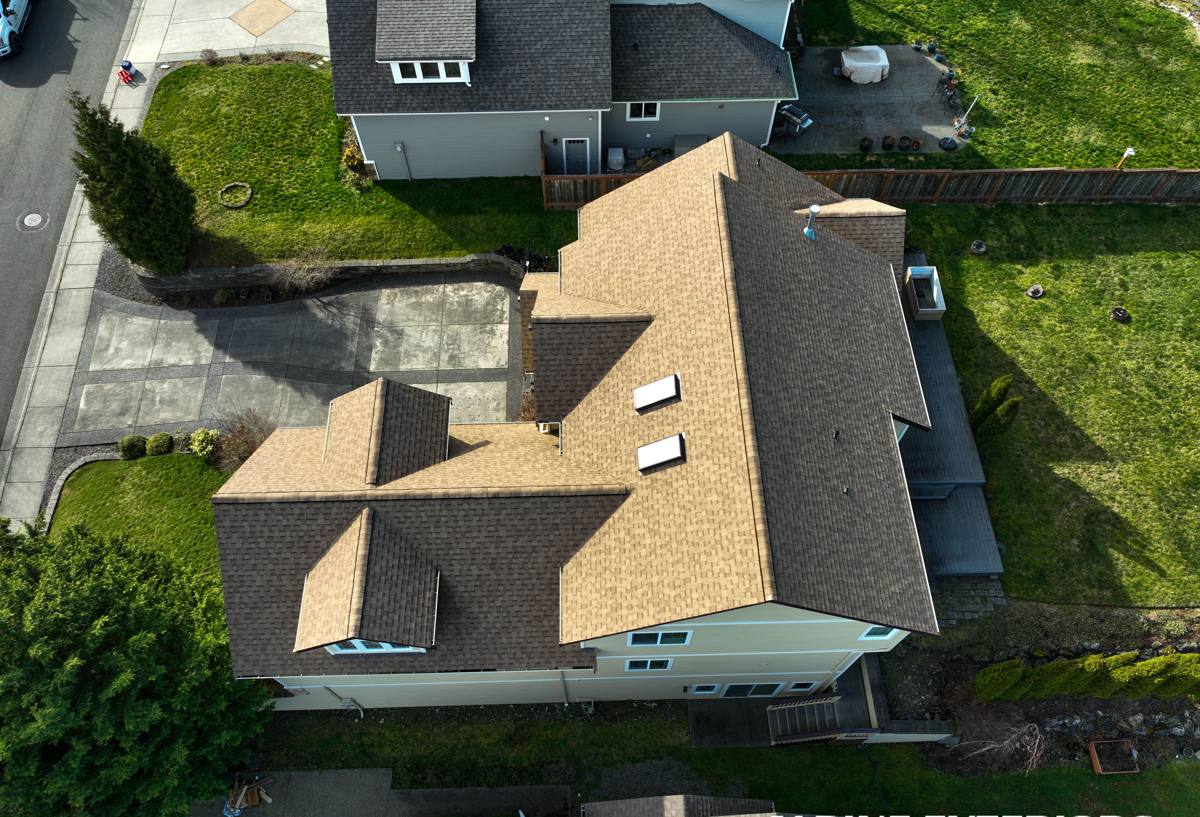
Sudden Valley sits on the south shore of Lake Whatcom, wrapped in second-growth forest, with its own private road network and homeowners association. It's one of the most heavily wooded residential communities in this part of Whatcom County, and that setting changes what a window installation actually needs to hold up against. Marine air moving in off the Salish Sea carries salt that works on hardware and fasteners countywide, but in Sudden Valley that's layered on top of something more local: heavy tree canopy that keeps many walls shaded most of the year, humidity rising off the lake itself, and driving rain that hits different elevations of the same house with very different force depending on the hillside and tree line around it. A long moss season settles into all of that and doesn't let go until the drier months arrive.
None of this means windows fail here faster than anywhere else in the county. It means the installation details that matter everywhere — flashing, drainage, sealing — matter even more on a shaded, lake-adjacent lot, because the wall assembly around a window doesn't get the same drying window that a sunnier, more open property would. This page covers window installation specifically for existing homes in Sudden Valley: what the climate does to aging windows, what a correct replacement actually involves, and why hiring a crew that already works this community makes a practical difference.
What This Environment Does to Aging Windows
Heavy Shade and Slow Drying
Most Sudden Valley lots sit under significant tree cover, and it's common for at least one or two sides of a house to get very little direct sun for most of the year. That matters for windows because a shaded wall stays wet longer after every rain, and any weak point in the seal or flashing around an old window has more time to let moisture in before the assembly dries out again. Over years, that slow, repeated wetting is what turns a small caulk failure into rot at the sill or soft framing around the opening.
Lake Humidity and Driving Rain
Lake Whatcom adds moisture to the air on top of the region's normal rainfall, and homes closer to the water tend to feel that extra dampness even between storms. Sudden Valley's hilly terrain means wind-driven rain doesn't hit every elevation the same way — a wall facing open water or a break in the tree line can take a real beating during a storm while another side of the same house stays relatively sheltered. Old windows built to a generic installation standard, rather than to the specific exposure of that wall, are usually the first place that shows up as a draft, a stain, or a stuck sash.
A Long Moss and Mildew Season
Shade, humidity, and mild temperatures are exactly what moss and mildew need, and Sudden Valley's tree cover keeps that combination active for much of the year. Roofs usually show it first, but window sills and lower frame corners on shaded elevations pick up the same buildup, especially on older wood or poorly ventilated vinyl units where trapped moisture has nowhere to go.
Signs Your Windows Are Due for Replacement
A lot of window problems in this setting develop slowly enough that homeowners adjust to them without noticing how far things have progressed. Worth checking for:
- Visible gaps, soft spots, or discoloration in the trim or siding around a window frame
- Condensation or fogging between panes, which usually means a failed seal on a double- or triple-pane unit
- Windows that are difficult to open, close, or lock, especially on shaded, north- or west-facing walls
- A noticeable draft near the frame even when the window is fully closed
- Visible moss, algae, or persistent black staining on the sill or lower corners
- A cold wall or window area that never seems to match the rest of the room's temperature
- Peeling paint or swollen wood trim immediately around the window opening
Any one of these can be a minor, fixable issue on its own. Several showing up together on the same window, or on the same elevation of the house, usually points to a flashing or sealing problem that a repair won't solve for long.
Full-Frame Replacement vs. Insert Replacement
On an existing home, there are two basic approaches to replacing a window, and which one is right depends on the condition of the opening — not just preference or price.
Insert replacement fits a new window into the existing frame, leaving the surrounding trim and siding in place. It's faster and less invasive, and it's a sound choice when the existing frame, sill, and flashing are still in good condition. Full-frame replacement removes the window down to the rough opening, which lets us inspect and correct the flashing, sill, and framing underneath before a new unit goes in. It costs more and takes longer, but it's the only option when there's already moisture damage, rot, or flashing that was never installed correctly the first time.
On a shaded, moisture-prone lot like a typical Sudden Valley property, we don't default to the cheaper option without looking first. An insert replacement installed over a hidden flashing problem just seals that problem behind a new window, and it tends to resurface within a few years rather than staying fixed.
What a Correct Window Installation Involves
Removing the Old Window and Inspecting the Opening
The old unit comes out carefully so we can see the actual condition of the sill, framing, and existing flashing rather than guessing at it from the interior. This is where hidden problems — soft framing, missing or failed flashing, trapped moisture — get found and addressed, instead of covered over.
Flashing and Water Management
This is the step that determines whether a window performs for one wet season or several decades, and it matters more here than on a drier, sunnier lot. A sloped sill pan sheds any water that gets past the window outward instead of letting it pool. Flashing at the jambs and head is integrated with the existing weather-resistive barrier and siding in the correct lapped order, so water moving down the wall drains past the window rather than behind it. On a shaded wall that doesn't dry out quickly between storms, a rushed or skipped step here is exactly what leads to the slow rot problems we see on older Sudden Valley homes.
Insulation and Air Sealing
Once the window is set, shimmed, level, and plumb, the gap between the frame and the rough opening gets insulated and sealed from the inside without trapping moisture against the framing. Done correctly, this closes drafts and improves comfort without creating a new place for condensation to collect.
Trim and Final Seal
Exterior trim gets reinstalled or replaced to match the surrounding siding, and the final exterior sealant bead goes down as the last line of defense — not the primary one. A window that relies on caulk alone to stay dry, rather than correct flashing underneath it, is a window that's going to leak eventually, usually right around the time the caulk itself starts to fail.
Choosing the Right Window for a Sudden Valley Home
Frame material matters more on a shaded, humid lot than it does on an open, sunny one, since shaded surfaces spend more time wet. Here's how the common options compare in this specific setting.
| Frame Material | Moisture Behavior in Shade | Typical Maintenance | Realistic Lifespan Here |
|---|---|---|---|
| Vinyl | Won't rot; performs well with correct installation and weep-hole drainage | Low; occasional track and weep-hole cleaning to prevent trapped moisture | 20-30 years |
| Fiberglass | Dimensionally stable; resists swelling and moisture absorption well | Low | 30-40+ years |
| Wood, clad exterior | Clad exterior protects the wood core from direct weather; unclad wood is a poor fit for a shaded lot | Moderate; interior finish upkeep depending on exposure | 20-30+ years depending on cladding |
| Aluminum | Conducts cold and can corrode in salt-influenced marine air unless well-finished | Moderate | 20-30 years |
We'll walk through which material fits a given elevation of your home, since a shaded north wall and a sun-exposed south wall on the same house don't always call for the same answer. We also review U-factor and NFRC glazing ratings against current Washington State Energy Code requirements, and talk through low-E coating options suited to how much sun a particular window actually gets.
What Affects the Cost of Window Installation Here
| Factor | Why It Matters |
|---|---|
| Insert vs. full-frame replacement | Full-frame costs more but is often required once flashing or framing damage is found |
| Number and size of windows | Larger units and higher counts affect both material and labor time |
| Frame material | Vinyl, fiberglass, and clad-wood options carry different price points and long-term maintenance costs |
| Condition of the existing opening | Hidden rot or prior flashing failures add repair work before the new window can go in |
| Access and elevation | Upper-story or steep-lot windows on a hillside property take more time and equipment to reach safely |
| Trim and siding match | Matching existing trim profiles and siding cleanly adds finish work beyond the window unit itself |
We won't quote a number without walking the actual openings in person, since the same house can have windows in very different condition from one elevation to the next. What we can promise is a clear, itemized estimate that explains which of these factors apply to your project before you commit to anything.
Our Process, Step by Step
- On-site assessment: We inspect each window and its surrounding wall, paying attention to how shade and exposure differ between elevations, which varies more from wall to wall in Sudden Valley than on a typical open lot.
- Honest recommendation: Insert or full-frame replacement, explained with the reasoning, along with frame material options suited to that specific wall's exposure.
- Written scope and timeline: A clear estimate before any work begins, with no surprises added mid-project.
- Removal and opening inspection: Old windows come out carefully so hidden flashing or framing issues can be found and addressed.
- Installation and flashing: Each window is set, shimmed, and flashed to a sequence built for correct drainage, not a generic shortcut.
- Trim, seal, and final walkthrough: Exterior trim is matched to the existing siding, and we walk the finished work with you before calling the job done.
Why Hire a Crew That Already Works Sudden Valley
Sudden Valley is a private community with its own internal roads and a homeowners association, and a crew that regularly works here already understands the practical side of that. Many properties fall under the Sudden Valley homeowners association's architectural review process, and exterior changes — including window replacement that alters trim, color, or opening size — may need approval before work starts. A local crew knows to raise that question early rather than after materials are ordered.
Beyond the paperwork, familiarity with this specific community shows up in decisions that don't come up in a sales conversation: which walls on a given lot need extra drainage detailing because they rarely see direct sun, how flashing needs to lap differently on a steep, tree-shaded elevation than on an open one, and which fastener grade actually holds up in a damp, wooded microclimate over decades rather than years. That's the difference between a window installation that performs through one wet season and one that performs through many.
A Simple Checklist Before Hiring for Window Work in Sudden Valley
- Ask whether they recommend insert or full-frame replacement for your specific windows, and why
- Confirm current Washington contractor licensing and active liability insurance
- Ask how they handle shaded, moisture-prone elevations differently from sunnier walls
- Ask about experience with Sudden Valley's HOA architectural review process and private-road access
- Get a written, itemized scope of work before signing anything
- Confirm what's covered under warranty — the window unit and the installation labor are often separate
If you're noticing drafts, fogged glass, or sticking windows on a Sudden Valley home, it's worth having someone look at the actual openings before you decide what to do. We offer free, no-pressure estimates for window installation throughout Sudden Valley and the surrounding area — use the form below to get a time on the schedule.