 Ferndale Siding
 Why Window Installation Looks Different in Bellingham
Bellingham sits right on the water, and that changes what a window installation needs to survive here compared to a house fifty miles inland. Salt-laden air off Bellingham Bay, long stretches of driving rain, and a moss season that can run from October through May all put more stress on a window opening than most manufacturers' install instructions assume. A window that's simply "installed to code" in a dry climate can still leak, fog, or corrode within a few years once it's facing what Whatcom County actually throws at it every winter.
This page is specifically about window installation for homes in and around Bellingham — not a general overview of windows everywhere. The materials, flashing details, and sequencing we use here are chosen because of this specific climate, not because they're the cheapest or fastest option.
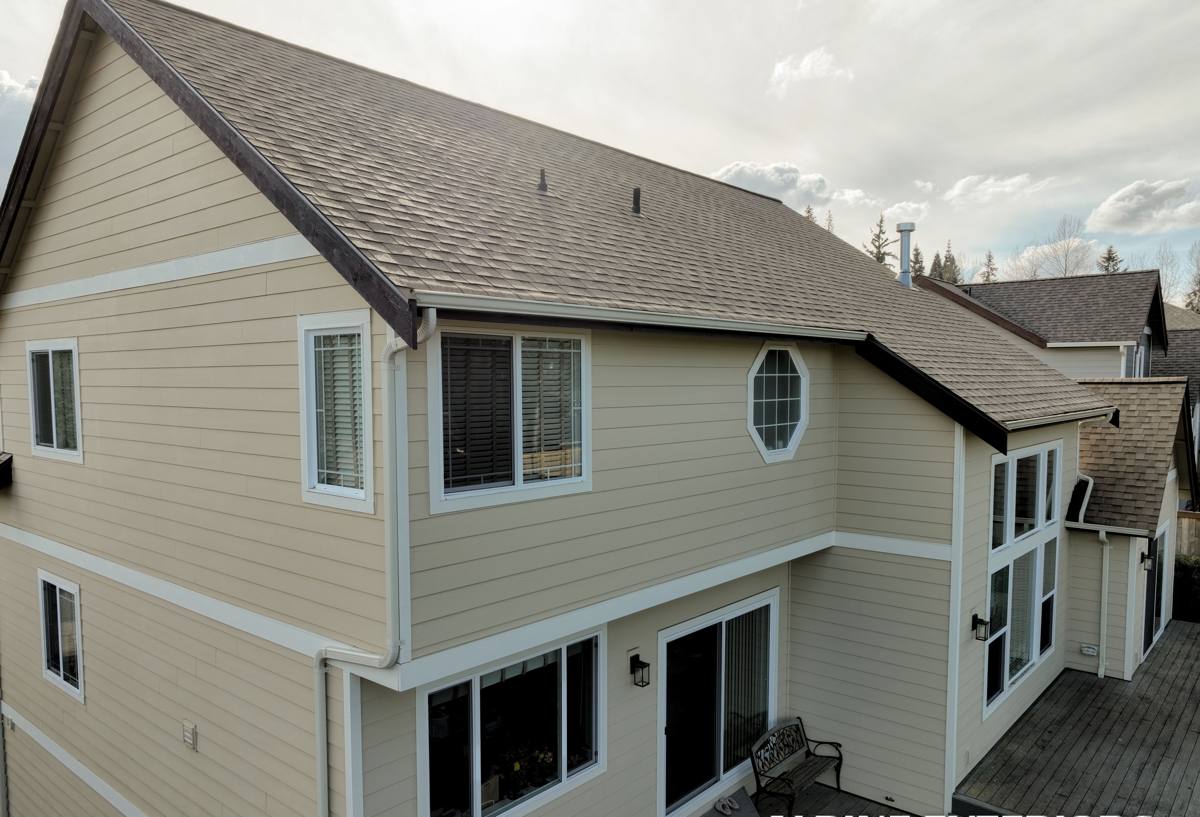
What Salt Air, Driving Rain, and Moss Season Do to a Window Opening
Salt Air and Hardware
Homes closer to the bay deal with airborne salt that accelerates corrosion on window hardware, screws, and unprotected fasteners. Cheap or mismatched fasteners can start rusting and staining a window frame well before the glass or vinyl itself shows any wear. It's a small detail, but it's one of the first things we check on an older Bellingham home — streaking below hardware or hinges is usually a sign the wrong fastener was used originally.
Driving Rain and the Rough Opening
Wind-driven rain off the Sound doesn't fall straight down — it gets pushed sideways into wall assemblies, which means the rough opening around a window has to shed water outward and downward no matter which direction the wind is coming from. A window that would perform fine in a calmer climate can still leak here if the sill pan, flashing laps, and weather-resistive barrier integration aren't done in the right order. Most leaks we find around older windows in this area trace back to flashing sequencing, not the window unit itself.
Moss Season and Sealant Failure
The long wet, shaded season that lets moss take over roofs and north-facing siding also keeps window sills and trim damp for extended stretches. Caulk and sealants that would last a decade in a drier climate can start failing in five or six years here if they weren't the right product for constant moisture exposure. Once a bead of sealant cracks, water works its way behind the trim and you get slow rot that isn't visible until it's advanced.
Full-Frame vs. Insert Window Installation
One of the first decisions on any Bellingham project is whether a home needs a full-frame replacement or a simpler insert (also called "pocket" or "retrofit") installation. Both are legitimate methods — the right choice depends on the condition of the existing frame and sill, not on which one is faster to install.
| Factor | Insert (Retrofit) Installation | Full-Frame Installation |
|---|---|---|
| Best for | Sound existing frame, no rot or water damage | Frames with rot, water damage, or failed flashing |
| Access to sill pan/flashing | Limited — relies on existing flashing being intact | Full access to re-flash and install a proper sill pan |
| Exterior trim disturbance | Minimal | Trim is removed and reinstalled or replaced |
| Glass area | Slightly reduced due to extra frame-in-frame | Can often match or slightly increase glass area |
| Typical timeline per window | Faster | More labor-intensive |
| Risk if existing frame is compromised | Traps hidden moisture problems behind new unit | Problem is exposed and corrected during install |
In a marine climate, we lean toward full-frame replacement any time there's evidence of past water intrusion, because an insert installed over a damaged sill just seals the problem inside the wall. If the existing frame checks out dry and sound, an insert installation is a perfectly good, less invasive option.
What a Correct Window Installation Actually Involves
The window unit itself is often the easy part. The details that determine whether it performs for the next twenty years are in the opening prep and flashing work around it.
- Removing and inspecting the old unit and framing for rot, soft wood, or prior water staining before anything new goes in
- Installing a sloped sill pan so any water that gets past the window drains back out, not into the wall cavity
- Integrating flashing tape and the weather-resistive barrier in the correct shingle-lap order — top piece always laps over the ones below it
- Setting the window level, plumb, and square, then shimming so the frame isn't stressed or bowed once fasteners go in
- Insulating the gap between the window frame and the rough opening without overpacking it, which can bow the frame and cause operational issues
- Sealing the exterior with a compatible, paintable sealant rated for continuous exposure to moisture
- Finishing interior trim and confirming smooth operation, locking, and a tight seal all the way around
Skipping or rushing any one of these steps is how a brand-new window ends up with the same leak the old one had.
Choosing Window Materials and Glass for a Coastal Climate
Material choice matters here more than in a dry inland climate because of the combination of moisture and salt exposure. We don't push one brand over another — we walk homeowners through the honest trade-offs of each option so the decision fits the house and the budget.
| Material | Strengths in This Climate | Trade-Offs to Know |
|---|---|---|
| Vinyl | Doesn't corrode, low maintenance, good value | Can expand/contract with temperature swings; quality varies a lot by manufacturer |
| Fiberglass | Very stable dimensionally, holds paint well, strong moisture resistance | Higher upfront cost than vinyl |
| Wood-clad | Classic appearance for older or historic-style homes | Exterior cladding still needs sealant maintenance; interior wood needs upkeep too |
| Aluminum | Strong and slim sightlines | Poor insulator and more prone to condensation without a thermal break |
On glass packages, we generally recommend double-pane with a low-E coating as the baseline for this area, and triple-pane where noise reduction or a north-facing, shaded exposure makes the extra insulation worth the cost. What matters more than the pane count, though, is a properly sealed insulated glass unit — a poorly manufactured or poorly installed triple-pane window can still fog up years before a well-made double-pane one does.
Signs Your Current Windows Are Already Failing
Because moisture problems in this climate develop slowly, homeowners often live with early warning signs for a while before calling anyone. Worth checking before it becomes a bigger repair:
- Fogging or a hazy film between the panes of an insulated glass unit — a sign the seal has failed
- Soft or spongy wood trim around the window, especially at the bottom corners of the sill
- Visible daylight or a noticeable draft along the frame edges when it's windy
- Difficulty opening, closing, or locking the window, which often points to a frame that's shifted or swelled
- Peeling paint or bubbling caulk on the exterior trim
- Moss or algae growth directly on or around the window frame, a sign the area stays damp longer than it should
- Noticeably higher heating bills in the coldest months without any other explanation
Our Window Installation Process for Bellingham Homes
- An in-person walkthrough to assess existing window condition, framing, and any signs of past water intrusion
- A straightforward recommendation on insert versus full-frame replacement, with the reasoning explained, not just a sales pitch
- A written estimate covering materials, install method, and timeline before any work begins
- Careful removal of old units with attention to what's found in the opening, since that can change the plan
- Correct flashing, sill pan, and sealant installation using materials suited to sustained moisture exposure
- Final check of operation, seals, and cleanup, with a walkthrough so you know exactly what was done and why
Why Hiring a Crew That Already Works in Bellingham Matters
Window installation instructions from a manufacturer are written for a generic climate. A crew that works Bellingham and the surrounding Whatcom County towns regularly already knows which details actually matter here — where driving rain tends to find weak points, how long moss season really lasts, and which sealants hold up against salt air instead of just looking fine on installation day. That local pattern recognition is the difference between a window that's technically installed and one that's installed to actually last through a Whatcom County winter.
It also means faster, more accurate estimates. We're not guessing at what a coastal Pacific Northwest home needs — we're applying what consistently works on homes like yours, in the same weather your house deals with every year.
If your windows are fogging, drafting, sticking, or just original to a home that's due for an upgrade, we're happy to take a look and give you a straightforward, no-pressure estimate using the form below.