 Ferndale Siding
 Window Installation Built for Fairhaven's Marine Climate
Homes in and around Fairhaven sit close enough to the water that the weather isn't quite like weather anywhere else in Whatcom County. Salt-laden air drifts in off the Sound, driving rain comes in sideways during winter storms, and a long, damp moss season settles in every fall and doesn't fully let go until late spring. Windows take the brunt of all three. A window that was installed correctly, with the right materials and flashing, will shrug this off for decades. A window that was installed carelessly — even a good window, installed poorly — will start failing within a few years, usually from the inside out where you can't see it until the damage is already done.
This page is specifically about window installation for homes in the Fairhaven area near Ferndale. Not a general "we install windows everywhere" pitch — the details below are about what actually matters for houses dealing with this specific coastal, marine-influenced climate.
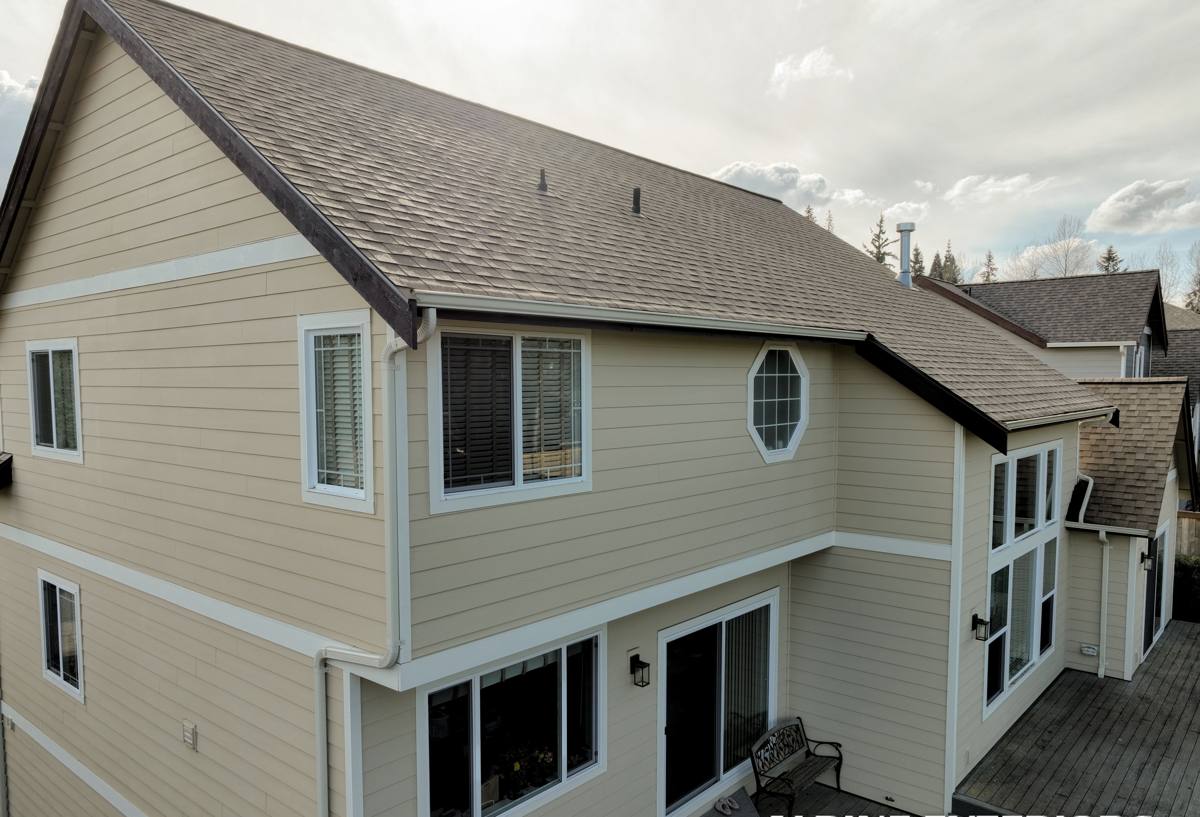
What Salt Air, Driving Rain, and Moss Actually Do to Windows
It helps to understand the failure modes before talking about how to prevent them.
Salt Air
Airborne salt is corrosive to metal hardware — hinges, cranks, locks, and especially aluminum or steel fasteners that weren't rated for coastal exposure. Over years, corroded hardware seizes up, window operation gets stiff or impossible, and seals that depend on proper hardware alignment start to fail early.
Driving Rain
Wind-driven rain doesn't just fall on a window — it gets pushed sideways and upward into any gap in the flashing or sealant. This is the single biggest cause of hidden rot around window openings in this region. Water finds its way behind the trim, into the wall cavity, and sits there against wood framing that never fully dries between storms.
Moss and Prolonged Dampness
A long moss season means extended stretches where sills, trim, and the wall surface around a window stay damp. Moss and algae hold moisture against wood and painted surfaces far longer than rain alone would, accelerating rot in old wood sills and breaking down caulk and sealants faster than manufacturers' warranties usually assume.
None of these are dramatic, one-time events. They're slow, cumulative damage — which is exactly why so many window problems in this area get discovered only after they're expensive to fix.
Signs a Fairhaven Home Needs Window Attention
- Visible gaps, soft spots, or paint failure on the exterior trim or sill around a window
- Windows that are hard to open, close, or lock — often a sign of corroded or swollen hardware
- Condensation or fogging between the panes of a double-pane window (a sign the seal has failed)
- Drafts you can feel near the window frame on windy days
- Interior sill or drywall staining, especially after a heavy storm
- A musty smell near a window that doesn't go away with cleaning
- Moss or dark staining creeping onto the siding directly below a window
Any one of these on its own might be minor. Two or more around the same window usually means water has already gotten past the exterior finish and into the assembly — worth a look before it becomes a framing repair instead of a window swap.
Getting the Installation Right: It's Mostly About Flashing
The window unit itself — vinyl, fiberglass, wood-clad — matters less than most homeowners assume. What actually determines whether a window lasts 30 years or 8 years in this climate is how it's flashed and sealed into the wall. A premium window installed with sloppy flashing will fail. A mid-grade window installed correctly, with proper flashing sequencing, will outlast it.
Retrofit vs. Full-Frame Replacement
There are two basic approaches, and choosing the right one for each opening matters:
- Retrofit (pocket) replacement — the new window is installed into the existing frame, leaving the old exterior trim and flashing in place. Faster and less disruptive, but it only works well if the existing frame and flashing are still sound and dry.
- Full-frame replacement — the window and its surrounding trim are removed down to the rough opening, exposing the sheathing and structural framing. This is more work, but it's the only way to actually inspect for hidden rot and install new flashing correctly around the opening.
In a climate that drives water sideways into wall assemblies, we lean toward recommending full-frame replacement whenever there's any sign of past moisture intrusion, even if it means more labor. Retrofitting over a compromised opening just seals the problem back up.
The Flashing Sequence
Proper flashing follows a "shingle" principle — every layer overlaps the one below it, so water is always directed outward and down, never trapped behind a layer above it. That means a sill pan at the bottom of the opening, self-adhered flashing tape at the jambs, and a head flashing or drip cap at the top that laps over the housewrap above it. Skipping the sill pan is one of the most common shortcuts we see on older or lower-bid installations in this area, and it's usually the first thing that leads to rot at the bottom corners of a window.
Choosing Materials for a Marine Climate
Not every window product performs the same way once salt air and constant moisture are part of the equation. Here's how the common options compare for coastal Whatcom County conditions:
| Material | Salt Air / Moisture Resistance | Maintenance | Typical Lifespan |
|---|---|---|---|
| Vinyl | Very good — won't corrode or rot | Low; occasional cleaning | 20–30 years |
| Fiberglass | Excellent — dimensionally stable, resists moisture and salt exposure | Low | 30–40+ years |
| Aluminum-clad wood | Good exterior protection, but interior wood is still vulnerable if seals fail | Moderate; watch for seal failure at joints | 20–30 years |
| Bare wood | Poor without diligent upkeep — prone to rot in prolonged dampness | High; regular painting/sealing required | Highly variable |
We tend to steer coastal homeowners toward vinyl or fiberglass for straightforward reasons: less ongoing maintenance, no corrosion-prone metal cladding to fail at the seams, and no bare wood exposed to the kind of sustained dampness this area sees for months at a time. That's a maintenance and moisture-performance judgment, not a knock on wood-clad windows generally — they can work fine in drier climates or with a homeowner committed to regular upkeep.
Glass matters too. Look for low-E coatings and argon-filled insulated glass units rated for this region's mix of cool, wet winters and mild summers — the goal is controlling condensation and heat loss, not just blocking UV.
How Our Installation Process Works
- On-site assessment — we inspect existing openings, check for soft framing or past water damage, and measure each window individually (older homes rarely have perfectly uniform openings).
- Recommendation — retrofit or full-frame, material and glass package, based on what we actually find, not a default upsell.
- Removal — old units and, for full-frame jobs, surrounding trim are removed carefully to expose the opening.
- Inspection and repair — any rotted sheathing or framing found during removal gets addressed before a new window goes in. Installing a new window over hidden rot just hides the problem for a few more years.
- Flashing and sealing — sill pan, jamb flashing, and head flashing installed in proper shingle-lap sequence, tied into the existing weather-resistive barrier.
- Setting the window — shimmed level and plumb, fastened per manufacturer spec, insulated around the frame without over-packing (which can bow the frame).
- Exterior finish — trim, caulking, and paint or cladding restored to match the home.
- Final check — every window is operated, locked, and inspected for a clean, even reveal before we call the job done.
What Affects the Cost of a Window Installation Project
| Factor | Why It Matters |
|---|---|
| Retrofit vs. full-frame | Full-frame requires more labor and trim/siding work, but is often necessary once moisture has reached the framing |
| Number and size of windows | Larger openings and multi-window projects have per-unit efficiencies but higher total cost |
| Material and glass package | Fiberglass and upgraded low-E/argon glass cost more upfront than basic vinyl |
| Existing damage found during removal | Rotted sheathing or framing discovered mid-project adds repair scope |
| Trim and siding complexity | Matching existing trim profiles or siding cladding around the opening affects labor time |
We give a written estimate after the on-site assessment, not before, because guessing at pricing before seeing the actual openings usually means a change order later — and we'd rather be upfront the first time.
Why It Matters That We Already Work in Fairhaven
A crew that regularly works homes near Fairhaven and elsewhere in Whatcom County already knows what this specific stretch of coastline does to a building envelope. That's not a small thing. Flashing details that would be perfectly fine in a drier inland climate aren't sufficient here, and a contractor without local, marine-climate experience may not know to look for it until a callback shows up a couple of winters later. We treat every window opening in this area as a moisture-management project first and an aesthetic upgrade second — because that's the order that actually keeps the wall behind it dry.
We also know that houses out here are dealing with real, ongoing exposure — not a one-time storm event. That shapes decisions about materials, flashing details, and where we recommend spending more versus where a standard approach is genuinely sufficient.
Ready to Talk About Your Windows?
If you're dealing with drafty, hard-to-operate, or visibly failing windows on a Fairhaven-area home, we're happy to take a look and give you a straight answer about what's actually going on — no pressure, no upsell script. Use the form below to request a free estimate, and we'll walk the property, check what's happening at each opening, and lay out your real options.