 Ferndale Siding
 Why Bellingham Homes Need Windows Built for This Climate
Windows in the Bellingham area do a harder job than windows almost anywhere else in the country. They're not just holding back cold air in the winter and heat in the summer — they're standing up to months of driving rain, salty coastal air moving in off the water, and long stretches of gray, damp weather where surfaces rarely get a chance to fully dry out. A window that would perform fine in a drier inland climate can start failing here within a few years if it wasn't built, or installed, with this specific environment in mind.
"Energy-efficient" gets used loosely in the window industry, but for a Whatcom County home it means something specific: a window that keeps conditioned air where it belongs, sheds wind-driven rain without letting it track back into the wall cavity, and resists the slow moisture creep that leads to soft frames, fogged glass, and moss and mildew staining around the exterior trim. Efficiency and durability aren't separate issues here — they're the same problem.
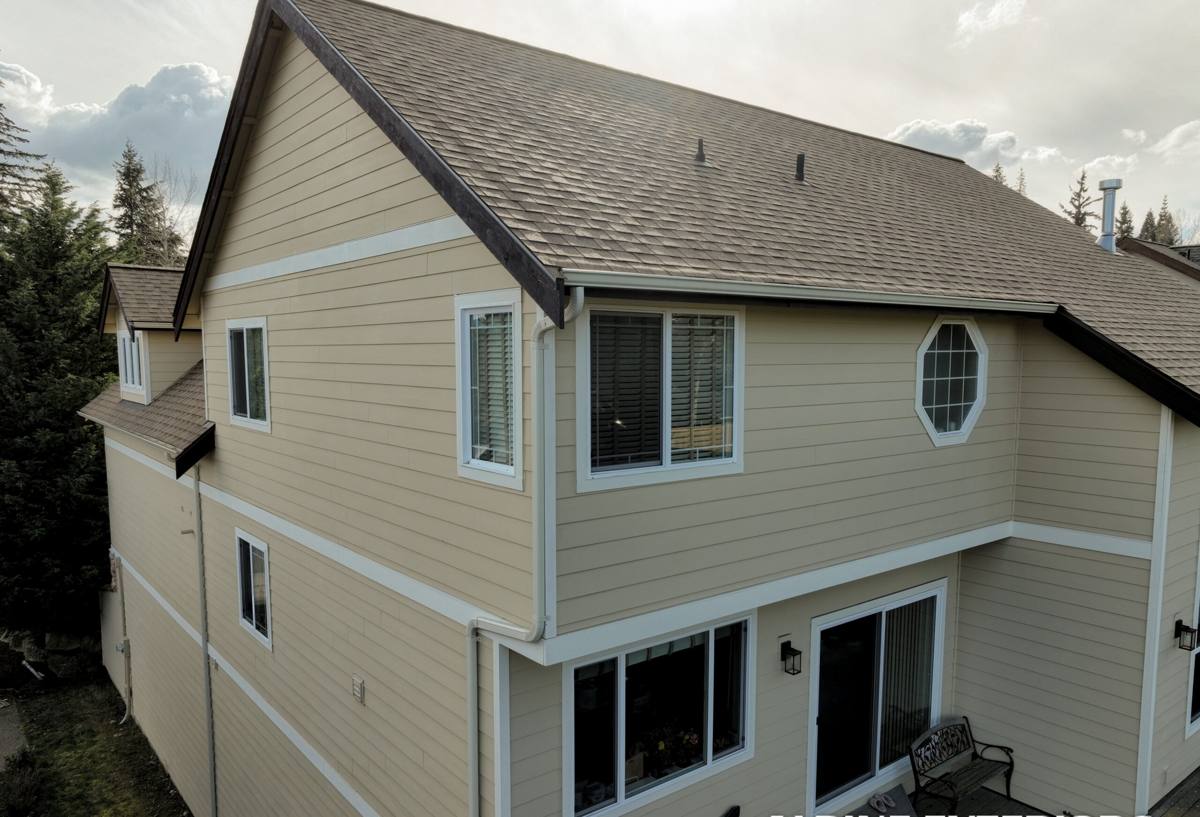
What Driving Rain and Salt Air Do to Ordinary Windows
A lot of window problems we see on local homes aren't glass failures — they're water management failures. Rain in this region rarely falls straight down; it comes in sideways during winter storms, which pushes water into every gap, seam, and fastener hole around a window opening. If the flashing and sealant weren't detailed correctly at installation, water finds its way behind the trim and into the wall assembly, where it can sit for weeks during the wet season without ever fully drying.
Salt-laden air adds a second layer of wear. It accelerates corrosion on window hardware — hinges, locks, balance mechanisms, and screws — and it can degrade lower-grade finishes and seals faster than the manufacturer's warranty assumes. And then there's moss: with as much moisture and shade as this area gets for much of the year, moss and algae will happily take hold in any spot around a window where water lingers, which is usually a sign that drainage isn't working the way it should.
- Condensation forming between panes (a sign the seal has failed)
- Soft or discolored wood trim around the frame
- Moss or dark streaking on the sill or exterior casing
- Stiff, corroded, or hard-to-operate locks and cranks
- Drafts or a noticeable temperature difference near the window in winter
- Rising heating bills without any other obvious cause
Flashing and Water Management
The single most important part of a window installation in this climate isn't the window itself — it's what happens around it before the window ever goes in. Proper flashing (installed in the correct shingle-style layering, sill pan first, sides next, top last) directs any water that gets past the window back out to the exterior rather than into the wall. Skipping or rushing this step is the number one reason a window that's technically a good product ends up causing water damage a few years down the road.
Insulation and Air Sealing
Once the window is set and flashed, the gap between the window frame and the rough opening needs to be sealed with the right materials — not just caulk on the outside, but proper low-expansion foam or backer rod and sealant that stays flexible through temperature swings. A gap that's packed too tight, left too loose, or sealed with the wrong material either restricts the window's ability to expand and contract or leaves a path for both air and moisture to move through.
Choosing the Right Window Material and Glass Package
There's no single "best" window for every home — the right choice depends on your home's exposure, your budget, and how much upkeep you want to take on. Here's how the common options stack up for a coastal Whatcom County home:
| Material | Moisture Resistance | Maintenance | Typical Lifespan |
|---|---|---|---|
| Vinyl | Very good — won't rot or corrode | Low; occasional cleaning | 20–30 years |
| Fiberglass | Excellent; very stable in temperature swings | Low | 30-plus years |
| Wood (clad exterior) | Good if the cladding and flashing are done right; interior wood still needs care | Moderate to high | 20–30 years, more with upkeep |
| Aluminum | Prone to condensation and corrosion in salt air unless thermally broken | Moderate | 15–25 years |
For most Bellingham-area homes, we lean toward vinyl or fiberglass frames precisely because they don't give salt air, humidity, or standing moisture anything to work with. Wood-clad windows can look great and perform well, but only when the cladding and every seam around it is detailed correctly — the trade-off is more sensitivity to installation quality and more long-term upkeep on the interior wood. We're straightforward with homeowners about that trade-off rather than pushing a product that doesn't fit their maintenance appetite.
Beyond the frame, the glass package matters just as much. Double-pane, low-E glass with argon fill is the baseline we recommend for this climate — it cuts heat loss in winter, reduces solar gain in summer, and the low-E coating helps limit condensation on the interior glass during cold, damp stretches. Triple-pane is worth discussing for homes with more direct wind or road-noise exposure, but it's not always necessary to hit strong efficiency numbers here.
Signs Your Current Windows Are Costing You Money
Not every window problem is obvious from inside the house. A quick self-check can tell you whether it's worth having someone take a closer look:
- You can feel a draft near a closed window on a windy day
- Glass fogs up between the panes, not just on the surface
- The window sticks, won't stay open, or is hard to lock
- You can hear more outside noise than you used to
- There's visible moss, algae, or dark staining on the sill or trim
- One room is noticeably colder or warmer than the rest of the house
- Your energy bills have climbed without a clear reason
If you're seeing two or more of these, especially the moisture-related signs, it's worth having the windows and the surrounding wall assembly inspected before it turns into a bigger repair.
Our Installation Process
We keep the process straightforward and we don't skip the steps that matter, even the ones that don't show once the trim is back on:
- On-site assessment. We look at each window opening, check for existing moisture damage, and talk through which materials and glass package make sense for your home's exposure and budget.
- Product selection. We help you compare options honestly, including where a cheaper window will and won't hold up in this climate.
- Careful removal. Old windows come out without unnecessary damage to the surrounding siding or trim, and we check the framing underneath for rot or soft spots before anything new goes in.
- Flashing and weatherproofing. Sill pan, flashing tape, and sealant go in correctly and in the right order — this is the step that determines whether the window stays dry for the next twenty years.
- Installation and sealing. The window is set level and square, shimmed correctly, insulated around the frame, and sealed both inside and out.
- Final check and cleanup. We test operation, check the seal, and clean up the work area before we call the job done.
What Affects the Cost of a Window Project
Every home is different, but these are the main factors that move the price of a window project up or down:
| Factor | Why It Matters |
|---|---|
| Frame material | Vinyl is typically the most budget-friendly; fiberglass and wood-clad cost more upfront |
| Number of openings | Per-window cost usually drops as the total project size goes up |
| Existing damage | Rot or moisture damage found during removal adds repair work before the new window goes in |
| Glass package | Triple-pane, tinted, or specialty glass adds cost over standard low-E double-pane |
| Window size and style | Large picture windows or custom shapes cost more than standard operable sizes |
| Access and complexity | Second-story or hard-to-reach openings take more time and labor |
We give straightforward, itemized estimates so you can see exactly what you're paying for — there's no reason a window quote should be a mystery.
Why Work With a Crew That Already Knows Bellingham and Whatcom County
Window installation isn't one-size-fits-all, and a crew that mostly works drier inland climates won't always think to detail flashing the way this region demands. Working windows in and around Bellingham day in and day out means we've seen how homes here actually age — where moisture tends to collect, which exposures take the worst of the winter storms, and which shortcuts show up as callbacks two or three years later.
It also means we're familiar with the local permitting expectations and typical construction found in Whatcom County homes, so there are fewer surprises once we open up a wall or trim line. And because we're local, warranty support and follow-up service aren't a phone call to some distant office — we're already working in the area.
Caring for Your New Windows Through Moss Season and Beyond
Even a well-installed, high-quality window benefits from a little seasonal attention in this climate. Keep weep holes along the bottom of the frame clear of debris and moss so water can drain the way it's designed to. Rinse salt residue off exterior surfaces near the coast periodically, since it can build up on hardware and finishes over time. And take a look at exterior caulking once a year — sealants do wear down eventually, and catching a small gap before the next round of winter storms is a lot cheaper than dealing with water damage afterward.
If you're not sure whether your current windows are holding up the way they should, or you're ready to talk through options for a replacement project, we're happy to come take a look. Reach out for a free, no-pressure estimate using the form below.