 Ferndale Siding
 Storm Damage Looks Different on a Blaine Roof
Blaine sits at the northern edge of Whatcom County, right on the water, and that location shapes how storms treat a roof here. Wind coming off open water has little to slow it down before it reaches a rooftop, which means it hits with more force and drives rain sideways, up under shingle tabs and flashing edges that would stay dry a few miles inland. Add the salt-laden marine air and a long, shaded wet season that keeps roofs damp for months at a stretch, and Blaine ends up with a specific, recognizable pattern of storm damage — not the same pattern you'd see on a roof in a drier, more sheltered part of the Pacific Northwest.
Because we're based just down the road in Ferndale and already do siding and exterior work throughout this stretch of Whatcom County, we see this pattern repeat house after house: lifted or creased shingles on the windward slope, corroded fasteners, flashing that's worked loose from repeated flexing, and moss colonies holding water against the deck long after the storm itself has passed. A repair that doesn't account for all of that isn't really a repair — it's a patch that fails again next storm season.
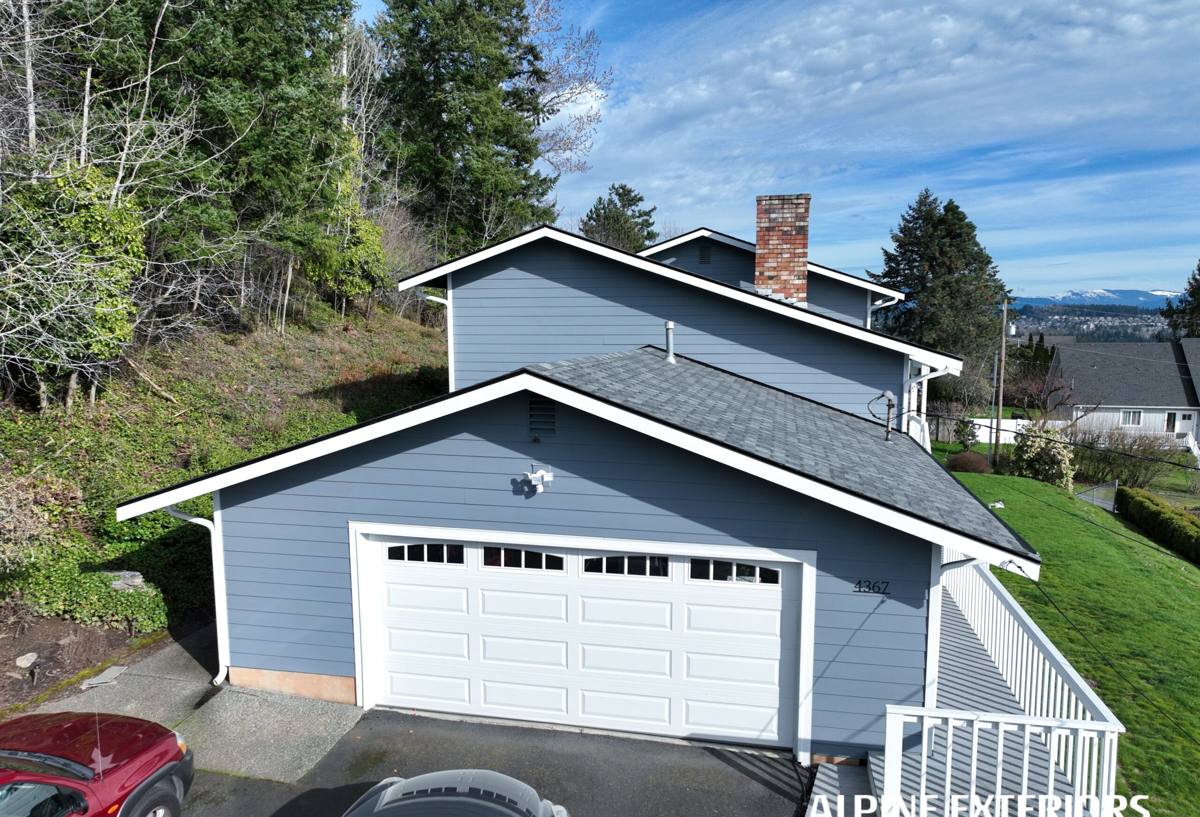
What Actually Counts as Storm Damage
Homeowners often assume storm damage means a hole in the roof, but most of what we get called out for in Blaine is less dramatic and easier to miss from the ground. It's worth knowing the difference between damage that needs immediate attention and wear that can wait for a scheduled repair.
- Wind-lifted or creased shingles — tabs that have been pried up and not fully reseated, which lets wind-driven rain get underneath on the next storm even if nothing looks obviously broken.
- Torn or missing shingles — usually on ridges, edges, and the corners of the roof, where wind uplift is strongest.
- Damaged or displaced flashing — around chimneys, vents, skylights, and roof-to-wall transitions, often the first thing to fail in wind-driven rain.
- Granule loss — small hail, blown debris, or just age can strip the protective granules off asphalt shingles, leaving them exposed to UV and moisture.
- Impact damage from falling limbs or debris — common where trees overhang a roofline, which describes a lot of properties in this part of the county.
- Moss-related deck softening — not caused by a single storm, but storms often expose it by finally pushing water through a weak spot moss has been working on for a season or two.
- Gutter and downspout damage — bent, pulled-away, or clogged gutters that let water back up under the roof edge instead of carrying it away.
Salt Air, Driving Rain, and Moss: The Three Things We Watch For
Salt Air and Corrosion
Metal components — flashing, fasteners, gutter hardware, vent caps — corrode faster this close to the water. A fastener that would last decades inland can weaken years sooner in a salt-air environment, and a corroded nail or screw is exactly what lets a shingle work loose in the next windstorm. When we're repairing storm damage on a Blaine roof, we're always looking one step past the visible damage to the hardware holding things down.
Wind-Driven Rain and Flashing
Most roof leaks that get blamed on "the storm" are actually flashing failures that the storm just exposed. Flashing relies on overlap and sealant to shed water, and wind-driven rain can push moisture uphill through gaps that would never leak in a normal vertical rain. Any storm repair that doesn't check flashing at every penetration and transition is leaving the most likely leak point untouched.
Moss Season and Trapped Moisture
Whatcom County's long, mild, wet stretch of the year is ideal moss-growing weather, especially on shaded, north-facing slopes. Moss doesn't just look bad — it holds water against the shingle surface and roof deck far longer than bare shingles would, which softens the deck, lifts shingle edges, and gives wind something to grab during the next storm. A storm repair that ignores existing moss growth is repairing a symptom while leaving the cause in place.
What a Correct Storm Repair Involves
Inspection Before Anything Gets Touched
We walk the roof (or use a ladder and binoculars when conditions call for it) and check every slope, not just the area the homeowner noticed damage on. Wind damage is rarely limited to one spot — if one section took a hit, others usually did too, just less obviously.
Matching Materials, Not Just Patching
Asphalt shingles vary in color and profile between production runs, so an exact match isn't always possible on an older roof. We tell homeowners honestly when a repair will be slightly visible versus when it will blend in, rather than promising a seamless match we can't guarantee.
Flashing, Underlayment, and Fasteners
Any storm repair we do includes checking the flashing and underlayment around the damaged area, not just replacing the shingles on top. If the underlayment is compromised or the deck underneath has softened from trapped moisture, covering it back up with new shingles just hides a problem that will resurface.
Verifying Scope Before Insurance Gets Involved
If a homeowner is filing an insurance claim, we document what we find — photos, notes on affected areas, and an honest assessment of cause — before repairs start. That documentation matters for the claim and protects the homeowner from disputes over what was storm-caused versus pre-existing wear.
Our Process From Call to Cleanup
- Initial call and, when needed, emergency tarping. If a roof is actively leaking, stopping water intrusion comes before anything else.
- Full roof inspection. We check every slope, all flashing points, gutters, and any moss or debris accumulation, not just the damaged section.
- Written estimate with options. We explain what's storm damage, what's pre-existing wear, and what a repair versus a larger project would involve — plainly, without pressure.
- Insurance documentation, if applicable. Photos and notes homeowners can hand directly to their adjuster.
- The repair itself. Matched materials where possible, full flashing and underlayment check, and fasteners rated for this environment.
- Cleanup and debris removal. Old materials, nails, and any moss or debris we cleared during the repair.
- Follow-up. We stand behind the work and want to hear from you if anything doesn't perform as expected in the next storm.
Repair or Replace? How We Help You Decide
Not every storm-damaged roof needs to be replaced, and not every roof that "just needs a patch" should be patched. Here's how we walk homeowners through that decision honestly:
| Factor | Repair Usually Makes Sense | Replacement Should Be Considered |
|---|---|---|
| Age of roof | Roof is well within its expected service life | Roof is already near or past the age most roofs of that material need replacing |
| Extent of damage | Damage is confined to one slope or a small area | Damage is spread across multiple slopes or the whole roof |
| Underlying deck condition | Deck is sound once damaged shingles are removed | Deck shows softening or rot from long-term moisture, often moss-related |
| Shingle match | Reasonable match available, or mismatch is on a less visible slope | No reasonable match exists and appearance matters to the homeowner |
| Frequency of past repairs | This is the first significant issue | This is one of several repairs in a short span, suggesting broader wear |
Costs vary a lot depending on scope. A small flashing or shingle repair after a windstorm is typically a modest, single-visit job. Damage that involves deck repair, larger sections of shingles, or multiple slopes costs more and takes longer, and a full replacement is a bigger investment still. We give a written estimate before any work starts so there's no guessing.
Materials We Use and Why
For storm repair work in a marine climate, small material choices matter more than they would inland.
| Component | What We Look For | Why It Matters Here |
|---|---|---|
| Shingle grade | Algae-resistant, higher wind-rated architectural shingles when replacement is on the table | Resists the streaking and moss-friendly growth that Whatcom County's damp climate encourages |
| Fasteners | Corrosion-resistant nails or screws rated for coastal exposure | Salt air accelerates corrosion of standard fasteners, which leads to loosened shingles |
| Flashing | Properly lapped metal flashing with fresh sealant, not just caulk over old flashing | Wind-driven rain finds gaps that vertical rain never would |
| Underlayment | Synthetic or self-adhering underlayment in vulnerable areas | Adds a real moisture barrier under shingles in a climate where wind-driven rain and prolonged dampness are routine |
We don't push a specific shingle brand as the "only" option — several manufacturers make products suited to this climate, and the right choice depends on the roof's slope, existing materials, and the homeowner's budget. What we won't do is cut corners on fasteners or flashing to save a small amount up front, because those are exactly the components that fail first out here.
Why a Crew That Already Works Blaine Matters
Storm damage repair isn't a specialty that benefits from guesswork, and it isn't a job where a crew unfamiliar with this stretch of coastline learns on your roof. Because we're a Ferndale-based crew that already works throughout this part of Whatcom County, we know what wind-driven rain does to flashing here, how fast moss reestablishes itself after a mild winter, and which fastener and flashing choices actually hold up near the water instead of just meeting a minimum code spec. That local pattern recognition is the difference between a repair that lasts and one that reopens the same leak next storm season.
It also means faster response. After a significant wind event, roofing crews from farther away get backed up with jobs across a wider territory. A local crew can typically get a tarp on an active leak and get an inspection scheduled sooner, which matters when water is actively getting into a house.
After the Storm: A Homeowner Checklist
If Blaine has just come through a windstorm or heavy rain event, here's what's worth checking from the ground before calling anyone out:
- Look for shingles or shingle pieces in the yard or gutters — a sign of wind damage even if the roof looks fine from below.
- Check gutters and downspouts for bending, pulling away from the fascia, or heavy debris blockage.
- Look inside the attic (if accessible) for new water stains, damp insulation, or daylight coming through the roof deck.
- Note any visible sagging or dark, wet-looking patches on ceilings, especially near chimneys or skylights.
- Check for moss buildup that looks freshly disturbed or lifted at the edges — a sign the storm moved it and possibly softened the shingles beneath.
- Photograph anything unusual before cleanup, in case an insurance claim becomes relevant later.
- Avoid climbing onto the roof yourself after a storm — wet, mossy surfaces are one of the more common ways homeowners get hurt trying to assess damage.
If a leak is active, our first priority is always stopping water intrusion, then scheduling a full inspection once conditions are safe to work in. If you're dealing with storm damage on a Blaine roof, or you're just not sure whether what you're seeing needs attention, we're happy to take a look and give you a straightforward answer. Estimates are free and there's no pressure to move forward — you can use the form below to get in touch.