 Ferndale Siding
 Deck Repair Built for Lynden's Weather, Not a National Checklist
Lynden decks don't fail the way decks fail in drier parts of the country. Out here, the problem usually isn't one dramatic thing — it's months of damp air, months of shade, and a freeze-thaw cycle that repeats itself every winter. A deck that looks fine from the porch door can have soft framing underneath, corroded fasteners holding on by habit, and moss working its way into seams you can't see until a board gives way. We repair decks in Lynden because we already know what this climate does to lumber, hardware, and finishes over time — we're not learning the area on your project.
This page is about one thing: deck repair for homes in and around Lynden. Not a general contracting pitch, not a full rebuild sales page — just what an honest repair job looks like here, what it should include, and how to tell if your deck actually needs one.
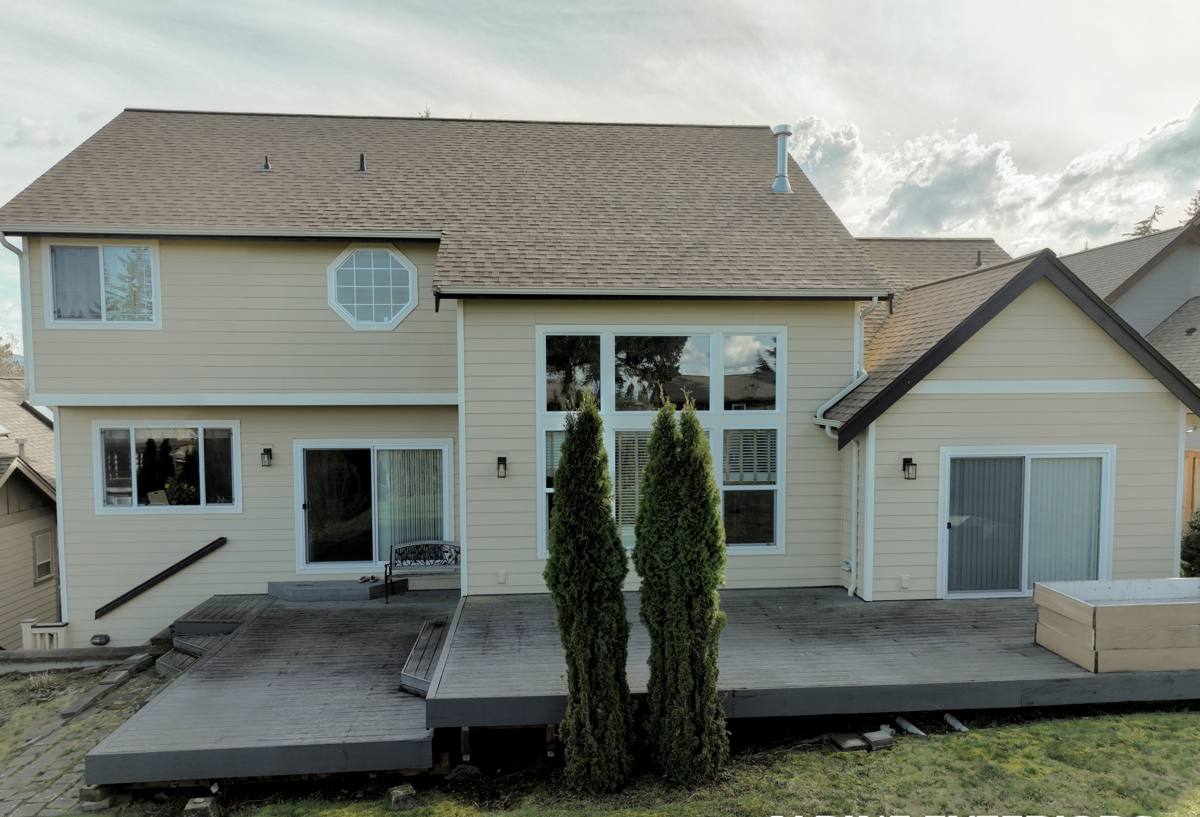
What Lynden's Climate Actually Does to a Deck
Driving Rain and Standing Moisture
Whatcom County gets a lot of its rain sideways, driven by wind off Pacific storm systems that push moisture into places a deck's design never accounted for — under railings, behind ledger boards, into the end grain of joists. Lynden sits inland from the coast, so it doesn't take the same salt exposure that decks closer to Ferndale and the water do, but it gets the same driving rain and the same long stretches of grey, damp weather. That moisture doesn't need to pool to cause damage. It just needs time, and around here it has plenty of it.
A Long Moss Season
Moss doesn't need much to get established on a deck surface — shade, moisture, and a few weeks of neglect. In Lynden, that combination shows up for most of the year, not just the wettest months. Once moss takes hold on decking boards or stair treads, it holds water against the wood surface constantly, which accelerates rot underneath even when the top of the board still looks okay. It also turns steps and low-traffic areas slick, which is a safety issue as much as a maintenance one.
Temperature Swings and Freeze-Thaw
Whatcom County winters aren't brutal, but they're inconsistent — freezing nights followed by wet, above-freezing days is common. Water that's worked its way into a crack or a fastener hole expands when it freezes, widening the damage a little more each cycle. Over several winters, that's how a small split in a board or a loose post connection turns into a real structural problem.
Signs Your Deck Needs Repair — Not Full Replacement
Most decks we look at in Lynden don't need to be torn out. They need targeted repair to the parts that actually failed, done correctly, with the rest of the structure left alone. Here's what we check for:
- Soft or spongy spots when you walk across the decking boards
- Visible moss or algae buildup on boards, stairs, or the shaded side of the deck
- Rust streaks running down from screws, nails, or metal hardware
- Gaps or movement where the ledger board attaches to the house
- Railings or posts that wobble or flex under hand pressure
- Stair stringers that feel uneven, bouncy, or show splitting at the notches
- Gray, weathered wood that's lost its finish and started to check or splinter
- Standing water that doesn't drain within an hour or two after rain
If you're seeing one or two of these, that's usually a repair. If the framing itself is compromised in multiple areas, or the deck was undersized or poorly built to begin with, that's a different conversation — and we'll tell you honestly which situation you're in before any work starts.
What a Correct Deck Repair Job Actually Involves
A repair that just replaces the boards you can see and skips everything underneath isn't a repair — it's a temporary patch. A correct job addresses the whole assembly:
Structural Framing First
Joists, beams, and posts get inspected for rot, splitting, and fastener corrosion before anything cosmetic happens. If the framing underneath is compromised, replacing the decking on top of it just hides the problem for another season.
The Ledger Board Connection
Where the deck attaches to the house is one of the most common failure points we find, and one of the most serious — it's what keeps the deck from pulling away from the structure. Flashing, fasteners, and the connection itself get checked carefully, especially on older decks built before current attachment standards.
Fasteners and Hardware
Standard nails and undersized screws corrode faster than they should in this climate, and corroded fasteners lose their holding strength long before they look obviously bad. We replace hardware with fasteners rated for exterior, high-moisture use, matched to whatever decking and framing material is on your deck.
Decking Boards and Railings
Individual boards get replaced where they're actually damaged, matched as closely as possible to the surrounding material. Railings and stair components get the same structural scrutiny as the deck surface — a loose railing is a liability, not a cosmetic issue.
Drainage and Airflow
Poor drainage and blocked airflow underneath the deck are why moisture problems come back after a repair. Where we can improve spacing, grading, or ventilation without a full rebuild, we do.
Repair vs. Replacement: How We Help You Decide
| Factor | Usually Points to Repair | Usually Points to Replacement |
|---|---|---|
| Framing condition | Isolated soft spots or localized rot | Widespread rot across multiple joists or beams |
| Ledger board | Solid connection, minor flashing issues | Separation from the house or major water intrusion |
| Age of structure | Under 15-20 years, built to reasonable standards | Older deck with outdated framing or undersized lumber |
| Decking surface | A portion of boards showing wear or damage | Most boards weathered, splitting, or moss-damaged |
| Design and layout | Layout still works for how you use the space | Deck is undersized, poorly laid out, or code-noncompliant |
Most of what we're called out for in Lynden falls in the repair column. We'd rather fix what's actually wrong and be straight with you about it than sell a full rebuild you don't need.
Our Process, Start to Finish
1. On-Site Inspection
We walk the whole deck — surface, framing, railings, stairs, and the ledger connection — and check moisture levels and hardware condition, not just what's visible from the top.
2. Honest Assessment
You get a clear rundown of what's actually failing, what's still sound, and what we'd recommend, in plain language with no pressure to upsize the scope of work.
3. Targeted Repair
We replace compromised framing, hardware, and decking material — not the whole structure — using fasteners and materials chosen for how this climate actually treats a deck over time.
4. Finishing and Protection
Depending on the material, that means sealing, staining, or another appropriate finish, applied correctly so it actually sheds the driving rain this area gets rather than trapping moisture underneath.
5. Maintenance Guidance
Before we leave, you'll know what to watch for and roughly how often this deck should be cleaned or resealed given its exposure — shaded decks that hold moss need more frequent attention than ones that get sun and airflow.
Material Choices: Why We Recommend What We Recommend
We work with both wood and composite decking, and we don't push one over the other automatically — it depends on the deck, the budget, and how much upkeep you want to take on.
Wood decking is often the right call for repairs where matching the existing material matters, and it's generally less expensive to repair in sections. It does require more regular maintenance in a climate like this — cleaning, sealing, and staying ahead of moss are not optional if you want the wood to last.
Composite decking holds up well against moss and moisture with less upkeep, which is appealing in a place with a moss season as long as ours. The trade-off is cost, and composite isn't always a straightforward match when you're repairing a section of an otherwise wood deck — the framing underneath still needs to be built to the manufacturer's specifications for the warranty to hold. We'll tell you honestly when composite makes sense for a repair and when it's overkill for the scope of work in front of you.
Why a Crew That Already Works in Lynden Makes a Difference
Deck repair done by someone unfamiliar with this specific climate tends to under-build for it — standard hardware where corrosion-resistant fasteners were needed, a finish schedule that assumes less rain than Whatcom County actually gets, or a repair that ignores how much shade and moss pressure a particular yard layout creates. We work on decks throughout Ferndale and the surrounding Whatcom County communities, including Lynden, and that means we're not guessing at how driving rain, a long moss season, and freeze-thaw winters interact with deck lumber and hardware over time — we see the results of it every week.
That familiarity also means a faster, more accurate first visit. We know which failure points to check first, which materials perform well locally, and which shortcuts show up as callbacks two winters later.
Get an Honest Look at Your Deck
If your deck has soft spots, moss buildup, a shaky railing, or you just haven't had it looked at in a few years, it's worth a proper inspection before another wet Whatcom County winter goes by. We offer free, no-pressure estimates for deck repair in Lynden and the surrounding area — use the form below to get a time on the calendar.