 Ferndale Siding
 Custom Decks in Custer: Built for a Wet, Wind-Exposed Corner of Whatcom County
Custer sits in the flatland north of Ferndale, close enough to the Salish Sea that homes here deal with salt-laden air, long stretches of driving rain, and a moss season that can run most of the year on shaded, north-facing surfaces. A deck is one of the most exposed structures on a property — it sits outside year-round, takes rain from every angle, and gets far less protection from roof overhangs and siding details than the rest of the house does. Building one that holds up in this climate takes more than picking a good-looking decking board. It takes attention to framing, fasteners, drainage, and ventilation that a lot of quick deck jobs skip.
We build custom decks throughout this stretch of Whatcom County, and on a property like a home in Custer, we treat the structure underneath the decking as just as important as what a homeowner actually walks on. A beautiful deck surface over a poorly flashed ledger board or undersized footings is a problem waiting a season or two to show up.
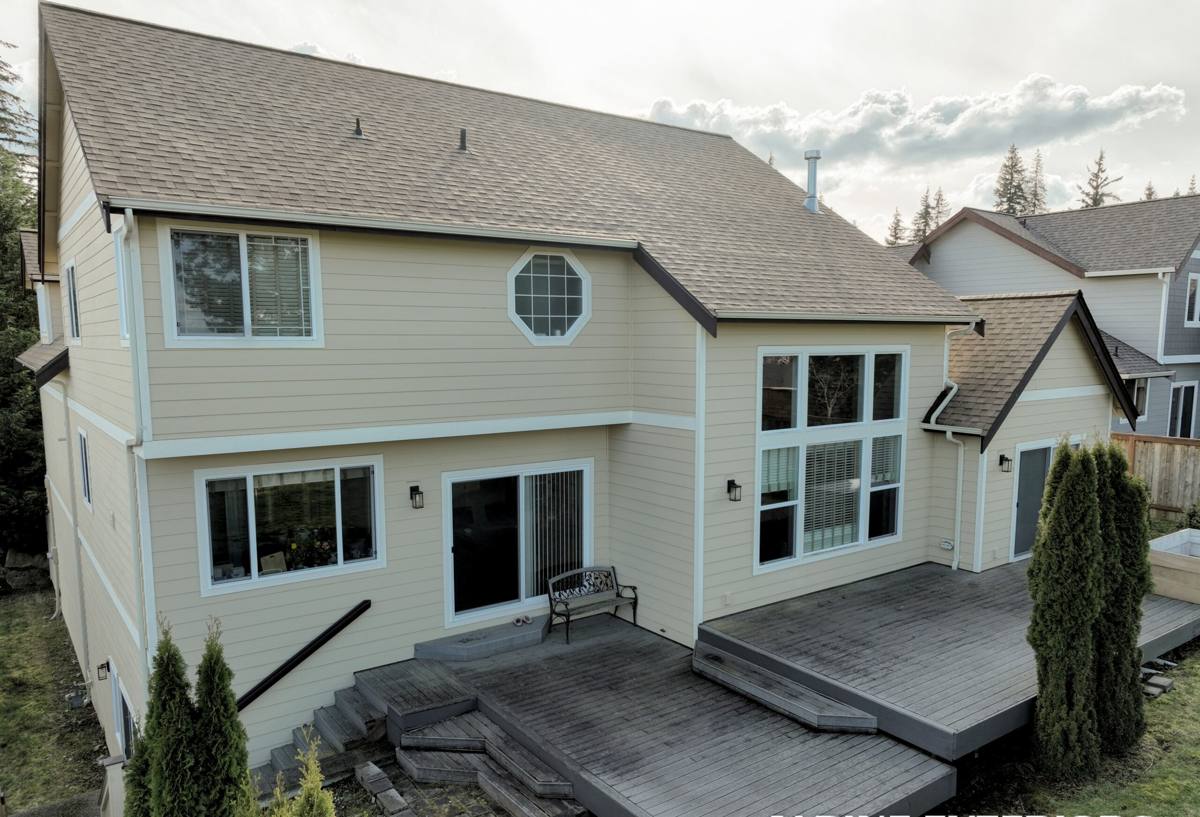
What Custer's Climate Does to an Unprotected Deck
Moss, Algae, and Constant Surface Moisture
Mild temperatures and near-constant moisture through fall, winter, and spring give moss and algae a long growth window across Whatcom County, and a deck surface is prime real estate for it. Boards that don't drain well, shaded corners, and spots where leaves and debris collect all become growth surfaces given enough time. Beyond looking bad, moss and algae hold moisture against the decking material and turn a dry surface into a slick one after rain.
Fastener and Hardware Corrosion
Salt-influenced air reaches inland to Custer even without direct waterfront exposure, and it's hard on standard-grade fasteners, joist hangers, and structural hardware over time. Screws and hangers that would hold up fine in a dry inland climate can start showing rust streaks, staining, or weakened holding power years earlier out here — and a corroded fastener at a critical connection point is a structural issue, not a cosmetic one.
Wood Rot at Ledgers, Joists, and Posts
The ledger board — where a deck attaches to the house — and the framing underneath are the parts of a deck most likely to fail first, because they're the hardest to inspect and the easiest to build wrong. Water that gets trapped behind a poorly flashed ledger, or that sits against joists and posts without a way to drain and dry, leads to rot that can go unnoticed until a board feels soft or a connection starts to fail.
UV and Weathering on Exposed Surfaces
Even under the Pacific Northwest's cloud cover, sun exposure during drier stretches fades and dries out wood decking over time, and repeated wet-to-dry cycling stresses both wood and composite materials at their joints and fastener points. A deck built with materials and finishes suited to this back-and-forth weathering pattern holds its look and structural integrity far longer than one that isn't.
Decking Material Options for a Custer Property
There isn't one right decking material for every home — the right choice depends on budget, how much upkeep a homeowner wants to take on, and how the deck will actually be used. We walk through these trade-offs honestly rather than pushing whichever product has the best margin.
| Material | Upfront Cost | Maintenance | How It Handles This Climate |
|---|---|---|---|
| Pressure-treated wood | Lower | Highest — regular cleaning, sealing, and re-staining | Prone to moss growth and surface checking if maintenance lapses |
| Cedar | Mid | High — needs sealing and cleaning to keep its color and resist moisture | Naturally rot-resistant but still needs upkeep in constant moisture |
| Composite decking | Mid to higher | Low — periodic cleaning, no staining or sealing | Resists rot and moisture well; surface can still grow algae if not cleaned |
| Capped composite / PVC | Higher | Lowest — occasional washing | Best resistance to moisture, staining, and moss buildup of the group |
Composite and capped composite products, including options like TimberTech, tend to make the most sense for homeowners who want a low-maintenance deck in a climate that punishes anything requiring regular sealing. Wood decking can absolutely work in Custer, but it needs a homeowner who's genuinely willing to keep up with cleaning and sealing on a real schedule — skipped maintenance shows up faster here than it would in a drier region.
The Structural Details That Actually Determine How Long a Deck Lasts
Ledger Board Flashing
Where the deck attaches to the house is the single most important flashing detail on the whole structure. Proper flashing directs water away from the ledger-to-house connection instead of letting it collect behind the board, and it needs to tie in correctly with the home's existing siding and weather-resistive barrier. This is standard practice on every deck we build, not an upgrade.
Joist Protection
Joist tape or an equivalent flashing membrane over the top of each joist keeps water from soaking into the wood at the exact spot where deck screws puncture it — one of the most common places rot starts on an otherwise sound deck frame. It's a small material cost that prevents a much larger repair down the line.
Footings and Post Bases
Footings need to be sized and set below frost depth per code, and post bases should hold posts up off the concrete rather than letting wood sit directly on a surface where water collects. In a climate with this much sustained ground moisture, that detail alone makes a real difference in how long the structural posts last.
Airflow Underneath the Deck
A deck built low to the ground or against a wall with no airflow underneath traps moisture against the framing. Where the design allows for it, we build in enough clearance and ventilation to let the structure actually dry out between rain events, rather than staying damp continuously through the wet months.
Design Considerations Specific to Custer Lots
Beyond the structure itself, a few site-level decisions affect how well a deck performs on a typical Custer property:
- Drainage and grading: The ground under and around a deck needs somewhere for water to go — a deck built over poorly graded soil just concentrates moisture problems underneath it.
- Orientation to wind and rain: On open, less-sheltered lots, the side of the house catching the most wind-driven rain may benefit from a covered or partially covered deck design rather than a fully exposed one.
- Railing and guard code compliance: Any elevated deck needs code-compliant railing height and baluster spacing, which we handle as a standard part of design, not an afterthought.
- Stair and landing placement: Stairs need slip-resistant treads and secure footings of their own, especially given how often surfaces stay damp here.
Our Process for a Custom Deck Build
We start with an on-site look at the property — where the deck will attach to the house, existing grading and drainage, sun and wind exposure, and how the space will actually be used. From there we talk through material options and realistic trade-offs before putting together a written scope. Framing and flashing details are treated as standard practice throughout the build, not upgrades a homeowner has to specifically ask for. Once the structure is framed and inspected, we install the decking, railing, and any stairs, and walk the finished deck with the homeowner before calling the job done.
| Stage | What Happens |
|---|---|
| Site assessment | Evaluate attachment point, grading, drainage, and exposure |
| Design and material selection | Walk through decking options and layout based on budget and use |
| Permitting | Pull required permits and confirm code compliance for framing and railings |
| Framing | Set footings, posts, ledger flashing, and joist protection |
| Decking and railing install | Install decking material, railing, and stairs |
| Final walkthrough | Inspect the finished deck with the homeowner |
Keeping a Custer Deck in Good Shape Over Time
Even a well-built deck needs some ongoing attention in this climate — the difference is that a properly built one needs far less than a poorly built one, and what it does need is manageable.
- Sweep leaves and debris off the surface regularly, especially in fall, so moisture doesn't sit trapped underneath them
- Clean moss and algae off the decking surface and stairs before it builds up and gets slick
- Check railing and stair connections periodically for looseness or corrosion at the hardware
- Keep gutters and downspouts near the deck functioning so roof runoff isn't dumping extra water onto or under the structure
- If you have wood decking, keep to a real sealing and staining schedule rather than letting it lapse a year or two
- Have the structure looked at every few years, particularly the ledger connection and any framing that's hard to see from above
Why a Local Crew Matters for Deck Work in Custer
A contractor who builds decks throughout this part of Whatcom County regularly already understands how wind-driven rain, salt-influenced air, and a long moss season affect a structure that sits outside year-round. That shows up in decisions a homeowner might not think to ask about — how much ledger flashing gets lapped, whether joist tape is standard or skipped, what hardware grade gets specified for fasteners and post bases. Those decisions are what actually separate a deck that looks good for one season from one that holds up structurally for decades.
If you're planning a new deck for a Custer property, or you're not sure whether an existing deck is sound, we're happy to take a look and walk through honest options. Reach out below for a free, no-pressure estimate.