 Ferndale Siding
 Why Fairhaven's Climate Is Tougher on Siding Than Most Homeowners Expect
Fairhaven sits close enough to the water that homes here deal with a different mix of weather stress than siding was originally designed around. Salt-laden air moves inland off the bay, driving rain comes in sideways during fall and winter storms, and the shaded, damp stretches of the year run long. That combination — salt, moisture, and shade — is exactly what breaks down the wrong siding material years before it should fail.
None of this is unique to one street or one style of house. It's a regional pattern across Whatcom County's marine-influenced areas, and it's the reason siding choices that work fine in a dry inland climate can underperform here. Paint that's rated for a drier climate chalks and fades faster near salt air. Wood-based products swell and check where moisture sits against the wall longer than the label assumed. Seams and caulk joints that would last a decade elsewhere get tested every rainy season instead of once or twice a year.
What "Long Moss Season" Actually Means for a Wall
Moss doesn't just grow on roofs. On siding, it takes hold anywhere shade, moisture, and a rough or porous surface line up — north-facing walls, areas under overhangs that never fully dry, and any spot where a previous installation left water a place to linger. Once moss or algae gets a foothold on siding, it holds moisture against the substrate underneath, which is a much bigger problem than the cosmetic staining most homeowners notice first.
What Fiber Cement Needs to Do Right in a Neighborhood Like This
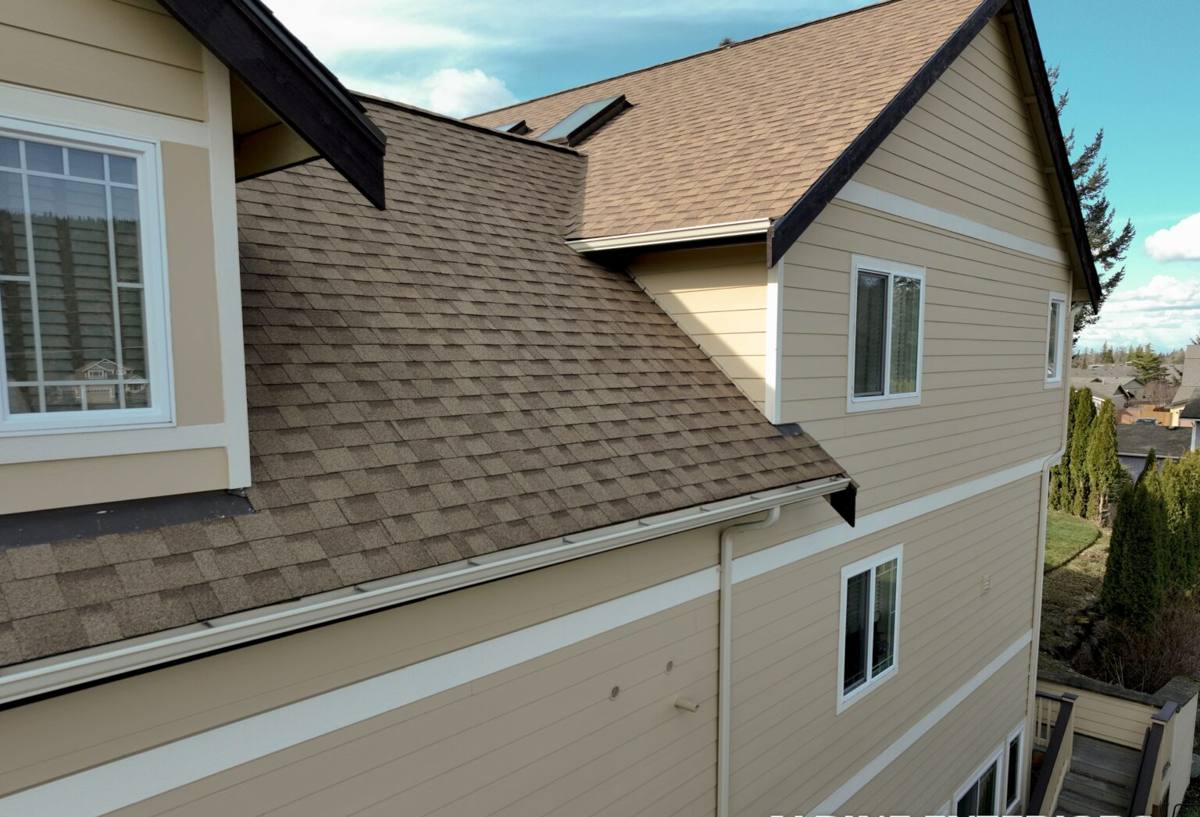
Fiber cement siding is a good match for Fairhaven's climate specifically because it's not organic material. It won't rot, it doesn't feed mold the way wood fiber can, and it holds its shape in freeze-thaw and wet-dry cycling far better than wood or wood-composite products. But "fiber cement" is a category, not a guarantee — how it performs here comes down to the specific product and how it's installed.
- Moisture management at every joint — fiber cement resists water intrusion at the panel itself, but water finds its way in at seams, penetrations, and trim if flashing and gaps aren't done correctly.
- A factory finish rated for this exposure — field-applied paint is the first thing to fail in salt air and constant damp; a factory-cured finish holds color and protects the substrate far longer.
- Correct clearance and drainage — siding installed too close to grade, decks, or roof lines traps moisture exactly where Fairhaven's rain volume punishes that mistake hardest.
- A surface that doesn't invite moss — texture and coating matter; smoother, factory-finished surfaces shed moisture and resist the buildup that feeds moss and mildew.
Why We Install Only James Hardie Fiber Cement
We get asked why we don't offer LP SmartSide, vinyl, or other fiber cement brands like Cemplank or Allura. It comes down to what we're willing to put our name behind in a climate like this one. LP SmartSide is a wood-strand product with a resin coating — it's a legitimate product, but it's still wood at its core, and wood-based siding depends heavily on caulking, paint maintenance, and cut-edge sealing to keep moisture out over time. In a marine climate with a long wet season, that maintenance margin gets thin fast. Vinyl is low-maintenance and inexpensive, but it's a thin material that can warp in temperature swings, doesn't offer the same fire resistance, and its appearance and seams read as vinyl up close — not something we're willing to install as our standard product.
James Hardie fiber cement is non-combustible, engineered specifically for different climate exposures through its HZ5 and HZ10 product lines, and finished with the ColorPlus factory coating system rather than a coat of field-applied paint. That's the combination we've standardized on: a material that's built for wet, salt-exposed climates, backed by a manufacturer warranty that transfers with the home, and consistent enough that we can guarantee the workmanship on top of it.
Fiber Cement Options at a Glance
| Material | Moisture Behavior | Maintenance in This Climate | Fire Resistance |
|---|---|---|---|
| James Hardie Fiber Cement | Non-organic, engineered for wet/coastal exposure | Low — factory finish resists fading and moss buildup | Non-combustible |
| LP SmartSide (wood-strand) | Wood-based core, relies on sealed edges and coatings | Higher — regular caulk and paint upkeep needed | Combustible |
| Vinyl | Doesn't rot, but can warp and gap with age | Low upfront, but seams and warping become issues over time | Combustible, can deform in heat |
What a Correct Fiber Cement Installation Involves
The material is only half the equation. Most fiber cement problems we're called out to look at — cracking, staining, moisture damage behind the siding — trace back to installation shortcuts, not the product itself. A correct job in a wet climate like this involves several things that are easy to skip and hard to notice once the siding is painted and up on the wall.
- Proper water-resistive barrier and flashing installed behind the siding, with correct overlap at every seam and penetration
- Minimum clearance maintained between the bottom of the siding and grade, roofing, decks, and walkways
- Correct fastener type, spacing, and placement per manufacturer specification — not just "close enough"
- Gaps left at butt joints and around trim for expansion, then properly caulked with a product rated for exterior movement
- Cut edges sealed before installation, since factory finish doesn't extend to a field cut
- Panels installed plumb and properly nailed to avoid buckling or telegraphing through the finish over time
Our Process for a Fairhaven Fiber Cement Project
1. On-Site Assessment
We start by walking the exterior and looking specifically at moisture exposure: which walls face prevailing wind and rain, where shade and moss are already a problem, and where the existing siding or trim shows signs of past water intrusion. This shapes decisions on flashing detail and product line before a single panel is ordered.
2. Removal and Substrate Check
Old siding comes off and we inspect the sheathing underneath. This is the point where hidden moisture damage from years of an underperforming siding system usually shows up — and it needs to be addressed before new siding goes on, not covered over.
3. Weather Barrier and Flashing
A correctly lapped weather-resistive barrier and flashing package goes on next. In a climate that sees as much driving rain as this one does, this layer is doing as much work as the siding itself.
4. Hardie Installation to Spec
Panels, fastening, joint gaps, and trim are installed to James Hardie's published specifications for the region's exposure category — not generalized best guesses. This is also where the HZ5 vs. HZ10 product selection matters most.
5. Final Detailing and Walkthrough
Caulking, touch-up, and a final walkthrough close out the job, along with a clear explanation of the manufacturer warranty and what routine maintenance (if any) the finish requires going forward.
Maintenance and Longevity: What to Expect After Installation
One of the real advantages of a correctly installed Hardie system in this climate is how little ongoing maintenance it asks for compared to wood-based alternatives. The ColorPlus factory finish is formulated to resist fading and doesn't need repainting on the schedule wood siding does. That said, no siding is maintenance-free in a climate with this much moisture and shade.
- Rinse siding periodically to keep organic buildup (pollen, dust, early moss growth) from taking hold, especially on shaded or north-facing walls
- Keep gutters clean and functioning so water isn't sheeting down the wall face
- Trim back vegetation and landscaping that keeps a wall section shaded and damp longer than the rest of the house
- Have caulking at trim and joints checked every few years — it's the one component that wears faster than the siding itself
What Drives Cost on a Fairhaven Project
Every home is different, but the same handful of factors move the price on most fiber cement projects in this area. We give a firm number after the on-site assessment, not before.
| Cost Factor | Why It Matters Here |
|---|---|
| Extent of substrate repair | Homes with prior moisture damage need sheathing repair before new siding goes on |
| Home size and wall complexity | More corners, trim detail, and elevation changes add labor time |
| Product line selected (HZ5 vs. HZ10) | Higher-exposure product lines cost more but hold up better on wind- and rain-exposed walls |
| Existing siding removal | Removal and disposal of old material adds time versus a bare wall |
| Trim and accessory scope | Fascia, soffit, and trim work bundled into the project affects total cost |
A Checklist Before You Hire Anyone for This Job
- Do they install James Hardie specifically, or a mix of brands depending on the bid?
- Will they walk you through the flashing and moisture-barrier plan, not just the visible siding choice?
- Do they have experience with homes in wet, shaded, or salt-air-exposed conditions like Fairhaven's?
- Is the manufacturer warranty explained clearly, including what voids it?
- Does the estimate specify fastener type, clearance details, and caulking — or just "install siding"?
Why Local Experience in Fairhaven Matters
A crew that already works in and around Fairhaven knows which walls in this kind of setting take the worst of the rain, where moss tends to establish first, and how the salt-air exposure common this close to the water changes maintenance expectations. That's not something you get from a general regional installer working from a spec sheet alone — it comes from having done the work here and seen how the climate actually treats a wall five and ten years later. As a Ferndale-based crew, this area is part of our regular service territory, not a special trip.
If you're weighing a siding replacement in Fairhaven, we're happy to take a look and give you a straight assessment of what your home needs — no pressure, no inflated scope. Reach out for a free estimate using the form below.