 Ferndale Siding
 Roofing in Kendall Takes a Different Kind of Beating
Kendall sits in a part of Whatcom County where the weather doesn't let up for long. Storms roll through with driving rain that finds its way into any gap in a roof system, humidity lingers under the tree canopy long after a storm has passed, and moss season stretches for much of the year rather than a few weeks in spring. Add in the salt-tinged air that this stretch of Washington sees carried inland off the Sound, and you've got a combination that ages roofing materials faster than most manufacturers' warranty language accounts for.
A roof replacement out here isn't just about swapping old shingles for new ones. It's about building a system that sheds water fast, resists moss colonization, and holds up to repeated wet-dry cycles without the underlayment or decking rotting out underneath. Homes in and around Kendall that get a generic, one-size-fits-all roof job tend to show problems again within five to eight years — premature granule loss, soft decking at the eaves, moss creeping under the shingle tabs. A correctly built roof, matched to this climate, should not.
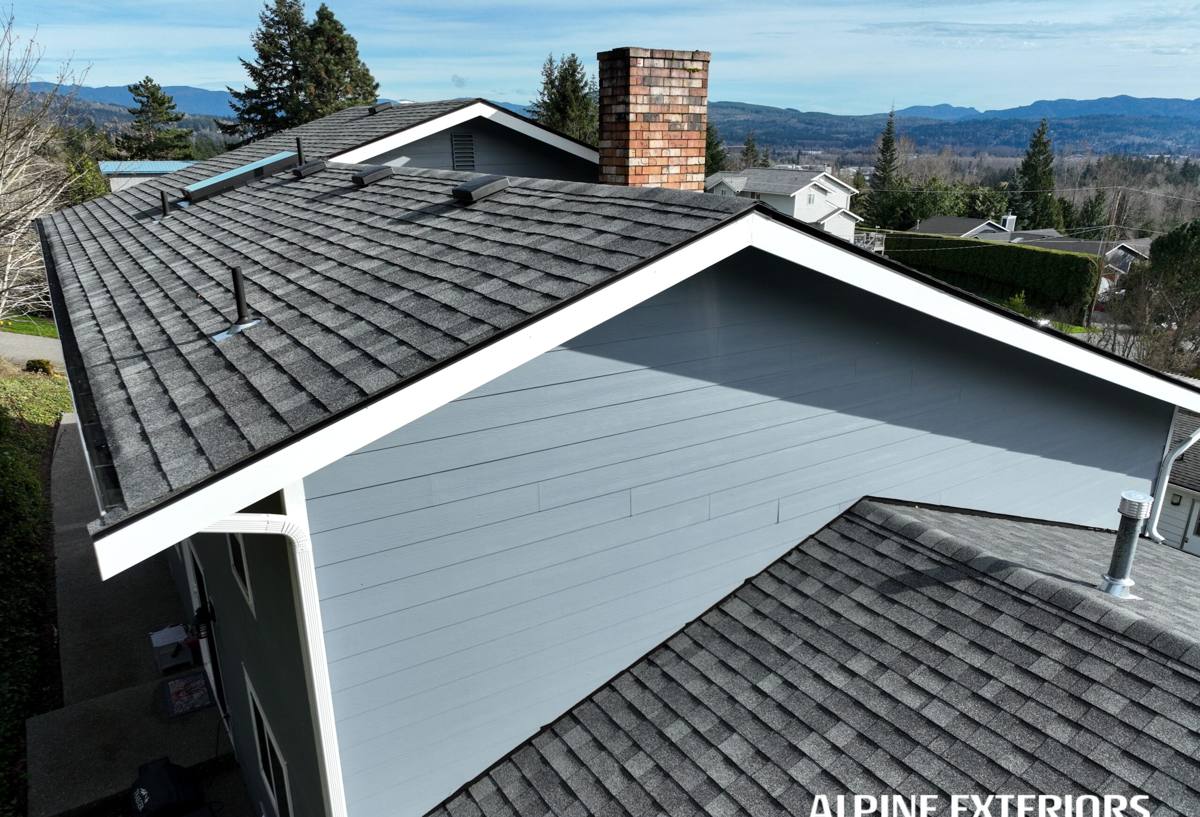
What a Correct Roof Replacement Actually Involves
A full tear-off and replacement has several stages, and skipping or rushing any one of them is where most premature failures start.
Tear-Off and Deck Inspection
Every layer of old roofing comes off down to the decking. This is the only point where anyone can actually see the condition of the sheathing underneath — soft spots, delamination, or rot from years of slow leaks. In this climate, we routinely find at least some decking that needs replacing near valleys, chimneys, and eaves, since that's where water sits longest. Skipping the tear-off (a "roof-over") hides this damage instead of fixing it.
Underlayment and Ice/Water Protection
Given how much wind-driven rain this area sees, we don't treat underlayment as an afterthought. Self-adhered ice-and-water membrane goes down at eaves, valleys, and around every penetration — the spots where wind can drive rain sideways under the shingles. The rest of the deck gets a synthetic underlayment rated for extended UV and moisture exposure, since roofs sometimes sit exposed to weather for a day or two during a multi-day job.
Ventilation and Moisture Control
Trapped moisture under a roof deck is one of the fastest ways to rot sheathing and warp shingles from underneath, and it's an easy thing for a lower-effort crew to overlook. A correct replacement balances intake at the soffits with exhaust at the ridge so the attic space can actually dry out between wet spells instead of holding humidity indefinitely.
Flashing and Valleys
Flashing around chimneys, skylights, sidewalls, and valleys is where the majority of roof leaks actually originate — not in the open field of shingles. We install new flashing as part of every replacement rather than reusing old pieces, since bent, rusted, or improperly lapped flashing is a leak waiting to happen.
Choosing Roofing Materials for This Climate
There's no single "best" roofing material — the right choice depends on your home's roof pitch, your budget, and how much long-term maintenance you're willing to do. Here's how the common options compare for a wet, moss-prone climate like this one:
| Material | Moss/Moisture Resistance | Typical Lifespan | Maintenance Burden |
|---|---|---|---|
| Architectural asphalt shingle | Good, especially with algae-resistant granules | 25–30 years | Low to moderate — periodic moss removal |
| Standing seam metal | Excellent — moss struggles to grip smooth panels | 40–50+ years | Low |
| Cedar shake | Poor without diligent upkeep — moss and moisture are its main enemies | 20–30 years with maintenance | High — regular treatment and cleaning required |
| Synthetic/composite shake | Good — engineered to resist the moisture cedar absorbs | 30–50 years | Low |
We're upfront with Kendall homeowners about cedar: it looks great, but in a climate with this much sustained moisture and moss pressure, it demands a maintenance commitment that most people underestimate when they choose it. That's a trade-off we lay out honestly rather than talk anyone out of — it's your roof and your call, but you should know what you're signing up for before, not after.
Signs a Kendall Home Needs a Roof Replacement, Not Just a Repair
Not every roof problem calls for a full replacement, but there are signs that patching is no longer the honest answer:
- Granules collecting in gutters or at downspout outlets in noticeable amounts
- Shingles that are cupping, curling, or cracking across multiple sections of the roof
- Moss buildup thick enough that it's lifting shingle edges rather than just sitting on the surface
- Soft or spongy spots when walking the roof, or sagging visible from the ground
- Daylight visible through the roof deck from inside the attic
- Repeated leaks in different spots after previous repairs
- The roof is past 20–25 years old and has never been fully replaced
If you're only seeing one or two of these, a repair may still be the right call. If several apply at once, a repair is usually just delaying the inevitable and spending money that could go toward a full replacement instead.
How Our Replacement Process Works
- On-site inspection. We walk the roof and the attic, not just look from the ground, and check for the deck and ventilation issues that don't show up in photos.
- Written estimate. You get a clear breakdown of materials, labor, and any decking or flashing work we expect to need, not a vague lump sum.
- Material selection. We walk through the trade-offs above so you're picking based on your home and budget, not a sales pitch.
- Scheduling around weather. Given how much rain this area gets, we plan tear-off days around forecasts and keep the deck protected if weather turns mid-project.
- Tear-off, deck repair, and installation. Full removal, any needed sheathing replacement, new underlayment, flashing, and roofing material installed to manufacturer spec.
- Final walkthrough. We go over the finished roof and ventilation with you before calling the job done.
Why Local Experience in Kendall Matters
A roof replacement isn't just a product installed by any qualified crew — the details that matter most are the ones specific to this area. A crew that already works Kendall and the surrounding Whatcom County communities knows which roof orientations take the worst of the wind-driven rain, which older subdivisions tend to have thinner original decking, and how aggressively moss returns on a north-facing slope shaded by tall trees. That local pattern recognition shows up in small decisions — where to add extra ice-and-water membrane, which ventilation setup actually keeps up with the humidity here — that a crew unfamiliar with the area might not think to make.
It also matters for accountability. A contractor working this area regularly has a reason to build a roof that holds up, because they're not driving off after one job — they're the one you'd call back if something needed a look years down the road.
What Affects the Cost of a Roof Replacement
Roof replacement costs vary enough by project that we won't quote a number without seeing the roof, but the main factors that move the price are consistent:
| Factor | Why It Matters |
|---|---|
| Roof size and pitch | Steeper roofs take longer to work safely and use more material per square foot of coverage |
| Number of layers to remove | Multiple existing layers mean more tear-off labor and disposal |
| Deck condition | Rotted or soft sheathing found during tear-off adds material and labor to replace |
| Material choice | Asphalt, metal, and composite shakes carry different material and labor costs |
| Roof complexity | Valleys, dormers, skylights, and chimneys all add flashing work and time |
| Ventilation upgrades | Adding or correcting soffit/ridge ventilation is worth doing during a replacement, not after |
Generally speaking, straightforward asphalt shingle replacements on moderate-sized homes run in the lower range of what full roof replacements cost regionally, while metal roofing, steep or complex rooflines, and significant deck repair push toward the higher end. We'll give you specifics once we've actually seen your roof.
After the Replacement: Keeping Moss and Moisture Off a New Roof
A new roof still needs some upkeep to hit its full lifespan in this climate. Keep gutters clear so water isn't backing up under the shingle edges, trim back overhanging branches that shade the roof and keep it damp longer than it needs to be, and have moss growth addressed while it's still light rather than letting it establish and lift shingles. None of this requires more than an occasional check a couple of times a year, but skipping it is how a well-built roof still ends up with moss and moisture problems within a few years.
If your roof in Kendall is showing its age, or you just want a straight answer about whether repair or replacement makes more sense, we're happy to take a look. Fill out the form below for a free, no-pressure estimate.