 Ferndale Siding
 Siding Built for Life on Lummi Island
Lummi Island sits in a different weather world than a lot of Whatcom County. Being surrounded by water means homes here take a steadier beating from salt-laden air, wind-driven rain off the water, and a moss and lichen season that runs longer than it does even a few miles inland in Ferndale. Siding that would hold up fine on a sheltered lot in town can start showing problems years earlier out here — chalking finishes, swelling edges, moss creeping up north-facing walls, fasteners bleeding rust through paint. None of that is a reason to avoid siding work on the island. It's a reason to be deliberate about the product and the installation details that actually matter in a marine climate.
This page covers what we look at specifically for Lummi Island siding installations: the conditions your walls are actually dealing with, what a correct install involves out here, and how we handle the logistics of doing quality work on an island job site.
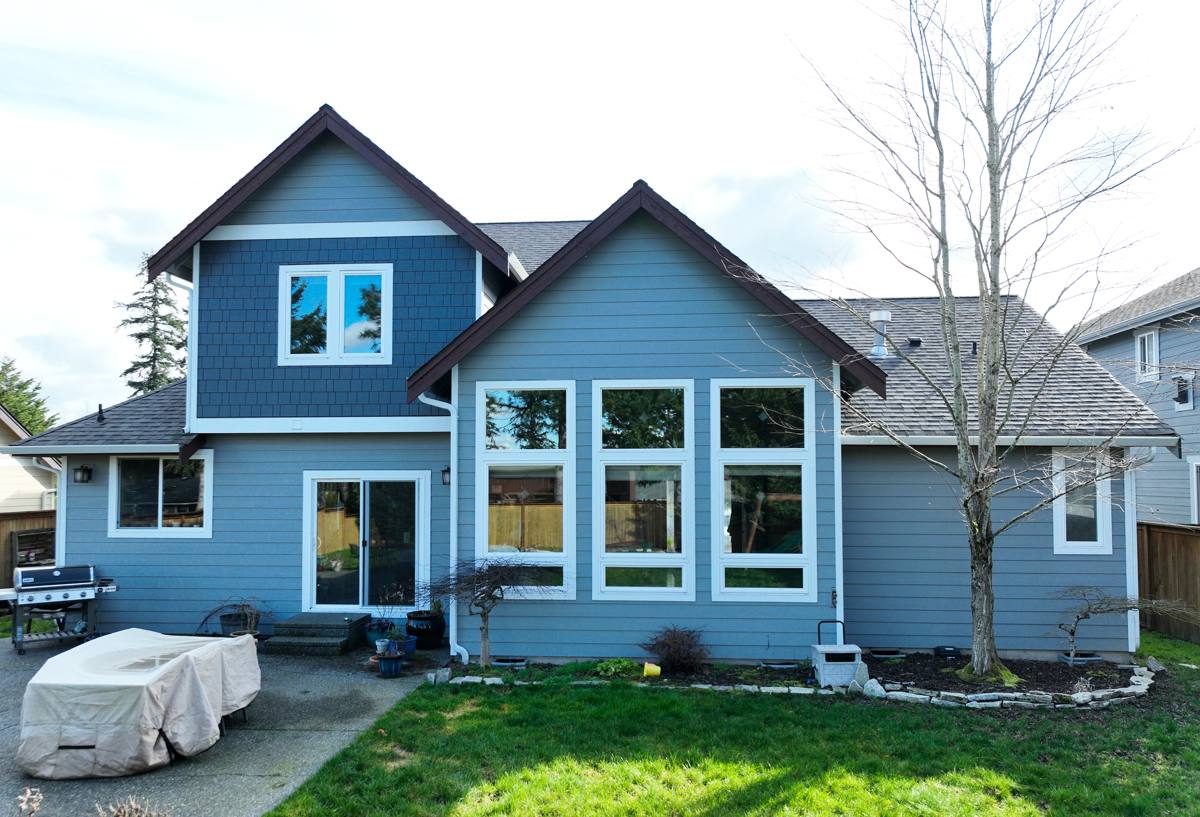
What Lummi Island's Climate Does to Siding
Salt Air and Corrosion
Airborne salt from the surrounding water settles on exterior surfaces and accelerates corrosion of anything metal — nail heads, flashing, trim fasteners, even some lower-grade hardware behind the siding itself. Over years, that corrosion can telegraph through paint as rust streaking, and in worse cases it compromises the fastener holding the siding board in place. Materials and hardware need to be chosen with that exposure in mind, not just for a standard inland install.
Driving Rain
Wind off open water doesn't just drop rain straight down — it pushes it sideways into wall assemblies, forcing water into seams, laps, and butt joints that would stay dry in a calmer setting. That means water-resistive barrier detailing, lap spacing, and joint treatment matter more here than they would on a sheltered lot. A siding job that's "good enough" for a typical Ferndale street can leak on an exposed island wall within a few seasons.
A Long Moss Season
Western Washington's wet, mild winters already favor moss and algae growth on north- and shade-facing walls. On Lummi Island, the combination of persistent moisture, filtered sun through tree cover on many lots, and salt-humid air stretches that growing season out even further. Moss holds moisture against the wall surface long after rain stops, which is exactly the kind of sustained dampness that punishes moisture-sensitive siding materials.
Why We Only Install James Hardie Fiber Cement Here
We don't install vinyl, LP SmartSide, primed spruce, cedar, or other fiber cement brands — on Lummi Island or anywhere else we work. That's a standard we hold across every job, and it matters even more on an island lot exposed to salt air and heavy rain.
- Non-combustible core: Fiber cement doesn't feed a fire the way wood-based products can, which matters on properties with more tree cover and less immediate access to fire response than in-town lots.
- Moisture-resistant by design: James Hardie's fiber cement doesn't swell, rot, or delaminate the way engineered wood siding can when it stays wet for extended stretches — a real concern given the island's moss and rain exposure.
- Climate-engineered HZ product lines: Hardie manufactures its HZ5 product specifically for regions with more moisture exposure, which is a better match for marine conditions than a general-purpose product.
- ColorPlus factory finish: A baked-on finish applied under controlled conditions holds color and resists fading and chalking from UV and salt exposure far better than field-applied paint, and it comes with its own finish warranty.
- Strong transferable warranty: Ownership on Lummi Island turns over regularly with vacation and retirement properties. A warranty that transfers to the next owner protects your investment if you sell.
We're honest that other products have their place and their fans. Vinyl is inexpensive and low-maintenance in mild climates; engineered wood siding is lighter and easier to handle on some jobs. But for the combination of salt air, wind-driven rain, and moss exposure that Lummi Island homes face, fiber cement is the material that holds up the way homeowners expect siding to hold up for decades, not years.
What a Correct Installation Looks Like Out Here
The product is only half the equation. A high-quality board installed with shortcuts will fail early regardless of brand. On an exposed island wall, these details are where most premature siding failures actually start:
Water Management Behind the Siding
A properly lapped and taped water-resistive barrier, correctly integrated flashing at windows, doors, and penetrations, and a drainage plane that lets any moisture that does get behind the siding find its way back out — these are non-negotiable on a wall that takes driving rain regularly. We follow manufacturer-specified fastening, clearances, and joint treatment on every board, every time.
Fastener and Hardware Selection
Given the salt exposure, corrosion-resistant fasteners and trim hardware aren't optional upgrades — they're the baseline for island work. Standard hardware that would pass on an inland job can start showing rust bleed within a few years out here.
Clearance and Airflow
Proper ground clearance, gutter and downspout function, and gaps at grade-level and roofline transitions all reduce how long moisture sits against the wall — which directly reduces how aggressively moss and algae take hold.
Caulking and Sealant Details
Where siding meets trim, windows, and roof lines, sealant quality and application matter more under sustained wind-driven rain. We use sealants rated for the exposure and apply them at the joints that actually need them — not as a blanket substitute for correct flashing.
Comparing Siding Options for a Marine-Exposed Lot
| Factor | Vinyl | Engineered Wood (LP SmartSide) | James Hardie Fiber Cement |
|---|---|---|---|
| Salt air / corrosion resistance | Panel itself resists corrosion, but fasteners and trim need attention | Moderate; moisture intrusion is the bigger long-term risk | Strong; non-combustible core and HZ5 formulation for moisture exposure |
| Wind-driven rain performance | Depends heavily on installation quality; can flex and gap | Vulnerable at damaged or unsealed edges | Rigid, dense board holds its shape and seals well when installed correctly |
| Moss and algae resistance | Moss can grow on surface but doesn't damage the panel | Sustained moisture against the panel is a real risk factor | Doesn't swell or rot from surface moisture; finish resists staining |
| Finish longevity | Color molded in, but can fade and become brittle over time | Field-painted or factory-primed; repaint cycles needed | Factory-baked ColorPlus finish with its own warranty |
| Typical lifespan when correctly installed | 20-30 years | 15-25 years, shorter in high-moisture exposure | 30-50+ years |
Working an Island Job: Logistics That Actually Matter
Doing siding work on Lummi Island isn't the same as pulling up to a job in downtown Ferndale. Materials, crew, and equipment all have to cross by ferry, which means scheduling has to account for sailing times and space availability — not just weather windows. A crew that hasn't planned an island job before can end up burning a day just getting set up, or worse, showing up with a partial material order because the load didn't fit the crossing they planned for.
We plan island jobs around this reality: staging full material orders in advance, coordinating crew and equipment crossings to avoid wasted trips, and building a realistic timeline that accounts for ferry access rather than assuming mainland logistics. That planning is part of why a crew that already works Lummi Island regularly gets your project done efficiently — we're not learning the logistics on your dime.
Our Process for a Lummi Island Siding Project
- On-site assessment: We walk the exterior, check the current siding and sheathing condition, note sun and wind exposure on each elevation, and look for existing moisture or moss problems.
- Scope and product selection: We discuss the right James Hardie plank or panel profile and HZ5 formulation for your home's exposure, along with color and trim details.
- Logistics planning: We schedule material delivery and crew crossings around ferry access so the job runs on a predictable timeline once we start.
- Tear-off and prep: Old siding comes off, sheathing is inspected and repaired as needed, and the water-resistive barrier and flashing are installed correctly before a single board goes up.
- Installation to manufacturer spec: Fastening, clearances, joint treatment, and corrosion-resistant hardware are all handled per James Hardie's requirements for your climate zone.
- Final walkthrough: We review the finished work with you and make sure trim, caulking, and paint lines meet our standard before we call the job done.
Checklist: What to Look For Before Hiring a Siding Contractor on Lummi Island
- Experience actually scheduling and completing island jobs, not just mainland Ferndale work
- A clear plan for material delivery and crew logistics around ferry access
- Corrosion-resistant fastener and hardware specifications called out in the estimate
- Manufacturer-correct water-resistive barrier and flashing details, not just "we'll caulk it"
- A written product and labor warranty, including what transfers if you sell the home
- Willingness to explain why they recommend one siding product over another for your specific exposure
Get a Straight Answer for Your Home
Every Lummi Island home faces a slightly different mix of sun, wind, and moisture depending on its elevation and orientation to the water. The right call on product line, finish color, and installation detailing depends on actually looking at your walls, not a generic recommendation. If you're weighing a siding replacement or new install on the island, we're happy to come take a look, walk you through what we see, and put together a straightforward estimate — no pressure, no upsell. Reach out using the form below to get started.