 Ferndale Siding
 Building Decks for Nooksack-Area Homes
The Nooksack area sits in a stretch of Whatcom County where outdoor living space earns its keep — long summer evenings, river and valley views, and a climate that rewards a deck built the right way and punishes one that isn't. We build and rebuild decks for homeowners in this part of the Ferndale service area regularly, and the pattern we see is consistent: decks that fail early almost always fail because of moisture management, not because of the wood or composite that was chosen. Get the structure and the water management right first, and the material choice becomes a matter of budget and looks rather than survival.
This page covers what a deck actually needs to hold up out here, what we do differently because of it, and how our process works from first call to finished project.
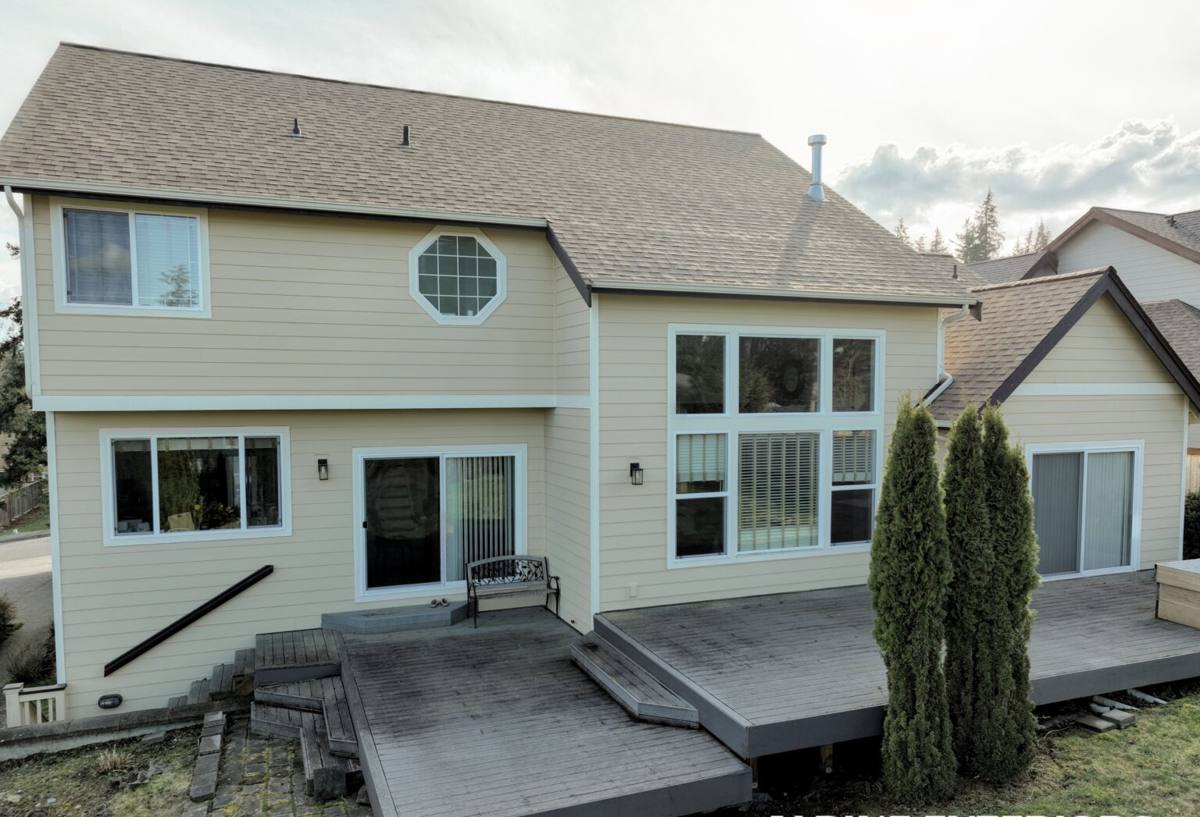
What This Climate Does to a Deck
Whatcom County's marine-influenced weather brings driving rain for a good part of the year, humidity that lingers under tree cover and in shaded yards, and a moss season that can run from fall through spring. Add in the salt air that moves inland off the Sound on prevailing winds, and you've got three separate stressors working on every exposed board, fastener, and joint:
- Driving rain pushes water sideways into joints, ledger connections, and end grain that a vertical-only rain design never accounts for.
- Extended dampness keeps wood fibers and composite surfaces wet longer between dry spells, which is what actually drives rot and mold growth — not a single storm, but weeks of not fully drying out.
- Salt-laden air accelerates corrosion on fasteners, brackets, and any hardware that isn't rated for it, which is a slower but just as real threat to a deck's structural connections.
None of this means a deck can't hold up here for decades. It means the details that don't show up in a walkthrough photo — flashing, fastener grade, gap spacing, footing depth — matter more in this climate than in a dry one.
Moss: More Than a Cosmetic Problem
Moss on a deck surface isn't just an appearance issue. It holds moisture against the board, stays damp long after the surrounding area has dried, and creates a slip hazard on stairs and landings. A deck built with tight board spacing, poor airflow underneath, or heavy shade will grow moss faster no matter what material it's built from. Design choices made at construction — board gaps, joist spacing, ventilation underneath — determine how much of a moss fight a homeowner is signing up for every fall.
Choosing Decking Material for Nooksack Conditions
There's no single "best" decking material — there's a best material for a given budget, maintenance appetite, and how much shade and dampness the specific site gets. Here's how the common options actually perform in this climate:
| Material | How It Handles This Climate | Maintenance | Typical Lifespan Here |
|---|---|---|---|
| Pressure-treated wood | Good rot resistance when properly sealed; needs re-sealing to stay ahead of moisture | Annual cleaning, re-sealing every 1-3 years | 15-25 years with upkeep |
| Cedar | Naturally rot- and insect-resistant, but softer and shows weathering faster in heavy rain exposure | Regular cleaning, periodic oil or stain | 15-20 years with upkeep |
| Composite decking | Doesn't absorb water like wood, resists rot; still needs airflow underneath to keep surface moss-free | Periodic washing, no sealing needed | 25-30+ years, backed by manufacturer warranty |
| PVC/capped composite | Fully synthetic surface, best moisture and moss resistance of the group | Lowest maintenance; occasional washing | 25-30+ years, backed by manufacturer warranty |
We won't push a homeowner toward one material as automatically "right" — a wood deck properly sealed and maintained can last just as long as composite, it just asks more of the owner year to year. Where we do steer people is away from thin, budget composite boards with no real moisture rating, because in a climate this wet, cutting corners on the board itself shows up fast as fading, staining, or surface degradation that a warranty won't fully cover.
What a Correctly Built Deck Actually Involves
A deck that holds up here comes down to a handful of details most homeowners never see once the boards are down:
- Footings set below frost depth and sized to the soil conditions on the specific lot — this varies more than people expect across the Ferndale area.
- Ledger board flashing where the deck attaches to the house, done correctly the first time, since this is the single most common source of hidden rot on attached decks.
- Joist tape or flashing on top of framing members to keep water from sitting in end grain and fastener holes.
- Corrosion-rated hardware — hot-dip galvanized or stainless fasteners and brackets, not standard-grade hardware that corrodes faster in salt-influenced air.
- Board spacing and joist layout that lets water and air move through instead of pooling or trapping damp debris.
- Proper drainage under the deck so water doesn't sit against footings or framing between rain events.
Skip any one of these and the deck can still look fine for a few years — the problems that come from cutting these corners show up slowly, usually as soft spots, rust streaks, or a ledger connection that's failed quietly behind the siding.
Our Process for a Nooksack-Area Deck Project
1. Site Visit and Honest Assessment
We walk the site, look at drainage, sun and shade exposure, existing structure if it's a rebuild, and talk through what the homeowner actually wants to use the space for. This is also where we flag anything that'll affect material choice — heavy tree cover, low airflow spots, or a ledger connection that needs extra attention.
2. Design and Material Selection
We lay out size, layout, railing style, and material options with real cost and maintenance trade-offs explained plainly — no upsell pressure toward the most expensive option.
3. Permitting
Deck projects above certain sizes or heights typically require a building permit through the local jurisdiction. We handle this as part of the project rather than leaving it to the homeowner to sort out, and we build to code on footing depth, railing height, and attachment regardless of whether a project happens to fall under a permit threshold.
4. Build
Footings, framing, flashing, decking, and railing — done in that order, with the hidden structural work inspected before anything gets covered up by finish boards.
5. Final Walkthrough
We walk the finished deck with the homeowner, cover basic care for whatever material was installed, and make sure everything meets what was agreed on before calling the job done.
Maintaining a Deck in a Moss-Prone Climate
Whatever material is chosen, a little seasonal attention goes a long way in this climate. A basic annual routine:
- Clear leaves and debris from board gaps and stair treads before fall rains set in
- Wash the surface at least once a year to knock back early moss and algae growth
- Check and clear any debris blocking airflow underneath the deck
- Inspect fasteners and railing connections for rust or looseness
- For wood decks, check the sealant or stain coat each spring and reapply before it fully wears through
- Trim back overhanging branches that keep sections of the deck shaded and damp longer than the rest
Decks that get this basic attention every year rarely have surprise structural issues. Decks that get ignored for five or six years are where we find the soft framing and hidden ledger rot.
Why a Crew That Already Works This Area Matters
Building a deck that holds up in Whatcom County isn't a different trade than building one anywhere else — but it does mean knowing which details actually matter for this specific mix of rain, humidity, and salt air, rather than building to a generic spec sheet. A crew that already works decks and siding across the Ferndale area, including the Nooksack side of our service territory, has already seen which fastener grades hold up, which board spacing actually keeps moss down, and which ledger details fail first in this climate. That's not something you get from a one-size-fits-all approach — it's from doing the work here, repeatedly, and paying attention to what comes back for repair versus what doesn't.
If you're planning a new deck or need to replace one that's past its useful life, we're happy to take a look and give you a straight assessment — no pressure, no inflated scope. Reach out for a free estimate and we'll walk the site with you and talk through what makes sense for your home and budget.