 Ferndale Siding
 Window Replacement for Lynden Homes
Lynden sits inland from the coast, out in the flatter farmland along the Nooksack River near the Canadian border, and that setting gives it a slightly different weather profile than the water-facing parts of our Whatcom County service area. It's still close enough to Bellingham Bay and the Strait that marine air pushes up the valley on a regular basis, carrying real moisture and a trace of salt further inland than most homeowners expect. Combine that with driving rain that comes in sideways more often than straight down, and a moss season that runs long across this whole part of the county, and you get an exposure that's genuinely tough on old, tired windows — even ones that still look fine from the curb.
We replace windows on Lynden homes regularly, and our approach is built around what this specific climate does to a window over its service life, not a generic sales pitch that would apply anywhere in the country.
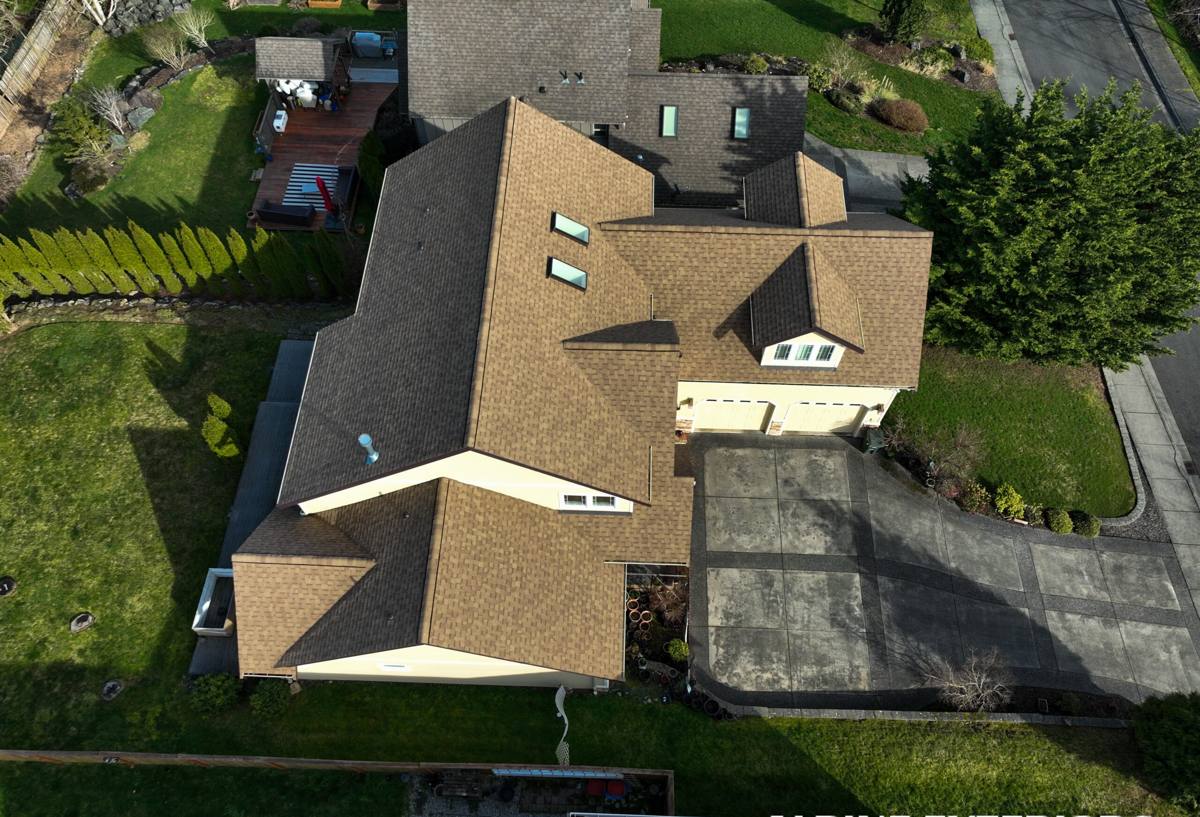
What Lynden's Valley Climate Does to Windows
Marine Moisture That Reaches This Far Inland
Lynden doesn't get the same direct, constant salt exposure as a home right on the water, but moist marine air still moves up the lowland corridor from the coast with real regularity. Over years, that moisture works into any gap around an aging window frame, and it accelerates corrosion in hardware, hinges, and fasteners that weren't specified for a damp climate to begin with.
Wind-Driven Rain at the Frame
Open farmland doesn't offer the same windbreaks that a tree-lined in-town lot does, so wind gets a clearer run at a house. That matters for windows specifically, because wind is what pushes rain sideways into a frame joint or under a sash instead of letting it run harmlessly down the glass. An older window with worn weatherstripping or a flashing detail that was never quite right will show that first as a damp sill or a soft spot in the wall below it.
A Long Moss and Mildew Season on Trim
Persistent regional dampness and mild temperatures add up to a moss and mildew season that stretches across much of the year here. It rarely shows up on the glass itself, but it shows up on window trim, sills, and casing, especially on shaded or north-facing walls, and sustained growth there holds moisture directly against wood trim and sheathing in a way that eventually leads to rot if it's not cleaned and addressed.
Freeze-Thaw Swings
Being further from the moderating effect of open water, Lynden and the rest of the inland Nooksack valley see harder frosts and more freeze-thaw cycling than towns right on the coast. Water that's already worked its way into a window frame or the wall assembly around it expands when it freezes, which speeds up cracking and material failure that a milder, purely wet climate wouldn't cause nearly as fast.
Signs a Lynden Home's Windows Need Replacing
Most homeowners don't think about their windows until something's obviously wrong, but by the time a window is visibly failing, the damage has usually been building for a while. Worth checking for:
- Visible fog or moisture trapped between panes of double-glazed glass
- Drafts you can feel near the frame even with the window fully latched
- Wood trim or sills that feel soft, spongy, or show staining below the window
- Windows that are difficult to open, close, or lock without extra force
- Condensation forming on the inside of the glass regularly, even in mild weather
- Visible gaps between the frame and the siding or trim around it
- Moss or dark staining building up on window trim faster than it can be cleaned off
- Noticeably higher heating bills without any other explanation
What a Correct Window Replacement Job Actually Involves
Swapping in a new window without addressing what's around it is one of the most common shortcuts in this trade, and it's exactly the kind of shortcut that shows up as a callback a year or two later on a property with this much sustained moisture exposure.
Getting Down to the Rough Opening
A full-frame replacement means removing the old window entirely, down to the rough opening in the wall, so the crew can actually see and address what's happening underneath — old flashing, damaged sheathing, or trapped moisture that's been sitting there for years. That's more work than a quick insert swap, but on a home that's dealing with this level of driving rain and valley damp, it's the only way to know the wall behind the window is actually sound before closing it back up.
Flashing and Water Management
The single most important detail on any window install is how water gets directed away from the opening rather than into it. That means correctly lapped flashing tape and building paper, a sill pan that sheds water back outside the wall instead of letting it pool, and head flashing that ties properly into the siding above. Skipping or rushing any one of these is invisible on install day and expensive two or three winters later.
Insulation and Air Sealing
The gap between a new window frame and the rough opening needs to be filled correctly — not overpacked with rigid foam that can bow the frame, and not left with big voids that waste energy and let moisture-laden air condense inside the wall. Getting this right is part of why a new window actually performs the way its energy ratings suggest it should.
Window Material Comparison
| Frame Material | Best Use | Why It Fits This Area |
|---|---|---|
| Vinyl | Most standard replacement projects on a budget | Won't rust or corrode from marine moisture; reasonable cost, though quality varies a lot between manufacturers |
| Fiberglass | Homes wanting a stiffer frame with less expansion and contraction | Handles the temperature swings of freeze-thaw cycling with less movement than vinyl over time |
| Wood-clad | Homes wanting a wood interior look with a protected exterior face | Exterior cladding shields the wood core from the driving rain that would otherwise rot an unprotected wood frame |
| Aluminum | Larger openings or specific architectural styles | Strong for its weight, but conducts cold and can condense more than other frame materials in this damp a climate |
Beyond frame material, the glass package matters just as much here: double-pane with a low-E coating and argon fill is the practical baseline for this climate, and homeowners dealing with a particularly exposed wall sometimes step up to triple-pane for the added performance. We'll walk through the real trade-offs for your specific home rather than upselling glass packages you don't need.
Our Window Replacement Process
- A walk-through of the home to assess every window being considered, along with the trim, sill, and wall condition around each one
- An honest recommendation on frame material and glass package based on that specific window's exposure, not a one-size-fits-all package
- A written estimate with no pressure to sign on the spot
- Scheduling that accounts for realistic weather windows, since a wall opening shouldn't sit exposed during a storm
- Full-frame removal, inspection of the rough opening, and correct flashing, sealing, and insulation before the new window goes in
- Final cleanup and a walkthrough with you to confirm every window opens, closes, and locks the way it should
Cost Factors for Window Replacement in Lynden
| Factor | What It Affects | Why It Matters Here |
|---|---|---|
| Full-frame vs. insert replacement | Labor scope and how much of the wall gets opened up | Full-frame is the only way to check for hidden moisture damage common in a valley climate like this |
| Number and size of windows | Total material and labor cost | A whole-house project scales differently than replacing a handful of problem windows |
| Frame material | Upfront cost and long-term maintenance | Vinyl, fiberglass, and wood-clad each carry a different cost and durability trade-off in this moisture level |
| Glass package | Energy performance and comfort | Low-E coatings and gas fill matter more on a home with real temperature swings between summer and winter |
| Substrate condition | Repair costs before the new window goes in | Rot found at the rough opening has to be addressed properly, not covered up with a new window on top of it |
Costs for a project like this vary a lot by scope — a handful of problem windows is a very different job from a full-house replacement — and honest ranges run anywhere from a few thousand dollars for a small project up to well into five figures for a whole house with higher-end materials. We won't give you a real number until we've actually looked at your windows and walls in person.
Repair, Restoration, or Full Replacement?
Not every window problem on a Lynden home calls for full replacement. A single failed seal, worn weatherstripping, or a hardware issue on an otherwise sound window can often be repaired for a fraction of the cost of a new unit. But once moisture has been tracking into the wall around a window for a while, or the frame itself is soft, warped, or corroded, patching it usually just delays a bigger job while hidden rot keeps spreading behind the trim. We'll tell you honestly which situation you're actually looking at rather than pushing a full replacement when a repair would do the job.
Windows as Part of the Whole Exterior
Window problems on a Lynden home rarely start with the window itself. Siding that's failed at a butt joint above a window, a roofline that's shedding water onto a wall it shouldn't, or trim that's been rotting quietly for years can all show up as a "bad window" long before anyone traces the water back to where it actually started. Because we handle siding, roofing, and decks in addition to windows, we look at a home's exterior as one connected system exposed to the same rain, valley damp, and freeze-thaw cycling, rather than treating a window as an isolated fix and missing where the water is actually getting in.
Why a Local Crew Matters in Lynden
A crew that works this part of Whatcom County regularly knows how valley damp, wind-driven rain, and a long moss season actually behave on real homes here over a full year, not just how a window performs on a spec sheet. That experience shapes decisions on install day: which walls and elevations stay wet the longest, where extra flashing attention pays off, and which details are worth the added time so a homeowner isn't dealing with a soft sill or a foggy pane two winters from now. Lynden's inland, agricultural setting means its exposure isn't identical to a coastal Ferndale lot, and a crew with real local experience treats that difference seriously instead of installing every window the same way regardless of where the house sits.
If your Lynden home has windows that are drafty, foggy, hard to operate, or just old enough that you're wondering if it's time, we're glad to take a look. Reach out using the form below to schedule a free, no-pressure estimate.