 Ferndale Siding
 Roof Repair Built for Semiahmoo's Waterfront Exposure
Semiahmoo sits right up against the Salish Sea, and that location shapes everything about how a roof ages here. Homes just a few miles inland in Whatcom County deal with rain and moss too, but they don't get the constant salt-laden air coming off the water, the wind-driven rain that hits roof edges and flashing sideways instead of straight down, or the same year-round dampness that keeps moss and algae active for most of the calendar. A roof repair that works fine in a drier, more sheltered part of Ferndale can fail early on a Semiahmoo roof if it wasn't built with this specific exposure in mind.
We work on homes throughout this stretch of Whatcom County, and the repairs we get called out for in waterfront and near-waterfront neighborhoods are consistently different from what we see elsewhere. Fasteners corrode faster. Flashing seams open up sooner. Moss gets a longer season to work its way under shingle tabs. None of that means a Semiahmoo roof needs to be replaced more often — it means the repair has to account for the environment it's actually in, not a generic one.
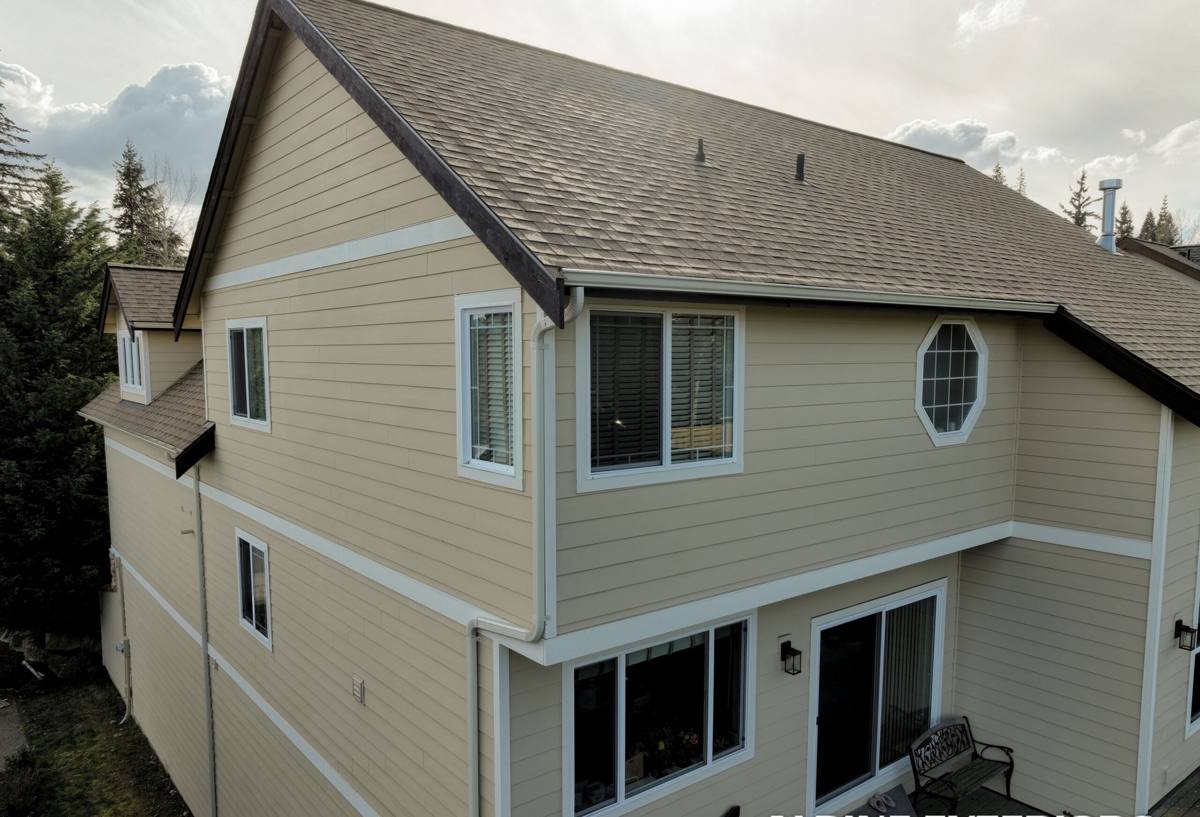
What Salt Air Actually Does to a Roof
Salt air is corrosive to metal, and a roof has more exposed metal than most homeowners realize: nail heads, flashing around chimneys and vents, drip edge, valley metal, gutter hangers, and any exposed fasteners on a metal roof panel. Over time, salt-laden moisture accelerates rust and corrosion on standard galvanized components, especially where a fastener or seam is already under stress from wind or thermal movement.
This shows up in a few predictable ways:
- Rust streaking below nail heads or flashing edges, even on a roof that isn't old
- Premature pitting or thinning on exposed metal flashing and valleys
- Gutter and downspout hardware failing years before the gutters themselves
- Fastener backing-out or loosening as corrosion works into the shank
None of this is a defect in a roof — it's just accelerated wear from the environment. The fix is using corrosion-resistant materials in repairs (stainless or coated fasteners, properly finished flashing) rather than replacing like-for-like with the same standard-grade hardware that failed the first time.
Wind-Driven Rain Adds Its Own Pressure
Semiahmoo's open exposure to wind off the water means rain doesn't always fall straight down. Wind-driven rain gets pushed sideways and upward under shingle edges, around flashing laps, and into any gap that a calmer, more sheltered roof would never test. A repair that would hold up fine on a wind-protected roof can leak here if the laps, seals, and flashing overlaps aren't sized and oriented for wind-driven water rather than just gravity drainage.
Moss, Algae, and a Long Wet Season
Whatcom County's marine climate keeps roofs damp for a large part of the year, and Semiahmoo's proximity to the water tends to stretch that dampness even further with morning moisture and coastal fog that other areas dry out from faster. Moss and algae don't need standing water to establish — they just need consistent shade and moisture, which is exactly what a north-facing slope or a tree-shaded section gets for months at a time.
Moss is more than a cosmetic issue. As it grows, it lifts shingle tabs slightly, creating a path for wind-driven rain to get underneath. Its root structure holds moisture directly against the shingle surface far longer than the roof would otherwise stay wet, which accelerates granule loss and, on older shingles, can lead to soft spots in the decking below. Algae staining is mostly cosmetic but is a sign that a roof is holding moisture longer than it should, which is worth checking rather than ignoring.
Why Moss Removal Needs to Be Done Carefully
Pressure washing or aggressive scraping strips granules and can shorten a shingle's remaining life faster than the moss itself would have. A correct moss treatment removes growth gently, treats the affected area to slow regrowth, and addresses the underlying cause — usually shade, poor airflow, or debris buildup in valleys — rather than just clearing the surface and leaving the conditions that grew it in the first place.
Common Repair Calls We See on Semiahmoo Roofs
A few issues come up again and again in this area, more so than in drier inland neighborhoods:
- Flashing failure around chimneys, skylights, and roof-to-wall transitions, where corrosion or wind flexing opens a seam that used to be sealed
- Valley leaks, often from moss or debris damming water in a low-slope valley during heavy rain
- Fastener corrosion on gutters, drip edge, and exposed trim, leading to loose or dropped sections
- Granule loss and soft spots in areas that stay shaded and damp longer than the rest of the roof
- Ridge cap and hip cap wear, since these are the most wind-exposed sections of the roof
Most of these start small — a single lifted shingle, one corroded fastener, a small gap in flashing — and are very fixable if caught early. Left alone through another wet season, they tend to turn into decking repairs, interior water stains, or insulation damage, which cost considerably more to put right.
What a Correct Repair Actually Involves
A roof repair done for the conditions here isn't just patching the visible problem. It means:
- Matching the repair material to the existing roof so the patch weathers at the same rate as the surrounding shingles or panels
- Using corrosion-resistant fasteners and flashing rather than standard-grade hardware that will corrode again in the same salt-exposed spot
- Checking and clearing the surrounding area for moss, debris, or trapped moisture that contributed to the failure, not just fixing the leak point itself
- Re-lapping flashing and shingle courses correctly for wind-driven rain, not just gravity drainage
- Confirming attic ventilation isn't trapping moisture against the underside of the decking near the repair
Skipping any of these steps usually means the same repair gets called in again within a season or two. It's tempting to treat a roof repair as a quick patch job, but in a coastal, moss-prone climate the details around the patch matter as much as the patch itself.
Our Repair Process
We keep the process straightforward, because a roof repair shouldn't require a homeowner to become an expert in roofing to understand what's happening on their house.
- Inspection — we get on the roof (or use a lift where pitch or access requires it) and look at the actual failure point, plus the surrounding area for related wear, moss, or corrosion.
- Diagnosis and explanation — we tell you what's actually wrong, what caused it, and whether it's a contained repair or a sign of broader wear worth planning around.
- Written estimate — a clear scope of work and price before anything is touched, with honest options if there's more than one reasonable way to address it.
- Repair — done with materials suited to salt air and wind exposure, not just whatever matches the roof color.
- Cleanup and walk-through — we clear debris, show you what was done, and flag anything else worth keeping an eye on.
Repair or Replace: Weighing the Factors
Not every roof issue on a Semiahmoo home needs a full replacement, but not every roof is a good candidate for another round of patching either. These are the factors that actually drive that decision:
| Factor | Favors Repair | Favors Replacement |
|---|---|---|
| Age of roofing material | Well within expected lifespan | At or past typical service life for the material |
| Extent of damage | Isolated to one area or component | Spread across multiple slopes or repeated in the same areas |
| Decking condition | Solid, no soft spots found | Soft, spongy, or previously water-damaged decking |
| Repair history | First repair in this area | Same spot has needed repair more than once |
| Fastener/flashing condition elsewhere | Rest of roof's hardware still sound | Widespread corrosion visible across the roof |
When a roof falls in the "favors repair" column, a well-done repair is the honest, cost-effective answer — there's no reason to push a full replacement on a roof that has years of good service left. When it falls into the other column, we'll say so plainly and explain why, rather than patching something that's likely to keep failing.
Why Hiring a Crew That Already Works Semiahmoo Matters
Roofing crews who mostly work drier, wind-protected neighborhoods can do fine work and still under-spec a repair for this location, simply because they aren't used to designing for salt exposure and wind-driven rain as a matter of course. A crew that regularly works Semiahmoo and the surrounding Whatcom County waterfront knows to default to corrosion-resistant fasteners, to lap flashing for wind rather than just gravity, and to expect a longer moss season than a roofing spec sheet written for a generic climate would assume.
That local familiarity isn't about a fancier repair — it's about not having to relearn the environment on your roof. It means fewer callbacks, fewer repeat repairs on the same spot, and a repair that's actually built for the conditions it has to survive.
Maintenance Checklist for Coastal Whatcom County Homes
Between repairs, a few habits go a long way toward keeping a Semiahmoo roof out of trouble:
- Clear gutters and valleys of debris before the heavy fall and winter rains set in
- Check shaded, north-facing slopes for early moss growth at least once a year
- Look for rust streaking below flashing or fasteners, which signals corrosion starting early
- Trim back overhanging branches that keep roof sections shaded and damp longer than necessary
- Have a professional look at flashing around chimneys and vents every few years, since these are the most common leak points
- Address small leaks or lifted shingles promptly rather than waiting for the next dry season
None of this requires climbing on the roof yourself — most of it can be checked from the ground or handled during a routine inspection.
Get a Straightforward Look at Your Roof
If you're dealing with a leak, moss buildup, corroded flashing, or just want an honest read on where your roof stands after another wet Whatcom County season, we're happy to take a look. We'll give you a clear, no-pressure estimate and tell you plainly whether you're looking at a contained repair or something bigger — use the form below to get started.