 Ferndale Siding
 Siding Built for Custer's Weather, Not Just Installed on It
Custer sits north of Ferndale in a stretch of Whatcom County where the weather doesn't do things halfway. Homes here take on salt-laden air drifting in off the nearby coastal waters, long stretches of driving rain that come sideways more often than straight down, and a moss season that can run most of the year in shaded, tree-lined yards. That combination is hard on exterior siding in ways that don't show up on a spec sheet. It shows up five, ten, fifteen years later as cupped boards, chalky paint, soft corners, and green streaking that no amount of pressure washing keeps ahead of.
A siding installation in this area has to be planned around that reality from the start. That means the right product, the right water-management details behind the cladding, and a crew that installs to the manufacturer's specification every time, not just on the parts that are easy to reach.
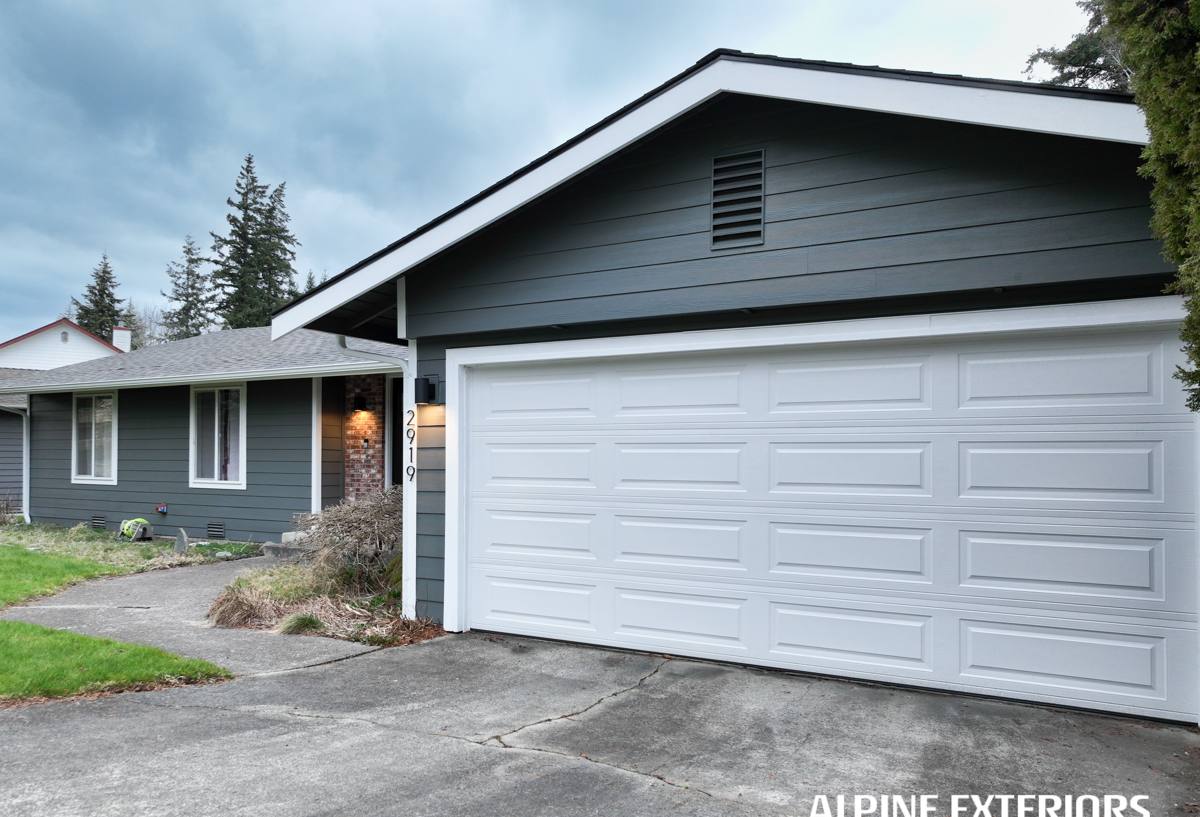
What Custer's Climate Actually Does to Siding
Salt Air and Corrosion
Properties closer to the water pick up salt-bearing moisture in the air, which accelerates corrosion on fasteners, flashing, and trim metal that isn't rated for it. Over time this shows up as rust bleed staining down the face of the siding and, eventually, fasteners that no longer hold securely.
Driving Rain and Wind-Driven Moisture
Whatcom County's weather pattern pushes a lot of rain in on wind, which means water gets forced up and under laps, around window and door trim, and into any gap that a rushed installation left open. Vertical rain a home can usually shed. Wind-driven rain finds every shortcut in the installation.
Moss, Mildew, and Shade
Custer has plenty of tree cover and rural acreage, and shaded north- and west-facing walls stay damp far longer after a storm than walls in full sun. That's exactly the environment moss and mildew need to take hold on siding surfaces and in the seams between boards.
What a Correct Siding Installation Involves Here
Most siding failures we get called out to inspect aren't a failure of the siding material itself — they're a failure of what's behind it or how it was fastened. In a climate like Custer's, the details matter more than they would somewhere dry.
- A continuous weather-resistant barrier installed and lapped correctly, shingle-style, so water is always directed outward and down
- Properly flashed windows, doors, and any wall penetrations, with flashing that sheds water past the barrier, not behind it
- Correct fastener type, spacing, and penetration depth per the manufacturer's installation guide — not just "close enough"
- Proper clearance at the base of the wall, decks, patios, and grade so siding isn't sitting in standing moisture
- Tight, consistent caulking at trim and butt joints using a sealant rated for exterior movement
- Adequate drainage plane or rainscreen detailing on walls that see heavy, prolonged wetting
Skip any one of these and the siding on top of it can look fine for a few years while damage builds underneath where nobody's checking.
Why We Only Install James Hardie Fiber Cement
We install James Hardie exclusively, and in a climate like Custer's that choice is about performance, not preference. Fiber cement doesn't absorb and swell with moisture the way wood-based products can, and it won't support rot the way untreated or lightly treated wood substrates do over time. James Hardie also builds its HardieZone system around actual regional climate data — the HZ5 product engineering used across the Pacific Northwest is formulated for exactly this kind of wet, moss-prone, temperature-swinging environment, rather than a generic national spec.
ColorPlus Finish and Moss-Prone Walls
The factory-applied ColorPlus finish matters most on the walls that stay shaded and damp longest. It's baked on under controlled conditions, holds color and sheen far longer than field-applied paint, and gives moss and mildew a harder, less porous surface to grip. That doesn't make a wall immune to organic growth in a heavily shaded, low-airflow spot, but it makes routine cleaning something you can actually stay on top of instead of fighting a losing battle against paint that's already chalking.
Non-Combustible Construction
Fiber cement is non-combustible, which matters for rural and semi-rural properties around Custer where wildfire risk and defensible space have become a bigger part of how Whatcom County homeowners think about their exterior.
Why Not the Alternatives
Vinyl can warp and become brittle in temperature swings and doesn't hold up well to long-term UV and moisture exposure the way fiber cement does. Wood-based composite siding depends heavily on maintaining an intact factory seal — any breach from impact or poor installation lets moisture in, and once it's in, it doesn't come back out easily. Primed wood and cedar look good on day one but require an ongoing paint and caulk maintenance schedule that most homeowners underestimate, especially on a property that already fights moss and mildew for eight or nine months a year. We'd rather put one product on every home we touch and stand behind it fully than install something we know will need repainting or partial replacement inside a decade.
Custer-Specific Considerations for Homeowners
Custer is a mix of rural acreage, farmhouses, and newer construction spread out north of Ferndale, and that spread-out, tree-covered character changes what a siding job needs to account for compared to a tighter in-town lot.
- Larger lots often mean more shaded wall area from mature trees, which concentrates moss growth on specific elevations
- Open, exposed sides of rural properties can take wind-driven rain harder than a home sheltered by neighboring structures
- Well systems, irrigation lines, and outbuildings near the foundation need to be accounted for during staging and material delivery
- Longer driveways and setbacks change how equipment and dumpsters get positioned for the job
None of this is complicated, but it's the kind of thing that goes smoother when the crew showing up has already worked jobs like it in the same area.
Our Process for a Custer Siding Installation
1. On-Site Assessment
We walk the property, check existing siding and sheathing condition, identify the walls taking the most weather and shade exposure, and note any moisture damage already present.
2. Product and Color Selection
We help you choose the right James Hardie profile and ColorPlus finish for the home, factoring in which elevations will need to resist moss and mildew staining the longest.
3. Tear-Off and Substrate Check
Old siding comes off and we inspect the sheathing underneath for rot or water damage before anything new goes up. Damaged substrate gets repaired, not covered over.
4. Weather Barrier and Flashing
A continuous, properly lapped weather-resistant barrier goes on first, followed by correctly integrated flashing at every window, door, and penetration.
5. Installation to Manufacturer Spec
Siding is installed with the fastener type, spacing, and clearances James Hardie specifies for this climate zone — no shortcuts on the parts that don't show.
6. Final Walkthrough
We walk the finished job with you, check trim, caulking, and clearances, and answer any questions about long-term care before we consider the job done.
Cost Factors for Siding Installation in the Custer Area
Every home is different, but the factors below are what typically move the price of a job up or down in this area. We'll give you a firm, itemized number after the on-site assessment — this table is just to help you understand what drives it.
| Factor | Why It Affects Cost |
|---|---|
| Home size and wall complexity | More corners, gables, and dormers mean more cutting, trim, and labor time |
| Substrate condition | Rotted or water-damaged sheathing found during tear-off needs repair before siding goes on |
| Siding profile and finish | Lap, shingle, and panel profiles, plus ColorPlus color selection, carry different material costs |
| Site access | Long driveways, tree cover, and setbacks affect staging, equipment placement, and crew efficiency |
| Trim and flashing scope | Older homes often need more extensive flashing and trim replacement, not just new siding |
| Existing moisture damage | Moss and mildew staining are cosmetic, but underlying wall damage can add repair scope |
Signs Your Custer Home May Need New Siding
- Persistent moss or mildew staining that comes back within weeks of cleaning
- Soft spots, especially near the bottom of walls, corners, or below windows
- Paint that's chalking, peeling, or no longer holding color evenly
- Visible cupping, warping, or gaps opening between boards
- Rust streaking coming from fasteners or metal trim
- Rising energy bills that suggest the wall assembly is no longer performing as insulation
If you're seeing more than one of these, it's worth having someone look at what's happening behind the siding, not just at the surface.
Why Hiring a Crew That Already Works Custer Matters
Siding installation isn't just about the product — it's about a crew that understands how Whatcom County's coastal, wet, moss-heavy climate behaves on real walls, not just in a manufacturer's brochure. A crew that's already worked jobs in and around Custer knows which elevations tend to hold moisture longest, how rural lot layouts affect staging, and what correct flashing and clearance details actually look like once winter rain starts testing the work. That local familiarity, paired with installing a single product system to a consistent standard, is what keeps a siding job performing years after the crew has moved on to the next house.
If you're considering new siding for a home in Custer or elsewhere around Ferndale, we're happy to take a look and walk you through what we'd recommend — no pressure, no obligation. Reach out for a free estimate using the form below.