 Ferndale Siding
 Siding Replacement Built for Bellingham's Coastal Climate
Bellingham sits right where Puget Sound weather meets the foothills of the North Cascades, and that combination is hard on exterior siding. Homes here deal with salt-laden air rolling off Bellingham Bay, driving rain that comes in sideways off the water for months at a time, and a moss and algae season that can run from October through May. If you're noticing warped panels, chalky paint, soft spots near trim, or green streaking on your siding, those aren't cosmetic problems — they're signs the material underneath is losing the fight against moisture. This page covers what a proper siding replacement looks like for a Bellingham home, and why we install James Hardie fiber cement exclusively rather than the wood, vinyl, or composite products still common on older homes in the area.
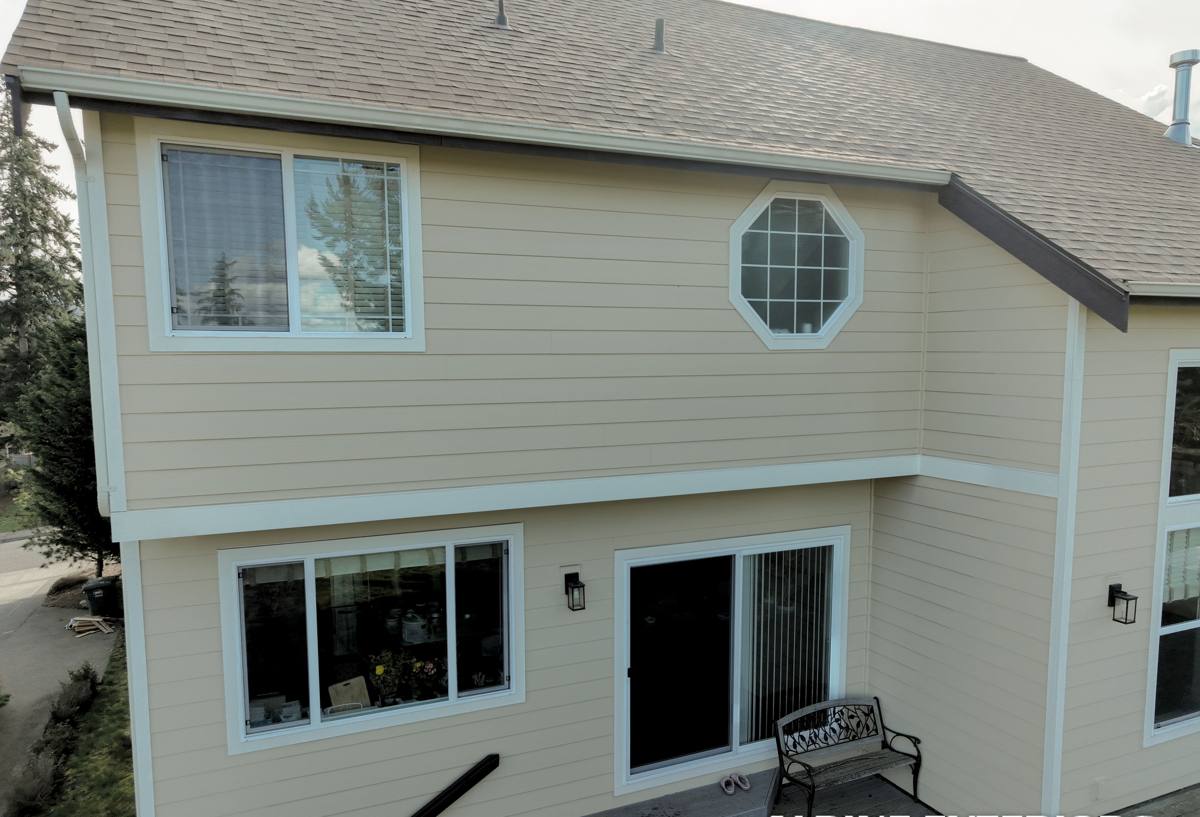
Why Bellingham Homes Wear Out Siding Faster
Whatcom County's marine climate isn't just "rainy" — it's a specific combination of conditions that stresses siding materials in ways drier regions never see.
Salt Air and Moisture Load
Proximity to Bellingham Bay means a steady low-level exposure to salt-carrying air, which accelerates corrosion on fasteners, flashing, and any exposed metal components. It also means the air itself holds more moisture, so siding rarely gets a long dry stretch to fully release the water it's absorbed during the wet months.
Driving Rain and Wind-Driven Exposure
Storms coming off the Strait of Georgia and Puget Sound frequently drive rain horizontally against west- and south-facing walls. That kind of exposure pushes water into seams, laps, and butt joints that would stay dry in a calmer climate — which is exactly why installation detailing matters as much as the product itself.
Moss, Algae, and Extended Shade
Bellingham's tree cover and long overcast stretches keep siding damp and shaded for extended periods, which is ideal growing conditions for moss and algae. On porous or absorbent siding materials, that growth can hold moisture against the surface long-term, which is a slower but real contributor to decay and finish failure.
Signs Your Bellingham Home Needs Siding Replacement, Not Just Repair
- Soft, spongy, or crumbling siding when you press on it, especially near the bottom courses or under windows
- Persistent green or black staining that returns within weeks of cleaning
- Paint that's peeling, bubbling, or chalking heavily rather than just fading
- Visible gaps, warping, or buckling panels, particularly on the west and south exposures
- Rot or soft wood discovered when removing trim, corner boards, or old siding sections
- Rising energy bills paired with drafts, which often points to failed sheathing or insulation behind old siding
- Siding older than 20-25 years, especially wood-based or older composite products, even if it looks okay from the street
A repair patches a symptom. Replacement addresses the whole envelope — sheathing, weather-resistive barrier, flashing, and finish siding — as one working system, which matters more in a climate that gives materials so little time to dry out between rain events.
Why We Only Install James Hardie Fiber Cement
We made a deliberate decision to stop installing vinyl, LP SmartSide, primed spruce, cedar, and other fiber cement brands, and to install James Hardie exclusively. That's not a marketing position — it's a response to what we consistently see on homes in this climate.
What Hardie Gets Right for This Climate
James Hardie fiber cement is engineered specifically to resist the moisture cycling that Pacific Northwest homes experience: it doesn't absorb and swell the way wood-based products can, and it holds its shape through repeated wet-dry cycles far better than vinyl, which can warp or buckle under sustained heat and cold shifts. Hardie's HZ5 product line is engineered for exactly this kind of climate — freeze-thaw cycling and high moisture exposure — and its ColorPlus factory finish is baked on under controlled conditions, which gives it more consistent, longer-lasting protection against fading and moisture intrusion than field-applied paint.
Where Other Products Fall Short Here
Vinyl siding is affordable and low-maintenance in dry climates, but it can distort under Bellingham's temperature swings and doesn't hold paint if you ever want to change the color. Primed wood and cedar are attractive but demand a maintenance schedule — recaulking, repainting, checking for rot — that most homeowners can't realistically keep up with given how much of the year is wet here. LP SmartSide and other engineered wood products perform reasonably well when installation is flawless, but they're wood-strand based, which means moisture intrusion at a poorly sealed cut edge or fastener can lead to swelling that's difficult to catch early. Other fiber cement brands exist, but we've standardized on Hardie for the consistency of its manufacturing, the depth of its climate-specific product engineering, and the strength of its transferable warranty.
Non-Combustible Performance
James Hardie siding is also non-combustible, which is a genuine safety advantage over wood-based and vinyl products, particularly relevant given the wildfire smoke and dry-summer risk periods Whatcom County has seen in recent years even in a generally wet region.
What a Correct Siding Replacement Involves
The siding itself is only part of the system. In a climate like Bellingham's, what's underneath the siding determines whether the whole assembly lasts.
Tear-Off and Inspection
We remove the old siding down to the sheathing and inspect for rot, soft spots, or moisture damage that's been hidden for years. This is often where we find problems the homeowner never knew existed — damaged sheathing near old window flashing is common on homes that have taken driving rain for a couple of decades.
Weather-Resistive Barrier and Flashing
A proper weather-resistive barrier goes on correctly lapped, shingle-style, so water sheds down and out rather than working its way behind the barrier. Flashing at windows, doors, and any roof-wall intersections gets installed or replaced so water is directed away from the wall assembly, not trapped against it.
Correct Fastening and Clearances
Hardie siding has specific fastening patterns, nail spacing, and gapping requirements at butt joints and trim, and Hardie itself publishes minimum ground clearance and roof-line clearance specs for a reason: those gaps are what let the assembly dry out and keep bulk water from wicking up into the bottom of the siding. Skipping these details is the single most common cause of early failure on fiber cement installs, regardless of brand.
Finish Detailing
Corner boards, trim, and caulking at penetrations get finished to shed water rather than collect it. Even with a factory-finished product like ColorPlus, the quality of field detailing at seams and terminations determines how well the system performs over the next 30-plus years.
Comparing Siding Options for a Bellingham Home
| Factor | James Hardie Fiber Cement | Vinyl | Wood / Cedar / Primed Spruce | Engineered Wood (LP SmartSide) |
|---|---|---|---|---|
| Moisture resistance | Excellent — does not swell or rot | Good, but can warp with temperature swings | Poor without diligent maintenance | Moderate — vulnerable at exposed cut edges |
| Maintenance in this climate | Low — occasional wash, no repainting for years | Low, but color can't be changed | High — regular repainting, caulking, inspection | Moderate — needs prompt attention to any damage |
| Fire performance | Non-combustible | Melts/deforms under heat | Combustible | Combustible |
| Typical lifespan when installed to spec | 30+ years | 20-30 years | 15-25 years with upkeep | 20-30 years |
| Finish/color options | Wide ColorPlus factory palette, holds color well | Limited, fades over time | Fully customizable, but repaint-dependent | Factory-finished options available |
How Our Process Works
We approach every Bellingham siding replacement the same structured way, because skipping steps is where climate-related failures start.
- On-site assessment: We walk the exterior, check for rot and moisture damage at grade level, trim, and roof-wall intersections, and identify problem areas before any tear-off begins.
- Written scope and estimate: You get a clear breakdown of what's being replaced, the Hardie product line and profile recommended for your home, and the cost — no vague allowances.
- Tear-off and sheathing repair: Old siding comes off, damaged sheathing gets replaced, and we document anything unexpected before closing it back up.
- Weather barrier and flashing installation: Correctly lapped house wrap and new flashing at all penetrations, sized for this climate's rain load.
- Hardie installation to manufacturer spec: Proper fastening, gapping, and clearances at every course, corner, and trim piece.
- Final detailing and walkthrough: Caulking, touch-up, and a walk-through so you understand what was done and what maintenance (minimal as it is) to expect going forward.
What to Expect for Cost
Siding replacement cost depends on your home's size, the number of stories, how much sheathing repair is needed once old siding comes off, trim complexity, and the Hardie product line and profile you choose. Homes with hidden moisture damage behind old siding — which is common on Bellingham homes that have taken 15-20 years of driving rain — will cost more once that damage is uncovered, which is exactly why we build in an inspection step before finalizing a scope rather than quoting blind. We'll walk you through the real cost drivers for your specific home during the estimate rather than throwing out a number that doesn't hold up once we open the wall.
Checklist: What to Confirm Before You Hire Anyone for Bellingham Siding Work
- Do they carry current Washington contractor licensing and adequate liability insurance?
- Will they inspect and address sheathing and moisture damage, not just install over it?
- Do they follow James Hardie's published fastening, clearance, and flashing requirements, not a generic installation approach?
- Can they explain why they recommend a specific Hardie product line (HZ5, HZ10, etc.) for your home's exposure?
- Do they provide a written scope of work and a real timeline, not a verbal estimate?
- Do they have experience working in Whatcom County's specific rain and moisture conditions, not just siding experience in general?
Why Local Experience in Bellingham Matters
Siding installation isn't identical everywhere. A crew that mostly works in drier inland climates may not think twice about clearance gaps, flashing overlap, or weather barrier sequencing — details that rarely cause problems where it doesn't rain nine months a year. In Whatcom County, those same shortcuts show up as moisture damage within a handful of years. A crew that regularly works Bellingham and the surrounding area already understands how the wind off the bay hits certain elevations harder, why moss pressure is worse on shaded north- and east-facing walls, and how to sequence a tear-off around this region's unpredictable rain windows so your home isn't left exposed longer than necessary.
If your siding is showing its age or you're planning ahead for a replacement, we're happy to walk your Bellingham property, point out what we see, and put together a straightforward, no-pressure estimate — just fill out the form below to get started.