 Ferndale Siding
 What Whatcom County Weather Does to Siding Around Sudden Valley
Homes in and around Sudden Valley take on a specific combination of weather that most siding was never designed to handle for decades on end. Marine air moving in off the Salish Sea brings driving rain that hits siding at an angle, working into every seam, nail hole, and trim joint that isn't sealed correctly. Add the heavy tree cover common to lots in this part of Whatcom County, and you get shaded, slow-drying wall surfaces that stay damp long after a storm has passed. That combination is exactly what moss and algae need to take hold, and once established, they hold moisture against the siding surface even longer, extending what's already a long moss season here into something closer to year-round.
None of that is unusual for the region. What it means practically is that siding repair around here isn't just about patching whatever's visibly cracked or dented — it's about understanding why that spot failed first, so the repair doesn't fail again in the same place two winters from now.
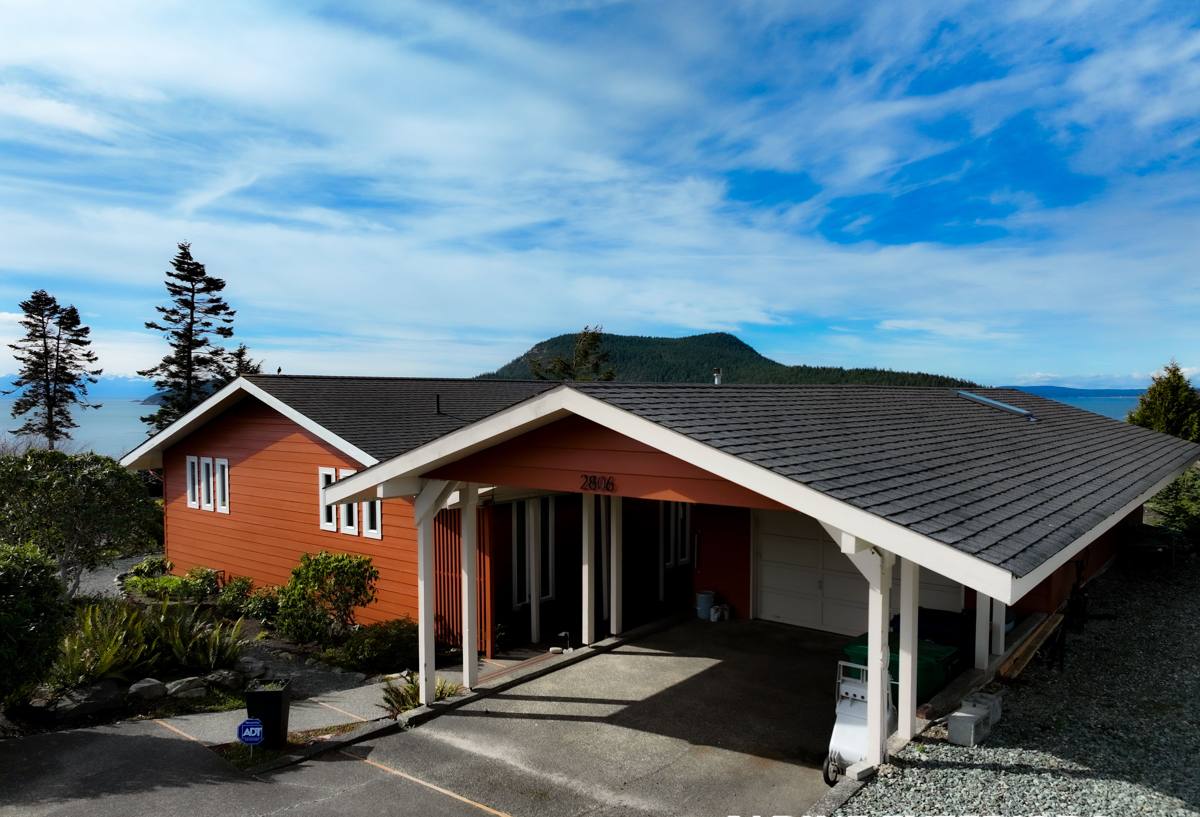
Signs Your Siding Needs Repair, Not a Full Tear-Off
Most homeowners call us because something looks wrong, but they're not sure how serious it is. A few patterns show up often enough in this area that they're worth knowing:
- Hairline cracks at horizontal butt joints, usually where boards were installed without proper gapping or flashing
- Soft, spongy sections near ground level or under downspouts, a sign moisture has been sitting there for a while
- Peeling or bubbling paint on wood trim, especially on shaded north- and west-facing walls
- Nail pops or fasteners backing out, common on older installs that weren't fastened to spec
- Persistent moss lines under eaves or in shaded corners that keep coming back after cleaning
- Gaps opening up at corner boards or window trim where caulking has dried out and pulled away
Any one of these, caught early, is usually a repair. Left alone through another wet season, several of them turn into a much bigger job because the sheathing behind the siding starts absorbing water too.
What a Correct Siding Repair Actually Involves
A repair done right starts before anyone touches the siding itself. We check for the actual moisture source — a failed flashing detail, a clogged gutter overflowing onto a wall, a missing kick-out flashing where a roofline meets a wall — because patching over an active leak just delays the next repair call. Once we know what we're dealing with, the work itself comes down to a few fundamentals that get skipped more often than they should:
- Matching the existing board profile and exposure so the repair doesn't create a visible seam line
- Checking the water-resistive barrier behind the removed section and repairing it before new siding goes back on
- Fastening to the manufacturer's schedule, not just "enough nails to hold it"
- Using the correct sealant at trim and joint locations — not just any exterior caulk
- Verifying the finish color and sheen actually match, not just look close from the driveway
Skip any of these and you get a repair that looks fine for a season and then telegraphs the problem right back — usually right where the last contractor cut corners.
Common Repair Scenarios We See Around Sudden Valley
The wooded, lake-adjacent character of this area produces a fairly consistent set of repair calls. Falling branches and wind-driven debris cause impact damage more often here than in more open subdivisions — cracked boards or dented corner trim from a limb that came down in a windstorm. Ground-level rot shows up where landscaping beds or sloped grading keep splashback hitting the bottom courses of siding. Shaded walls that never fully dry out develop the moss and mildew staining that eats through paint finishes faster than sun-exposed walls. And on older homes, failed caulking at window and door trim is a frequent culprit behind water finding its way behind the siding without any obvious crack to point to.
Each of these has a different fix, but they share the same root cause: standing moisture that had somewhere to sit for too long. That's the pattern we're checking for on every repair visit in this area, not just the spot the homeowner pointed out.
Repair or Replace? How We Actually Decide
Not every damaged section needs a full re-side, and we won't sell you one if a targeted repair will hold up. But there's a point where patching stops making financial sense. Here's how we weigh it:
| Factor | Favors Repair | Favors Replacement |
|---|---|---|
| Extent of damage | Isolated to one or two wall sections | Spread across multiple elevations |
| Age of remaining siding | Under 10-15 years, still sound | Original siding nearing or past expected service life |
| Sheathing condition | Dry, structurally sound behind the damage | Soft, delaminated, or showing rot |
| Color/profile match | Current product still available or close match achievable | Discontinued profile or badly faded original finish |
| Cost over time | Repair cost is a small fraction of full re-side | Repeated repairs are adding up close to replacement cost |
We'll tell you honestly which side of that table your house falls on, including when the answer is "repair this now and plan to replace in a few years" — that's a legitimate answer, and we'd rather give it to you straight than upsell a job you don't need yet.
Why We Repair With James Hardie Fiber Cement Only
We install and repair exclusively with James Hardie fiber cement siding — no vinyl, no LP SmartSide, no Cemplank or Allura, no primed wood. That's not a marketing line; it's a standard we hold because of what it means for repair work specifically. Hardie's ColorPlus factory finish is baked on and UV-cured, which means a repair patch can be color-matched far more reliably than field-painted wood or fading vinyl. The material itself is non-combustible and dimensionally stable, so it doesn't expand and contract the way vinyl does in temperature swings, and it doesn't absorb and hold moisture the way untreated wood does when a repair site gets rained on before it's fully sealed.
Practically, this also means we're not mixing materials on your wall. If your home already has Hardie siding, we repair it with Hardie — matched to the correct HZ climate zone product and the right profile, so the patch performs the same way the surrounding siding does for the next twenty-plus years, not just until the next wet winter.
Our Repair Process, Start to Finish
- Site visit and assessment — we look at the damage, the surrounding siding, and the likely moisture source, not just the spot you called about
- Moisture check — where rot or staining suggests it, we check sheathing condition before quoting anything
- Written scope and price — a clear description of what's being replaced, what's being resealed, and why
- Material match — sourcing the correct Hardie profile, exposure, and ColorPlus color, or the closest honest match if the original run is discontinued
- Removal and inspection — pulling damaged boards, checking the water-resistive barrier and flashing underneath, repairing those first
- Install and seal — new siding fastened to spec, joints and trim sealed correctly
- Walk-through — we show you the completed work and explain anything we found that's worth keeping an eye on
Before You Hire: A Sudden Valley Homeowner's Checklist
- Ask what caused the damage, not just what it'll cost to fix — a real answer means they actually inspected it
- Confirm they're repairing with matched, compatible siding material, not whatever's on the truck
- Ask whether they'll check the sheathing and flashing behind the damaged area before closing it back up
- Get the color and profile match confirmed before work starts, not after
- Check that they carry current WA contractor licensing and insurance, and ask for the license number
- Ask how they handle it if they find more damage once the old siding comes off
Why a Crew That Already Works Sudden Valley Matters
A contractor who's worked this area regularly already knows the patterns — which elevations tend to hold moisture longest under heavy tree cover, where splashback and grading cause repeat rot near ground level, and how the marine climate here treats sealants and fasteners differently than it does twenty miles inland. That familiarity shows up in faster, more accurate assessments and fewer surprises once the old siding comes off. It also means a shorter response time when a storm knocks a limb into a wall and you need someone out to look at it before the next round of rain gets behind the damage.
If you've got siding damage in Sudden Valley — whether it's one cracked board or a section that's been patched one too many times already — we'll come take an honest look. The estimate is free, there's no pressure to turn a repair into a replacement you don't need, and you'll get a straight answer either way.