 Ferndale Siding
 Why Decks in the Sumas Area Wear Out Faster Than You'd Expect
Decks near Ferndale and across Whatcom County don't fail because homeowners neglect them. They fail because the climate here is genuinely hard on exterior wood and hardware. Salt-laden air off Bellingham Bay and the Strait of Georgia works its way inland on prevailing winds, accelerating corrosion on fasteners, joist hangers, and railing brackets long before the visible decking looks bad. Layer on our driving rain — the kind that comes in sideways, not straight down — and water finds its way into ledger connections, end grain, and any gap where flashing was skipped or done wrong the first time.
Then there's moss season, which around here isn't really a season so much as most of the year. Shaded decks, north-facing decks, and anything under fir or cedar canopy stay damp for weeks at a stretch. Moss and algae hold moisture against the wood surface, and that constant damp-dry cycling is what actually breaks decking down — not one bad storm, but hundreds of them over a decade.
A deck built or replaced without this climate in mind will look fine for a few years and then go downhill fast. A deck built for it — correct flashing, the right fasteners, materials matched to how wet and shaded the site actually is — holds up for the long haul.
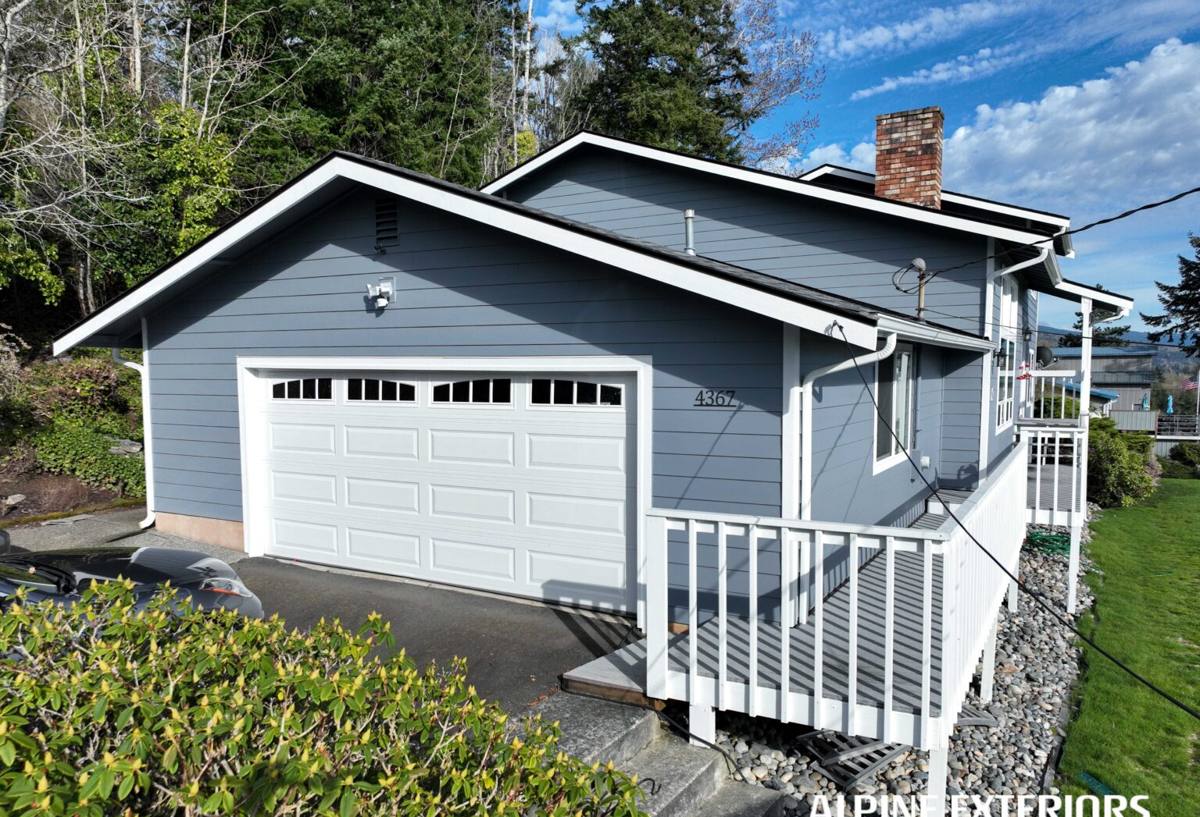
Repair or Replace? Signs a Sumas-Area Deck Has Reached the End
Not every problem deck needs full replacement. Sometimes a few boards, a section of railing, or a re-flash at the ledger solves it. But there's a point where patching keeps throwing money at a structure that's already failing underneath. Before we quote anything, we look for these signs:
- Soft, spongy, or springy spots when you walk across the decking — usually rot in the joists below, not just the boards on top
- Rust streaks running down from fasteners or joist hangers, a sign the hardware itself is corroding
- Gaps or water staining where the deck ledger meets the house — the most common source of hidden structural rot
- Persistent moss or black algae growth that comes back within weeks of cleaning, indicating the deck rarely fully dries
- Railings or posts that flex or wiggle under hand pressure — a safety issue, not a cosmetic one
- Visible wood checking, splitting, or delamination on composite boards nearing the end of their service life
- A structure more than 20-25 years old built before current ledger-flashing and fastener standards were common practice
If you're seeing two or more of these, especially anything involving the ledger connection or the framing underneath, replacement is almost always the more honest recommendation than another round of patchwork.
What a Correct Deck Replacement Actually Involves
A deck is a structure, not just a surface to walk on. The parts nobody sees — footings, framing, and flashing — matter more to how long it lasts than the decking material on top. Skipping or shortcutting any of these is where most deck failures start.
Footings and Framing
Footings need to be sized and set to local frost and load requirements, not eyeballed. We evaluate existing footings during tear-off rather than assuming they're adequate just because the old deck stood on them — soil movement and age can compromise a footing that looked fine when it was poured. Joists are spaced to support the specific decking material going down; composite and wood often have different span requirements, and using wood-spec spacing under composite boards leads to bounce and premature sagging.
Ledger Board Flashing
This is the single most common point of failure on decks in our region, and it's almost always invisible until the damage is already done. The ledger board bolts directly to the house framing, and if it isn't properly flashed with the right layered approach — flashing tucked correctly behind the house's water-resistive barrier, not just caulked over the top — rainwater tracks straight into the rim joist and wall framing behind it. We treat ledger flashing as non-negotiable on every replacement, regardless of what was there before.
Decking Material and Fasteners
Whatever decking material you choose, the fasteners holding it down need to be rated for the exposure — stainless steel or high-quality coated fasteners, not standard hardware that will streak and corrode within a few wet seasons near the coast.
Railings and Stairs
Railing height, baluster spacing, and stair stringer requirements follow current building code, and post attachment needs to resist real lateral load, not just look solid. This is a safety system as much as an aesthetic one.
Choosing the Right Decking Material for This Climate
There's no single "best" decking material — the right choice depends on how much sun and shade the deck gets, how much moss and algae exposure it will see, and how much upkeep you actually want to do. Here's how the common options compare for a Whatcom County site:
| Material | Moisture Behavior | Maintenance | Typical Lifespan Here |
|---|---|---|---|
| Pressure-treated wood | Absorbs and releases moisture readily; prone to checking and splitting if not sealed regularly | Annual cleaning and re-sealing recommended, especially on shaded decks | 10-15 years with consistent upkeep |
| Cedar | Naturally rot-resistant, but still needs sealing to fight moss staining and graying | Periodic cleaning and refinishing to maintain appearance | 15-20 years with regular care |
| Composite | Doesn't absorb water or rot, but can still grow surface algae/moss in shaded, damp spots | Periodic washing; no sealing or staining required | 25+ years, backed by manufacturer warranty |
For decks that stay shaded most of the day or sit under tree canopy — common on wooded Sumas-area lots — composite generally holds up with far less fighting against moss than either wood option. For sunnier, more open sites, cedar or well-maintained pressure-treated wood remains a reasonable and more budget-friendly choice. We'll walk your specific site conditions with you rather than push one material as a default.
Permits and Whatcom County Requirements
Deck replacement, especially anything involving new footings, structural framing changes, or a deck attached at a different height or footprint than before, typically requires a permit. Requirements can vary by jurisdiction within the county, and pulling the right permit protects you if you ever sell the home — an unpermitted structural deck is a common snag in real estate inspections. We handle the permit process as part of the job rather than leaving it for the homeowner to sort out.
Our Deck Replacement Process
- On-site assessment — we inspect the existing deck, ledger connection, and framing to determine what's salvageable versus what needs full replacement
- Written scope and estimate — a clear breakdown of materials, structural work, and price before anything is torn out
- Permitting — filed and secured before demo begins, when required
- Tear-off — old decking, framing, and railing removed, with the ledger and house connection inspected for hidden rot
- Structural rebuild — footings verified, framing set, ledger properly flashed
- Decking, railing, and stair installation — per your chosen material and current code
- Final walkthrough and cleanup — job site cleared, deck inspected with you before we call it done
Why a Crew That Already Works This Area Matters
Deck replacement done right depends on knowing how the local climate actually behaves against a structure, not just following a generic spec sheet. A crew that regularly works in and around Ferndale and greater Whatcom County has already seen how salt air corrodes hardware on coastal-exposed sites, how long shaded decks stay wet, and which flashing details actually hold up through a full Pacific Northwest winter. That's the difference between a deck built to look good at handoff and one built to still be solid in fifteen years.
Local also means faster response if something needs a look after the fact, and familiarity with the permitting process for this part of the county rather than learning it on your job.
Keeping a New Deck Performing Long-Term
Whatever material you choose, a little seasonal attention goes a long way here. Clearing debris out of gaps between boards, keeping gutters and downspouts directing water away from the deck footprint, and washing off moss and algae buildup before it gets established will do more for lifespan than almost anything else. Wood decks need that plus periodic sealing; composite decks mostly just need to be kept clean. We'll walk you through the specific care schedule for whatever material we install.
If your deck is showing its age or you're ready to replace one that was never built to handle this climate in the first place, we're happy to take a look and give you a straightforward, no-pressure estimate — just fill out the form below.